



Bus accidents in Binghamton, NY, are often caused by driver error, inadequate vehicle maintenance, hazardous road conditions, and the negligence of third parties. Knowing the cause of a bus accident and who may be held liable is critical for protecting your rights and ensuring proper compensation.
Binghamton’s public transit landscape comprises BC Transit buses serving city routes, school district buses transporting thousands of students daily, Binghamton University shuttles moving students across campus, and private charter operators offering tours and long-distance trips. Each type of bus operates under different safety standards, maintenance schedules, and oversight requirements. When accidents occur on busy corridors like Court Street, Main Street, or along Interstate 81, the consequences can be severe.
Understanding transit agency liability is essential for navigating claims, avoiding legal pitfalls, and ensuring that responsible parties are held accountable. A Binghamton bus accident lawyer can guide you through these complex cases and help secure the compensation you deserve.
Most Common Causes of Bus Accidents in Binghamton
Binghamton bus crash causes are usually due to one or more of these factors:
Driver Fatigue and Scheduling Pressures
Commercial bus driver fatigue is a significant contributor to crashes across New York State. Research indicates that 10 to 20% of crashes involving trucks and buses may be attributed to fatigued drivers, posing a critical safety concern in Binghamton and across Broome County.
Drivers working split shifts, extended hours, or overtime often struggle to stay alert, especially during early morning or late evening routes. Federal Motor Carrier Safety Administration (FMCSA) regulations limit interstate commercial bus drivers to 10 hours of driving after eight consecutive hours off duty. However, local transit and school bus drivers sometimes face less stringent state requirements.
BC Transit drivers, who manage multiple daily routes, may experience cumulative fatigue over time. School bus drivers often work split shifts with morning and afternoon routes, potentially driving during their body’s natural low-energy periods. When fatigue sets in, reaction times slow, judgment suffers, and the risk of missing stop signs, traffic signals, or pedestrians increases significantly. If a tired driver caused your accident, both the driver and their employer may be liable for the accident.
Distracted Driving
On Binghamton’s busy streets, drivers must manage fare transactions, use GPS systems, answer route questions, reply to dispatch radio messages, and monitor passenger movement while maintaining awareness of traffic, cyclists, and pedestrians. School bus drivers face unique distractions from managing student behavior while navigating residential neighborhoods.
A BC Transit driver checking their dispatch system while approaching the Court Street and State Street intersection might miss a changing traffic signal, or a charter bus driver programming a GPS while merging onto Interstate 81 creates dangerous conditions for everyone on the highway. Even brief moments of inattention at critical times can result in serious collisions.
Speeding and Unsafe Driving on City Routes
Some bus drivers drive at unsafe speeds for the conditions, particularly when running behind schedule. Binghamton’s downtown streets, with frequent intersections, pedestrian crossings, and changes in parking lanes, require constant speed adjustments and vigilance to ensure safe navigation. Speeding reduces reaction time and increases the severity of collisions.
Buses traveling along Vestal Parkway during rush hour or navigating the curves on State Street must adjust their speed according to traffic conditions. A bus moving too fast on rainy or snowy roads risks losing control or being unable to stop in time. Aggressive lane changes, failing to yield the right of way, and running traffic signals all constitute unsafe driving that can lead to preventable accidents.
Poor Training and Credentialing Oversight
Not all bus drivers receive adequate training before transporting passengers. The New York Department of Motor Vehicles requires commercial bus drivers to hold a Commercial Driver’s License with passenger endorsements. However, the quality of training varies significantly between operators.
Drivers who haven’t received thorough training in managing large vehicles in urban environments pose increased risks. School districts, charter companies, and university transit departments must properly train drivers in vehicle operation, defensive driving, emergency procedures, and passenger safety protocols. When inadequately trained drivers cause crashes, their employers can be held liable for negligent hiring and training practices.
Bad Weather and Southern Tier Winter Hazards
The Southern Tier experiences harsh winter conditions, characterized by heavy snow, ice, and freezing temperatures. Binghamton averages approximately 70 inches of snow annually, and buses must continue operating during storms, unlike many other vehicles, which stay off the roads.
Black ice on Interstate 81, snow-covered residential streets, and reduced visibility during heavy snowfall all increase the risk of accidents for large buses, which have longer stopping distances.
While buses are designed for winter operation, driver error in judging safe speeds or failing to adjust for ice and snow causes many preventable crashes. Transit agencies and charter companies must suspend service during severe weather when conditions become too dangerous.
When weather-related accidents occur, liability may fall on the driver, the agency, or both if proper precautions weren’t taken.
Mechanical Failures and Inadequate Maintenance
Buses require rigorous, regular maintenance to operate safely. Brake failures, tire blowouts, steering malfunctions, and other mechanical issues can lead to catastrophic accidents.
Federal Motor Carrier Safety Administration regulations (49 CFR Part 396) require detailed inspection and maintenance schedules for commercial buses. New York State imposes additional requirements (17 NYCRR Parts 720 and 721) for school buses and public transit vehicles. However, some operators cut corners on maintenance to reduce costs or keep buses in service when they should be taken out of service for repairs.
A BC Transit bus with worn brake pads might struggle to stop on State Street’s hills, while a school bus with neglected tire maintenance could experience a blowout on Route 17. When mechanical failures cause accidents, liability typically extends to the company responsible for maintaining the vehicle’s mechanical components.
Improper Loading and Weight Distribution
Buses carrying passengers, luggage, and cargo must distribute weight properly to maintain stability. Overloaded buses or those with improperly secured cargo can become difficult to control, especially during turns or emergency maneuvers.
Charter buses loading passengers for trips must ensure luggage is adequately secured and doesn’t exceed weight limits. When improper loading contributes to a loss of control or rollover accident, the company or driver responsible may face liability.
Blind Spot Conflicts with Cyclists and Pedestrians
Large buses have significant blind spots around all four corners, particularly on the right side and directly behind the vehicle. Binghamton’s downtown streets experience regular bicycle and pedestrian traffic, creating numerous opportunities for blind-spot conflicts.
A BC Transit bus making a right turn from Main Street onto Court Street might not see a cyclist in the blind spot. University shuttle buses navigating campus roads face constant challenges in managing blind spots around students. Buses should be equipped with extended mirrors, blind spot detection systems, and backup cameras. When blind spot accidents occur, both driver error and inadequate safety equipment may contribute to transit agency liability.
Intersection Collisions on Major Binghamton Corridors
The intersections of Court Street, Main Street, and Vestal Parkway see heavy traffic throughout the day. These busy intersections present multiple accident scenarios, including rear-end collisions when buses stop to pick up passengers, side-impact crashes when drivers run red lights, and pedestrian strikes in crosswalks.
The intersection of Vestal Parkway and Jensen Road, where BC Transit buses turn across traffic, requires careful judgment and consideration. Downtown intersections near the bus terminal involve complex traffic patterns with multiple turning lanes. When bus drivers fail to yield the right of way or proceed through intersections in an unsafe manner, serious accidents can occur.
Interstate 81 and Route 17 Crash Patterns
Binghamton is situated at the intersection of Interstate 81, Route 17, and Interstate 86, where buses encounter high-speed traffic and complex interchange geometry. Charter buses and intercity carriers use these highways daily, and accidents on these roadways often result in severe injuries due to higher speeds.
Rear-end collisions occur when buses fail to slow for traffic backups. Sideswipe accidents happen during lane changes in heavy traffic. Jackknife or rollover crashes can occur due to excessive speed on curves.
How Liability Is Determined in New York Bus Accident Claims
Bus accidents often involve multiple parties. When proving bus driver negligence, New York law provides mechanisms for apportioning liability among them through comparative negligence principles, as outlined in CPLR § 1411. Determining transit agency liability requires investigating who owed a duty of care, how that duty was breached, and whether the breach directly caused the accident and injuries. 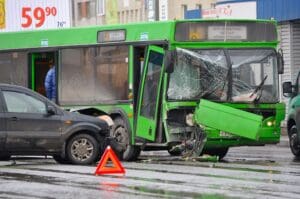
Commercial bus carriers and public transit agencies owe passengers a high duty of care—they must exercise the highest degree of care consistent with the practical operation of their services. This standard exceeds ordinary, reasonable care applied to private drivers.
Even if you bear some percentage of fault, you can still recover damages reduced by your percentage of fault. For example, if you suffered $100,000 in damages but were found 20% at fault, you could recover $80,000. This rule applies when multiple parties share fault for a bus accident.

“At Munley Law, our mission is simple: to provide all injury victims equal access to justice, even against the most powerful entities. For almost 70 years, we have been the voice for the injured, the forgotten, and those who need someone to stand beside them in their darkest hour.”
Marion Munley

 Call us at (844) 686-5397
 Potentially Responsible Parties
Determining who is liable for a bus accident involves identifying all parties whose actions or negligence may have contributed. These parties typically include:
Bus Driver
The person behind the wheel bears primary responsibility for operating the bus safely. Drivers who violate traffic laws, drive recklessly, operate while fatigued or impaired, fail to maintain a proper lookout, or make judgment errors can be held personally liable for resulting damages.
BC Transit, School Districts, and Municipal Agencies
Public transit authorities and school districts can be held liable for the negligence of their drivers under the principle of vicarious liability. These agencies also face direct liability for negligent hiring, training, supervision, and maintenance. Claims against government entities in New York must comply with the notice requirements outlined in the New York Court of Claims Act and applicable municipal law.
Private Charter and Tour Bus Companies
Commercial bus operators bear full responsibility for their drivers’ actions and their own corporate safety practices. When a private charter company causes an accident due to driver negligence, inadequate maintenance, or violations of safety regulations, it is liable for all resulting damages.
University-Operated Shuttles
Binghamton University operates shuttle services between campus locations and downtown areas. When university drivers cause accidents, the university may be liable as a public entity, subject to New York’s governmental immunity laws. However, exceptions to immunity arise when the university maintains insurance coverage for such claims.
Third-Party Drivers
Not all bus accidents are caused by the bus driver’s error. Other motorists who run red lights, change lanes unsafely, drive while impaired, or violate traffic laws can cause a car accident involving a bus. When a third-party driver’s negligence leads to an accident, that driver and their insurance carrier bear primary liability.
Manufacturers and Parts Suppliers
Defective bus designs, manufacturing defects, or faulty parts can cause accidents even when drivers operate vehicles properly. Brake system failures, tire defects, steering problems, or design flaws that make buses unstable may create liability for manufacturers under product liability law.
Maintenance Contractors
Some bus operators contract with third-party companies for vehicle maintenance and repairs. When negligent maintenance or repairs contribute to mechanical failures that cause accidents, the maintenance contractor may share liability with the bus operator.
Why Legal Representation Matters in Multi-Defendant Bus Claims
New York bus accident liability cases involve complex liability issues with multiple potentially responsible parties, each typically represented by experienced defense attorneys and insurance companies. These cases require a thorough investigation, expert analysis, a clear understanding of federal and state transportation regulations, and knowledge of governmental immunity laws that affect public transit claims.
The claims process against government entities involves strict notice requirements and shortened deadlines. Missing these deadlines can result in losing your right to compensation entirely, even when you have a valid claim.
If you or a loved one was injured in a Binghamton bus accident, you need skilled legal counsel. An experienced personal injury lawyer can secure critical evidence, identify who is liable for a bus accident lawsuit, establish the full value of your damages, and negotiate for the compensation you deserve. Contact Munley Law now for a free consultation with an award-winning bus accident attorney.
Marion Munley
Marion Munley has been practicing personal injury law for nearly 40 years. She is triple board-certified by the National Board of Trial Advocacy for Truck Accident Law, Civil Trial Law, and Civil Practice Advocacy. She currently serves as Vice President of the American Association for Justice, an organization dedicated to safeguarding victims’ rights. Marion has won many multimillion-dollar recoveries for her clients, including one of the largest trucking accident settlements in history. She has been named a Top 10 Super Lawyer in Pennsylvania since 2023, a Best Lawyer in America, and was recently inducted to the Lawdragon Hall of Fame.