Why Reddit Legal Advice Can Hurt Your Personal Injury Case
Posted August 18th, 2026 by Marion Munley, Esq..
The moments after an accident can be nerve-racking, with questions racing through your mind. Should you talk to the insurance company? Who will cover your medical bills? What happens if you’re found at fault? And what if your injuries prevent you from working?
When looking for answers, you may turn to the internet for guidance and find yourself on Reddit’s r/legaladvice, reading about how others have handled similar situations. While communities like this can offer useful perspectives and support, following advice from strangers online could hurt your personal injury case.
Can You Trust Reddit Legal Advice?
 No, you shouldn’t trust legal advice from Reddit. The people who answer your question are anonymous. They may not be personal injury attorneys or have the legal background and credentials needed to answer your question. And if they are attorneys, they only know the facts of the case from what you posted online. […]
Posted in Personal Injury.
Truck Accident Lawyer Katie Nealon Published in Advocate Magazine
Posted August 14th, 2026 by Munley Law Personal Injury Attorneys.
Munley Law attorney Katie Nealon has been published in the August 2026 issue of Advocate magazine, the journal of Consumer Attorneys Associations for Southern California.
In her article, “Using technology to investigate truck crashes,” Katie breaks down a two-phase approach to modern truck crash investigation. Phase one covers securing evidence immediately, sending preservation letters to the trucking company and driver, covering everything from driver logs and maintenance records to cell phones and other electronics before anything gets deleted. Phase two covers the online investigation, researching the trucking company through its website, SAFER records, and social media, while also digging into the driver’s social media, blogs, and podcasts for admissions, safety violations, or evidence of distracted or reckless driving habits.
Katie is board-certified in Truck Accident Law by the National Board of Trial Advocacy and the Academy of Truck Accident Attorneys. She has been named to Best Lawyers in America since 2025. […]
Read MorePosted in Munley News.
What Happens If I Reject a Personal Injury Settlement Offer?
Posted August 12th, 2026 by Marion Munley, Esq..
Rejecting a settlement offer doesn’t end your case; it advances it. Insurance companies often make low settlement offers, hoping you’ll accept less than your claim is worth, but you have every right to say no. When you reject an offer, negotiations continue, or your case may go to trial. This decision carries real consequences, both positive and negative. Understanding what happens next helps you negotiate from a position of strength and make the choice that’s right for your situation.
After rejecting a settlement offer, it’s essential to understand what comes next. Negotiations can continue, and the different laws may affect how your case progresses. Knowing these steps helps you make informed decisions about protecting your rights.
If you have questions about a personal injury settlement offer, your first step is to speak with an experienced personal injury lawyer. Munley Law has over 65 years of experience walking our clients through settlement offers. […]
Read MorePosted in Personal Injury.
How Long Does it Take to Receive My Personal Injury Settlement?
Posted August 12th, 2026 by Marion Munley, Esq..
Most personal injury cases settle within three months to two years from the date of injury, depending on the complexity of the case and the severity of your injuries. Once you reach a settlement and sign the release forms, receiving your check normally takes another three to 12 weeks while your attorney clears the funds, resolves any medical liens, and finalizes the accounting.
The two timelines get confused often. If you are asking how long until your case settles, the answer depends on your case. If you are asking how long it will take after settlement to receive your payment, the realistic range is 3 to 12 weeks.
To help you understand more about the process, we’ve created this guide so that you can plan financially and know what to expect after your case settles. Our award-winning personal injury lawyers have over 250 years of combined experience and have secured more than $1 billion in settlements and verdicts, […]
Read MorePosted in Personal Injury.
Weird Laws in PA
Posted August 7th, 2026 by Marion Munley, Esq..
Laws often reflect the times and values of the era in which they were written. As such, many states have outdated laws, some of which are still on the books, that may seem unusual to us today. And Pennsylvania is no exception.
Weird laws in Pennsylvania serve as a reminder that the law is complex. That means having professional legal assistance is quite valuable when you’re facing a legal situation you’re unfamiliar with. When you have been injured because of the negligence of others, contact our Pennsylvania personal injury team at Munley Law today for a free consultation.
Weird Pennsylvania Laws
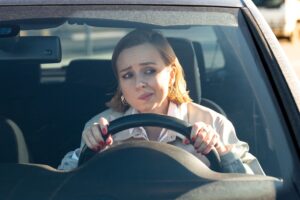 Although the following Pennsylvania laws applying to traffic and vehicles may not be all that well-known, they’re still on the books:
- No car purchases on Sundays: The prohibition on buying or selling a car on Sunday is a holdover from “Blue laws,” […]
Posted in Personal Injury.
Can Pittsburgh Families Recover After an Injury From a Defective or Recalled Product?
Posted July 31st, 2026 by Marion Munley, Esq..
Pittsburgh families can recover damages for injuries caused by a defective or recalled product. They can do this by filing a product liability claim against the manufacturer, distributor, or retailer responsible for putting a dangerous product on the market, whether or not a recall was issued.
A recall notice can strengthen a claim, but its absence doesn’t end one. Many defective products injure people well before a manufacturer acknowledges a problem. However, many Allegheny County families dealing with a serious injury from a faulty appliance, tool, vehicle part, or piece of equipment often assume they have no case simply because the product was never formally recalled.
What Makes a Product Legally Defective in Pennsylvania?
A product may be legally defective for one of three reasons. 
It may have a:
- Design flaw that makes the entire product line unreasonably dangerous
- Manufacturing defect affecting a specific unit
- Inadequate warnings about a risk that the manufacturer knew about but failed to disclose
A design defect affects every unit made to that design, […]
Read MorePosted in Product Liability & Recalls.
Is an Uber or Lyft Driver Considered a Commercial Driver in New York?
Posted July 30th, 2026 by Marion Munley, Esq..
New York doesn’t require Uber or Lyft drivers to hold a commercial driver’s license, as these drivers operate their own personal vehicles rather than taxis or livery vehicles. Instead, the state classifies Uber and Lyft as Transportation Network Companies (TNCs) under a specific law that took effect in 2017.
Because rideshare drivers fall under a different insurance framework, a Binghamton rideshare accident claim often follows very different rules than a standard car accident case.
What’s the Difference Between a Commercial Driver and a TNC Driver?
A TNC driver uses their own car and their own personal license. They only activate commercial-level insurance coverage through the rideshare company’s policy while actively working through the app. This differs from a livery or limousine driver, who operates under a different regulatory category with its own licensing requirements. 
This distinction is important because it impacts which insurance policy responds first after a crash, […]
Read MorePosted in Car Accidents.
How Effective Is Automatic Emergency Braking in a Commercial Truck?
Posted July 30th, 2026 by Marion Munley, Esq..
Automatic Emergency Braking (AEB) has become one of the most promising safety technologies in modern vehicles. Designed to detect an impending collision and automatically apply the brakes if the driver fails to react, AEB has been shown to reduce rear-end crashes in passenger cars, and it’s increasingly making its way into commercial trucks.
But while AEB can help prevent some accidents, it’s not a substitute for safe driving. Like any technology, it has limitations, and serious truck accidents can still occur when drivers, trucking companies, or equipment manufacturers fail to do their part.
If you’ve been injured in a commercial truck accident, understanding how AEB works and when it should have prevented a crash can be an important part of determining liability.
What is Automatic Emergency Braking?
Automatic Emergency Braking is an advanced driver assistance system that uses sensors, cameras, radar, or a combination of technologies to monitor traffic ahead of a vehicle. […]
Read MorePosted in Truck Accidents.
How Can an Atlanta Family Recognize and Report Nursing Home Medication Errors?
Posted July 28th, 2026 by Marion Munley, Esq..
Medication errors are one of the hardest-to-catch forms of nursing home neglect because the signs often look like normal aging rather than a mistake. To determine whether a nursing home resident has been given the wrong medication or is missing a scheduled dose, family members need to keep a close eye on their loved one to notice the signs of neglect.
If you believe your loved one is the victim of a medication error, there are steps you can take. Contact the Atlanta nursing home abuse lawyers at Munley Law for a free consultation.
What Counts as a Medication Error in a Georgia Nursing Home?
A medication error covers more ground than most families expect. Common examples include: 
- Administering the wrong drug entirely
- Giving a correct drug at the wrong dose
- Missing a scheduled dose
- Failing to account for a dangerous interaction between two prescription medications that a resident is taking at once
Poor recordkeeping is often the root cause, […]
Read MorePosted in Nursing Home Abuse.
Marion Munley Sworn in as President-Elect of the American Association for Justice
Posted July 27th, 2026 by Munley Law Personal Injury Attorneys.
 Marion Munley, Partner at Munley Law, was sworn in as President-Elect of the American Association for Justice (AAJ) on July 27, 2026. Marion was elected as a national officer for the AAJ in 2022 after over a decade of dedicated service to the Association. Marion became the first woman to serve as Chair of the AAJ Trucking Litigation Group in 2018 and is also a past chair of the AAJ Women Trial Lawyers Caucus.
Her leadership in the AAJ has been recognized with many service awards, including the Above and Beyond Award in 2018, 2019, and 2021; the Distinguished Service Award in 2020 and 2021; and the Marie Lambert Award in 2020. In 2020, she was one of the first recipients of the Robert W. Munley Pursuit of Justice Award by the AAJ Trucking Litigation Group.
The American Association for Justice is a 20,000-member organization of plaintiff attorneys whose mission is to protect the right to trial by jury. […]
Read MorePosted in Munley News.
How Do Center City Construction Accidents Lead to Catastrophic Injuries in Philadelphia?
Posted July 24th, 2026 by Marion Munley, Esq..
Center City construction accidents often lead to catastrophic injuries in Philadelphia. The most common causes of these accidents include falls from scaffolding or unfinished floors, being struck by falling materials or equipment, and crane or hoist failures on the dense high-rise construction sites that define the neighborhood’s skyline.
Philadelphia construction sites operate in some of the tightest urban footprints in Pennsylvania, with cranes swinging loads over sidewalks and scaffolding rising directly next to active streets. This density means a single safety failure doesn’t just endanger the worker on site; it can catastrophically injure a pedestrian, a delivery driver, or anyone else within reach of the site.
What Are the Most Common Causes of Catastrophic Injuries on Philadelphia Construction Sites?
Falls remain the leading cause of catastrophic construction injury nationwide. Center City’s high-rise projects multiply the risk since a fall from an upper floor or scaffold level carries far greater force than a fall on level ground. […]
Read MorePosted in Construction Accidents.
What Should Cyclists Know About Summer Accidents on the Schuylkill River Trail?
Posted July 24th, 2026 by Marion Munley, Esq..
Summer brings the trail’s heaviest use of the year, packing it with joggers, families with strollers, e-bikes, and serious cyclists all at once. This mix of speeds and skill levels is where most preventable trail accidents occur, and determining who’s responsible when one happens isn’t always straightforward.
What Kinds of Accidents Happen Most Often on the Schuylkill River Trail in Summer?
In summer, the most common accidents on the Schuylkill River Trail near Reading are collisions between cyclists and pedestrians or other cyclists, falls caused by tree roots, erosion, or debris on the trail surface. Crashes at points where the trail crosses local roads are also common.
Berks County’s stretch of the trail experiences a sharp increase in foot and bike traffic once school lets out, with families, joggers, and cyclists of very different speeds sharing a path that’s often only wide enough for two or three people to pass comfortably. […]
Read MorePosted in Bicycle Accidents.
How Can Families Spot Summer Heat Neglect in Lehigh County Nursing Homes?
Posted July 24th, 2026 by Marion Munley, Esq..
Older adults, especially those on certain heart or blood pressure medications, lose the ability to cool themselves as effectively as younger people. This means that a nursing home’s air conditioning failure or understaffing during a heat wave can turn into a medical emergency faster than families expect.
Knowing what to look for and what the facility is legally required to do makes it possible to catch a problem before it becomes a crisis.
What Are the Early Signs of Heat-Related Neglect in a Nursing Home Resident?
The early signs of heat-related neglect include: 
- Flushed or unusually dry skin
- Confusion or sudden agitation
- A fast or weak pulse
- Heavy sweating that stops suddenly
Dehydration often accompanies heat stress and can be harder to spot in residents with limited mobility or communication abilities. […]
Read MorePosted in Nursing Home Abuse.
What Can a Wilkes-Barre Family Recover After a Fatal Distribution Center Accident?
Posted July 23rd, 2026 by Caroline Munley, Esq..
Depending on the cause of the accident, a Wilkes-Barre family can file two claims after a loved one dies in a distribution center accident: a workers’ compensation claim and a wrongful death lawsuit against any third party whose negligence contributed to the crash.
Luzerne County’s distribution corridor along I-81 puts thousands of workers inside massive warehouse and fulfillment operations every day, and a fatal accident there rarely involves just one company. Knowing which claim applies and who else might share responsibility often determines how much a grieving family recovers.
Why Can’t a Family Sue the Employer Directly After a Fatal Warehouse Accident in Wilkes-Barre?
In most cases, Pennsylvania’s workers’ compensation system bars a family from suing the employer directly after a workplace death. In exchange, the employer’s insurance carrier automatically pays death benefits, without the family needing to prove the employer was negligent. 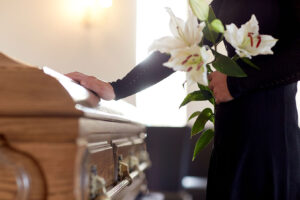
These benefits include a portion of the worker’s average weekly wage paid to a surviving spouse and dependent children, […]
Read MorePosted in Personal Injury.
What Are a Scranton Patient’s Options After a Surgical Error at a Lackawanna County Hospital?
Posted July 23rd, 2026 by Marion Munley, Esq..
Waking up after surgery to discover an unexpected complication can be overwhelming, leaving most patients uncertain about what happened and what to do next. If you believe a surgical error caused your injury, it’s important to understand your legal options as early as possible.
Pennsylvania law provides a specific, time-limited process for pursuing a medical malpractice claim against a surgeon, hospital, or other healthcare provider, and taking prompt action can help protect your rights.
Our Scranton medical malpractice lawyers can review what happened and advise whether you may have a claim.
What Counts as a Surgical Error Under Pennsylvania Law?
A surgical error becomes medical malpractice under Pennsylvania law when a surgeon or surgical team’s conduct falls outside the accepted standard of care and causes harm. 
Common examples include operating on the wrong site or the wrong patient, […]
Read MorePosted in Medical Malpractice.
Survey Reveals: The Most Frustrating Summer Parking Lots in the U.S. [2026]
Posted July 20th, 2026 by Munley Law Personal Injury Attorneys.
A summer day rarely begins at the beach, a lake, or on a hike—it almost always begins in the parking lot. The common experience, before even a chair has been unfolded or a cooler opened, is 15 minutes spent crawling around a parking lot looking for a space.
To figure out where this gets worse, Munley Law asked 3,001 drivers about the vacation parking lots where they have encountered the worst behavior and the most stress.
The result is a ranking of 139 destinations across all 50 states, packed oceanfront lots, mountain trailheads, boat ramps, and inland swimming holes, all of it.
Created by Munley Law • View larger version
Key Findings
New York parking lots are the source of most drivers’ frustrations. […]
Read MorePosted in Personal Injury.
What Are a Philadelphia Patient’s Rights After a Birth Injury at a Center City Hospital
Posted July 20th, 2026 by Marion Munley, Esq..
A family affected by a birth injury at a Philadelphia Center City hospital, such as Pennsylvania Hospital or Thomas Jefferson University Hospital, has the right to pursue a medical malpractice claim on the child’s behalf.
Pennsylvania law gives that claim far more time to be filed than most other medical malpractice cases. Because a birth injury involves a minor, the standard two-year filing deadline works differently, which changes how urgently a family needs to act and what records matter most in the meantime.
What Counts as a Birth Injury Under Pennsylvania Malpractice Law?
A birth injury becomes malpractice when the medical team’s response to labor and delivery falls outside the accepted standard of care and causes harm to the mother or infant.

Common examples include:
- A delayed response to fetal distress on the heart rate monitor
- Mismanaged shoulder dystocia that causes a brachial plexus injury
- Improper use of forceps or a vacuum extractor
- A delayed cesarean section that leads to oxygen deprivation
Not every difficult delivery or unexpected complication is medical malpractice. […]
Read MorePosted in Medical Malpractice.
Can an Allentown Renter Sue Their Landlord for an Injury at Home?
Posted July 17th, 2026 by Marion Munley, Esq..
Injury on Rental Property
The landlord is usually liable when an unsafe condition in an Allentown rental property causes a tenant’s injury, and the tenant often has an unusual advantage in proving it: the city’s own rental inspection records.
Allentown runs one of Pennsylvania’s most active rental inspection programs, which means that a landlord’s history of code violations, failed inspections, or an expired rental license can serve as evidence in the case rather than requiring the tenant to prove it from scratch.
What Legal Standard Applies When an Unsafe Rental Property Causes an Injury?
In a premises liability claim, the standard against which a landlord’s conduct is measured derives from the Pennsylvania Supreme Court’s 1979 decision in Pugh v. Holmes, which requires that rental housing be safe and sanitary regardless of what the lease says. This standard doesn’t exist to give a tenant a way to compel repairs. […]
Read MorePosted in Premises Liability.
Who Is Liable for a Slip and Fall at a Pocono Water Park Near Stroudsburg?
Posted July 17th, 2026 by Marion Munley, Esq..
Whether at Camelbeach, Kalahari Resorts, or Great Wolf Lodge, the water park operator can be held liable for a slip and fall, even if a guest signed a liability waiver at check-in.
Monroe County’s three major water parks draw families from across the region every summer, and a wet concrete deck around a wave pool or slide landing is one of the most common places a visit turns into an injury. What a guest can recover in compensation for their injuries often depends on what the waiver covers and whether the fall resulted from the water park’s own maintenance failure.
Does Signing a Liability Waiver Stop an Injured Guest From Suing a Pocono Water Park?
No, not automatically. Pennsylvania courts enforce liability waivers for voluntary recreational activities against ordinary negligence but not against reckless conduct or gross negligence, the most flagrant form of carelessness. […]
Read MorePosted in Premises Liability.
Can Wilkes-Barre Be Held Liable for an Injury at the MLK Jr. Park Splash Pad?
Posted July 15th, 2026 by Marion Munley, Esq..
Yes, the City of Wilkes-Barre can be held liable for an injury at the Dr. Martin Luther King Jr. Park splash pad, but a claim against the city comes with limits.
Pennsylvania’s governmental immunity law bars most lawsuits against municipalities, but it creates a specific exception for injuries arising from how a city maintains its own property, including the playground and splash pad at the recreation complex on Kattell Street.
Why Doesn’t Pennsylvania’s Governmental Immunity Automatically Protect the City?
Pennsylvania’s Political Subdivision Tort Claims Act gives local governments broad immunity from lawsuits, but the law carves out eight specific exceptions, and one of them, the “real property” exception under 42 Pa.C.S. § 8542(b)(3), covers negligence in how a local agency cares for, controls, or maintains property it possesses. A city-owned park and splash pad falls squarely inside that exception. 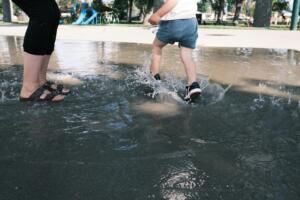
But this is narrower than it sounds. […]
Read MorePosted in Premises Liability.
Load More Posts