What Philadelphia Construction and Union Workers Need to Know About Workers’ Comp When a Contractor Disputes the Claim
A contractor disputing your workers’ compensation claim does not mean that you lose your right to benefits. It just means someone, usually the contractor’s insurance company, is questioning part of your claim. This query could be whether you were hurt on the job, whether your injury is work-related, or whether you should still be receiving benefits.
From commercial buildings in Center City to roadwork along I-95 and neighborhood redevelopment projects across Philadelphia, construction workers do some of the toughest jobs in the city. The work is physically demanding, and a single accident can leave someone unable to work for weeks or even months.
Pennsylvania’s workers’ compensation system is meant to cover medical benefits and wage-loss benefits after a work injury. Unfortunately, the process is not always as simple as filing paperwork and waiting for benefits to arrive. Contractors and insurance companies sometimes challenge claims, especially when an injury could keep someone out of work for months or longer.
Why Would a Contractor Dispute a Workers’ Compensation Claim?
Most disputes occur because the contractor or insurance company believes your injury should not be covered. That does not necessarily mean they’re right. 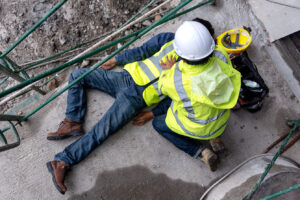
Construction work is tough on the body. Whether you’re lifting materials, working on scaffolding, operating equipment, or spending hours on your knees, injuries can happen even when you’re doing everything right. Instead of accepting the claim, the insurance company may argue that something else caused your injury or that it isn’t as serious as you say.
Sometimes they argue that a back injury is really the result of arthritis or another condition that existed before the accident. Other times, they claim you waited too long to report the injury or that you can already return to work despite your doctor’s restrictions. Disputes also happen when the insurance company questions whether someone was actually an employee or an independent contractor.
These issues are especially common on large construction projects in Philadelphia, where several contractors and subcontractors work together. A worker may report to one supervisor, receive a paycheck from another company, and perform work on property owned by someone else. Determining who employed you and whose workers’ compensation insurance applies can quickly become part of the dispute.
Union Workers Can Still Face Workers’ Compensation Disputes
Being part of a union does not prevent an insurance company from challenging your claim. Philadelphia has one of the strongest union construction workforces in the country. Members of organizations such as the Philadelphia Building and Construction Trades Council, IBEW Local 98, Steamfitters Local 420, and the Laborers’ District Council help build everything from schools and hospitals to commercial developments throughout the region.
Even with union protections, workers’ compensation claims can still be denied or delayed. Your union may be able to assist with employment issues or explain parts of your collective bargaining agreement, but workers’ compensation claims are handled under Pennsylvania law. If the insurance company disputes your injury, the case may end up before a workers’ compensation judge regardless of whether you belong to a union.
Disputes Often Begin Soon After an Injury
Many workers are surprised by how quickly an insurance company starts asking questions. You might report your injury to your supervisor, seek medical treatment, and expect benefits to begin. Instead, you receive a letter asking for more information or stating that the insurance company is investigating your claim.
A dispute usually means the insurance company wants more information before deciding whether to accept or continue paying your claim. This could include reviewing your medical records, talking to witnesses, or asking you to attend an independent medical examination. They may even look at your social media if they believe it relates to your injury.
Receiving these requests doesn’t mean you’ve done anything wrong or that your claim will be denied. It’s a common part of many disputed workers’ compensation cases.
What Evidence Can Strengthen Your Claim?
 The strongest workers’ compensation claims are supported by consistent medical records and documentation. The more information available about your injury, the harder it becomes for the insurance company to argue that nothing happened.
Medical records are often the starting point. If you receive treatment through providers such as Penn Medicine, Jefferson Health, or Temple Health, your records may help establish when your injury occurred, how it happened, and the restrictions your doctor placed on your activities.
Other evidence can also make a difference. Coworkers who witnessed the accident may be able to confirm what happened. Incident reports, photographs of the job site, payroll records, and communication with supervisors can all help paint a clearer picture of what occurred.
Just as important is consistency. When your accident report, medical records, and your own description of the injury all tell the same story, it becomes more difficult for the insurance company to create doubt.
Are You an Employee or Independent Contractor?
Construction companies sometimes classify workers as independent contractors even though they work much like regular employees. This classification is important because true independent contractors are generally not covered by Pennsylvania workers’ compensation laws.
The insurance company may cite tax forms or contracts to support its position, but those documents are not the only factors that matter. Pennsylvania also looks at how the work was performed. Questions about who controlled the job, who supplied the equipment, who assigned daily tasks, and who supervised the work can all be part of the analysis.
Misclassification disputes are not unusual in the construction industry, particularly on projects involving multiple subcontractors.
A Workers’ Compensation Claim May Not Be Your Only Option
Some construction accidents involve people or companies outside your employer. Workers’ compensation usually prevents you from suing your employer for a workplace injury. However, this does not necessarily protect everyone else on the job site.
For example, another subcontractor may have created the dangerous condition that caused the accident. Defective equipment, unsafe scaffolding, malfunctioning machinery, or negligent deliveries can also involve businesses that are separate from your employer.
When someone other than your employer contributed to the accident, you may have both a workers’ compensation claim and a third-party personal injury claim. Those cases involve different legal issues and different types of compensation, so identifying every potentially responsible party can be an important part of the investigation.
How Is a Disputed Claim Resolved?
Once a contractor or insurance company disputes your claim, the case usually shifts into the Pennsylvania workers’ compensation process. This isn’t a traditional courtroom trial. Instead, it proceeds through a series of hearings before a workers’ compensation judge.
At these hearings, both sides get a chance to tell their side of the story. This includes submitting medical records, presenting documents, and sometimes bringing in witnesses. Doctors may also be asked to explain the injury, whether it came from your work, and what kind of restrictions you should have.
After reviewing the case, the judge decides whether benefits should be started, continued, changed, or stopped. These decisions often come down to the details, especially medical opinions and how the job duties are described. For construction workers, this can also mean looking closely at what was happening on the job site, how different contractors were involved, and the safety conditions at the time of the injury.
Even after a decision is issued, either side may appeal, which can add more time to the process. While it can feel drawn out and technical, the system is meant to give both sides a full and fair review before benefits are decided. Workers can also keep submitting updated medical records or work evaluations if their condition changes, which can help show the judge how the injury is affecting their ability to work over time.
Munley Law Can Help With Your Workers’ Compensation Case
Workers’ compensation disputes can quickly become complicated, especially when several contractors, subcontractors, and insurance companies are involved. Munley Law’s Philadelphia workers’ compensation lawyers have represented injured Pennsylvania workers for decades, including construction workers whose claims have been denied, delayed, or challenged.
Attorney Caroline Munley is certified as a workers’ compensation specialist by the Pennsylvania Bar, a distinction held by fewer than 160 attorneys in Pennsylvania. This certification reflects extensive experience handling workers’ compensation matters throughout the Commonwealth.
Contact us today for a free consultation. We charge no fees unless we win your case.

Caroline Munley
Caroline Munley is a certified workers’ compensation specialist. During her time fighting for the rights of workplace injury victims, she has recovered millions of dollars for injured workers, in addition to being named as among the Best Lawyers in America for Plaintiffs and Workers’ Compensation Law-Claimants for Northeastern Pennsylvania.
 Call us at (844) 686-5397
 Posted in Construction Accidents.