




The Atlanta construction accident lawyers at Munley Law represent workers and bystanders seriously hurt on Georgia’s most active and dangerous job sites. Atlanta is in the middle of one of the biggest construction booms in its history, from the ongoing BeltLine expansion and Midtown high-rise developments to infrastructure projects reshaping Fulton, DeKalb, and Gwinnett counties. Behind that growth is a quieter, more troubling reality: a sharp rise in preventable construction accidents.
Construction site injuries in Atlanta are not random. They are the predictable result of pressure to move fast, layered subcontracting structures that blur safety responsibilities, heat conditions that Georgia employers routinely underestimate, and OSHA violations that go uncorrected until someone gets hurt. When that happens, injured workers and their families deserve an attorney who understands the specific legal landscape governing Georgia construction sites.
If you were injured on an Atlanta construction site, contact Munley Law’s premises liability lawyers today for a free consultation. There is no fee unless we win your case.
 Call Us At 844-686-5397
 Why Are Atlanta Construction Sites So Dangerous Right Now?
In Atlanta, rapid expansion has outpaced safety accountability on construction sites. When developers stack layers of general contractors and subcontractors on the same project, responsibility for worker safety gets diluted at every level. 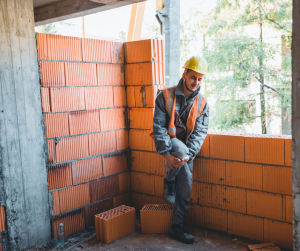
Georgia’s brutal heat makes a bad situation worse. OSHA has recognized the crisis and responded by launching a regional emphasis program specifically targeting heat-related injuries in Georgia.
What Types of Construction Accidents Happen Most in Atlanta?
The most common construction accidents in Atlanta fall into the four categories OSHA calls the “Fatal Four” plus a set of Atlanta-specific hazards that reflect the city’s particular construction environment.
The OSHA Fatal Four
- Falls: From scaffolding, rooftops, elevated platforms, and ladders; falls are the leading cause of construction fatalities in Georgia.
- Struck-by accidents: Falling tools, crane loads, and debris; especially dangerous on Atlanta’s dense urban sites where workers and pedestrians share close quarters.
- Caught-in/between accidents: Machinery entrapment and trench collapses are common across Atlanta’s heavy infrastructure and residential excavation work.
- Electrocutions: From unmarked power lines and improperly grounded equipment, a persistent hazard on sites with aging utility infrastructure.
Atlanta-Specific Construction Hazards
- Heat illness: OSHA’s Southeast regional emphasis program exists precisely because Georgia employers have a documented record of failing to provide adequate water, shade, and rest breaks in Atlanta’s brutal summer months
- Scaffold collapses on high-rise projects: These may occur in Midtown, Buckhead, and the Old Fourth Ward, where projects rise to dozens of stories in dense pedestrian areas.
- Atlanta’s rapid residential development: Growth in Gwinnett, Cobb, and Cherokee counties drives high volumes of excavation work, and trench collapses are among the most fatal construction events.
- Crane and heavy equipment accidents: May occur on BeltLine segments, transit projects, and commercial developments in close proximity to active roads and existing structures.
Who Can Be Held Liable for a Construction Accident in Georgia?
Liability in a Georgia construction accident rarely rests on one party alone. The most serious injuries involve a chain of responsibility running from the property owner down through general contractors, subcontractors, equipment suppliers, and manufacturers.
Identifying every link in that chain is one of the most important things a construction accident attorney does.
Property Owner or Developer
The entity that owns or is developing the project has a duty to ensure a reasonably safe site, even when construction work has been fully delegated to a general contractor.
Developers who create or knowingly permit dangerous conditions can be held directly and independently liable.
General Contractor
The GC holds site-wide responsibility for safety compliance under OSHA standards. When a general contractor fails to coordinate subcontractor safety, ignores documented hazards, or skips required protocols, that failure creates direct liability for any resulting injury.
Subcontractors
The party whose crew or equipment most directly caused the injury is often a subcontractor. Subcontractors carry their own independent insurance and liability exposure. In Atlanta construction site cases, multiple subcontractors are frequently named as defendants alongside the GC and developer.
Equipment Manufacturers
When defective scaffolding, a malfunctioning crane, or faulty fall protection equipment contributed to the injury, the manufacturer can be pursued under a product liability claim entirely separate from any negligence claim against the contractor. Defective equipment and contractor negligence can both be pursued simultaneously.
Can You Still Sue if You Were Partly at Fault for a Construction Accident?
Yes, you can still sue even if you are partially to blame for the construction accident. Georgia’s modified comparative fault rule allows an injured person to recover compensation as long as they are found to be less than 50 percent at fault.
Defense teams routinely try to shift blame onto the injured worker. An experienced Atlanta construction accident attorney knows how to counter those arguments with physical evidence, OSHA records, and expert testimony.
How Does a Construction Accident Lawsuit in Georgia Work?
A successful Georgia construction accident claim is built through a deliberate, time-sensitive investigation that begins the moment you engage an attorney.
Here is how Munley Law approaches these cases:
Immediate Evidence Preservation
Construction sites change fast. The equipment disappears, footage gets overwritten, and co-workers move on within days. Our construction accident attorney sends immediate legal preservation demands to every party on the site, locking down footage, inspection logs, and safety records before they are gone.
Independent Site Investigation
Munley Law conducts its own investigation of the accident site, independent of any internal actions by the contractor or property owner. We work with accident reconstruction experts, site safety specialists, and engineering consultants to build a factual record that holds up in a Georgia courtroom.
Identifying Every Liable Party
Atlanta construction sites rarely have just one responsible party. Construction accident liability typically runs through developers, general contractors, subcontractors, and equipment suppliers simultaneously. Munley Law traces that full chain and names every negligent party, because each additional defendant means additional insurance coverage available to you.
Building the Damages Case
Georgia has no statutory cap on compensatory damages in personal injury cases, which matters enormously when injuries are catastrophic. Munley Law works with medical experts, vocational consultants, and economists to document every loss.
We’ll fight for compensation for current and future medical care, lost earning capacity, permanent disability, and pain and suffering.
What Evidence Matters Most in an Atlanta Construction Accident Case?
The evidence that wins Atlanta construction accident cases is site-specific, time-sensitive, and tied directly to Georgia’s regulatory environment. Much of it disappears within days if no one acts to preserve it. 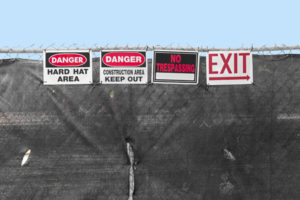
The evidence a Georgia construction accident lawyer collects includes:
- OSHA inspection records and citation history: If OSHA cited the contractor before your accident, that record establishes a pattern of known negligence. Georgia OSHA records are public and obtainable through federal OSHA or legal discovery.
- Site safety plans and daily logs: These are required on most Atlanta commercial projects. The plans and logs reveal whether known hazards were documented, ignored, or never addressed.
- Subcontractor agreements and insurance certificates: These identify every party with legal presence on the site and the coverage each carries.
- Equipment maintenance records: These are logs for crane accidents and scaffold collapses. They reveal if defective equipment was flagged and kept in service, which is particularly damaging to defendants.
- Site surveillance and drone footage: Atlanta construction sites increasingly use cameras for monitoring. This footage must be preserved immediately through a legal hold before it is overwritten.
- Co-worker witness statements: Collect them as early as possible, before any employer pressure affects recollection or cooperation.
- Medical records linking injury to specific site conditions: This documentation ties your diagnosis to the hazard, not just a general workplace event.
What Compensation Can an Atlanta Construction Accident Victim Recover?
Georgia law allows injured construction workers and their families to pursue full economic and non-economic compensation for construction accidents.
Victims may collect compensation for:
- Current and future medical expenses
- Lost wages
- Loss of earning capacity
- Pain and suffering
- Loss of enjoyment of life
- Disfigurement and permanent disability
- Wrongful death
Frequently Asked Questions About Atlanta Construction Accident Cases
How Long Do I Have To File A Construction Accident Lawsuit in Georgia?
Georgia’s statute of limitations for personal injury claims is two years from the date of the accident. Wrongful death claims carry the same two-year window, running from the date of death. Missing this deadline almost always permanently eliminates the right to sue.
Can I Sue the City If I Was Hurt On a Beltline or Atlanta City Infrastructure Project?
Potentially yes, but claims against the City of Atlanta or other Georgia government entities require an additional step. Under the Georgia Tort Claims Act, you must file a formal ante litem notice, which is a written notice of your intent to sue, with the appropriate government entity within 12 months of the injury. Missing that deadline can permanently bar your claim even if the standard two-year statute has not yet expired. Any accident on a public project in Atlanta requires immediate legal attention.
What OSHA Rules Apply To Atlanta Construction Sites, and How Do Violations Affect My Case?
Federal OSHA standards govern all construction sites in Georgia, including fall protection, scaffold safety, and trench and excavation requirements. When OSHA investigates and issues citations following an accident, those findings are not automatically admissible in civil court, but they become powerful evidence of negligence in the hands of an experienced attorney.
Can a Bystander Or Passerby File a Claim If Hurt By a Construction Accident In Atlanta?
Yes. Non-workers injured by construction site accidents (i.e., pedestrians struck by falling debris, drivers hit by construction equipment entering a roadway, or neighbors affected by a site collapse) can pursue personal injury claims against the contractor, developer, and any other party whose negligence caused their injuries.
Georgia law does not limit construction accident claims to employees. In Atlanta’s dense urban construction environment, bystander injuries are a documented and growing category of construction accident cases.
Hurt on an Atlanta Construction Site? Munley Law Is Ready to Fight
Atlanta’s construction boom is not slowing down, and neither is the pressure on contractors to move fast and cut corners on safety. When that calculation goes wrong, and a worker or bystander pays the price, the legal system offers real recourse. But only if you act before evidence disappears and deadlines pass.
Munley Law has three attorneys board-certified in trial advocacy by the National Board of Trial Advocacy. We are one of the few firms in the country with that designation. We know Georgia construction law, we know how to investigate complex multi-party site accidents, and we know how to hold every responsible party fully accountable for the harm they caused.
Contact Munley Law today. An Atlanta construction accident lawyer is ready to review your case and start protecting your rights.

Jack Cartwright
Jack Cartwright is a personal injury lawyer at Munley Law. Jack was named by Best Lawyers in America as “Ones to Watch” in 2025 and 2026. He was also named a Georgia Super Lawyers Rising Star in 2024. In 2021, Jack received the Legal Aid Society’s Pro Bono Publico Award. He currently serves on the board of the Stonewall Bar Association of Georgia.