Why Do People Brake Check in Atlanta Traffic?
Brake checking in Atlanta traffic is something many drivers have seen, and some have experienced firsthand. It happens when a driver suddenly slams on their brakes to scare or teach the car behind them a lesson. On busy highways like I-285 and I-85, that split-second decision can cause a serious crash.
If you were hurt in a rear-end crash caused by intentional braking, this issue ties directly into fault and liability. At Munley Law, our Atlanta car accident lawyers have handled cases involving this type of aggressive driving behavior and can assist if you have a claim, too.
Contact a Car Accident Lawyer at Munley Law
 Call Us At 844-686-5397
 What Is Brake Checking?
Brake checking happens when a driver deliberately hits the brakes to intimidate the driver behind them. It’s different from slowing down for traffic, reacting to a hazard, or stopping for safety reasons. 
The key difference is intent. The driver is not responding to road conditions but reacting to another motorist.
Georgia traffic law requires drivers to avoid following another vehicle “more closely than is reasonable and prudent” under O.C.G.A. § 40-6-49. Georgia law also prohibits aggressive driving when someone commits a traffic violation with the intent to harass or intimidate another driver under O.C.G.A. § 40-6-397.
If someone slams on the brakes to scare the car behind them, that conduct can cross the line into brake checking and aggressive driving that Georgia law recognizes as unlawful.
Why Do People Brake Check in Atlanta Traffic?
Atlanta’s congested highways and long commutes can lead to frustration behind the wheel, but irritation never justifies dangerous conduct.
From a psychological standpoint, brake checking often comes from:
- Anger at being tailgated
- A desire to “teach a lesson.”
- Road rage triggered by merging or lane changes
- Feeling disrespected or cut off
On busy roads, traffic moves fast and stops suddenly. Drivers who already feel stressed may react impulsively, and slamming on the brakes feels like a quick way to regain control.
Is Brake Checking Illegal in Georgia?
It depends on the circumstances, but intentional brake checking may violate more than one traffic law.
First, Georgia prohibits aggressive driving when a driver commits a traffic offense with the intent to intimidate or harass another person. Second, reckless driving involves driving with reckless disregard for others’ safety.
If a driver intentionally slams on the brakes in moving traffic with no safety reason, law enforcement may treat that behavior as aggressive or reckless driving.
Whether a citation is issued affects a criminal case, but civil injury claims are separate. A driver can still be held financially responsible for a crash even if no ticket was written.
Who is At Fault in an Atlanta Brake Check Rear End Accident?
In most rear-end collisions, the rear driver is presumed at fault because drivers are expected to leave enough space to stop safely. However, that presumption is not absolute.
In a brake-check rear-end accident in Atlanta, the rear driver may argue that the front driver intentionally caused the crash. That shifts the analysis.
So, who is at fault in a brake check accident that Georgia courts evaluate?
Fault depends on the evidence. If the front driver slammed on the brakes for no reason and intended to intimidate the rear driver, that conduct may reduce or eliminate the rear driver’s liability. Georgia follows a modified comparative fault system. Under O.C.G.A. § 51-12-33, a person can recover damages if they are less than 50% at fault.
That means a rear driver could still recover compensation if the brake-checking driver bears the majority of responsibility.
These cases often rely on proof of intent.
Who is Liable in a Brake-Checking Rear-End Collision in Georgia?
In Georgia rear-end crashes, the law often starts with the assumption that the rear driver was following too closely. Insurance companies rely on that presumption when deciding fault.
But when brake checking is involved, liability is not automatic.
Evidence that can rebut the presumption includes:
- Dashcam footage brake check claim showing sudden, unnecessary braking
- Witness statements describing road rage
- Traffic camera video
- Prior aggressive gestures or chasing behavior
Intent can shift the focus from following distance to whether the front driver created a sudden hazard.
At Munley Law, we’ve handled cases where video showed a driver glance in the mirror and then brake hard with no traffic ahead. That kind of evidence quickly reshapes a claim.
How is a Brake Check Car Accident Claim Proven?
A brake check car accident in Georgia requires more than simply saying, “They stopped too fast.” You must show that: 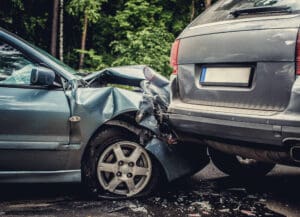
- The braking was unnecessary for the traffic conditions
- The driver intended to intimidate or obstruct
- The sudden stop caused the crash
- You suffered damages
The prevalent use of dashcams has changed how these cases are evaluated. Clear video can show speed, following distance, and traffic conditions in real time. Without footage, cases often rely on witness statements and accident reconstruction to piece together what happened.
In past motor vehicle cases, Munley Law has recovered significant results, including a $1.9 million verdict for a family injured by a teenage driver and a $1 million settlement in a head-on collision involving unsafe passing. While every case is different, these outcomes show how dangerous driving conduct can translate into civil liability.
Contributory Fault in Brake-Checking Car Accidents
Insurance companies often try to shift part of the blame to the rear driver. They may argue the driver behind was speeding, following too closely, or not paying attention.
In Georgia, fault can be divided between drivers. That means the insurer may claim both drivers contributed to the crash. If the rear driver was following too closely, that may reduce the amount of compensation available. If the lead driver intentionally slammed on the brakes, that conduct can shift a larger share of liability to them.
Early documentation can make a difference after a suspected brake check crash. Photos of the scene, skid marks, and traffic conditions can help show what happened before impact. Nearby cameras may have recorded the event, and dashcam footage should be preserved immediately. Witnesses can also provide valuable information.
In many of these cases, small details help explain how the crash unfolded and who should be held responsible.
Why Brake Checking and Road Rage Often Overlap
Brake checking rarely happens in isolation. It often follows road rage that escalates from honking, yelling, or aggressive lane-blocking. That pattern fits within broader concerns about brake checking and aggressive driving in Georgia.
The legal focus remains the same: was the conduct intentional, and did it cause harm?
No Fee Unless We Win
Talk With Munley Law About a Brake Check Crash
Brake checking in Atlanta traffic can be dangerous and unlawful. When it leads to injury, the issue becomes legal responsibility, not frustration.
Munley Law handles serious motor vehicle injury cases across Georgia. Our attorneys have received recognition from organizations such as Super Lawyers, Best Lawyers, and Martindale-Hubbell for their trial work. We offer free consultations, and there is no fee unless we recover compensation for you.
To discuss a possible brake check rear-end accident Atlanta claim, contact our office and speak with a lawyer about your options.

Marion Munley
Marion Munley has been practicing personal injury law for nearly 40 years. She is triple board-certified by the National Board of Trial Advocacy for Truck Accident Law, Civil Trial Law, and Civil Practice Advocacy. She currently serves as Vice President of the American Association for Justice, an organization dedicated to safeguarding victims’ rights. Marion has won many multimillion-dollar recoveries for her clients, including one of the largest trucking accident settlements in history. She has been named a Top 10 Super Lawyer in Pennsylvania since 2023, a Best Lawyer in America, and was recently inducted to the Lawdragon Hall of Fame.
Posted in Car Accidents.