




Medical Malpractice statistics in the United States
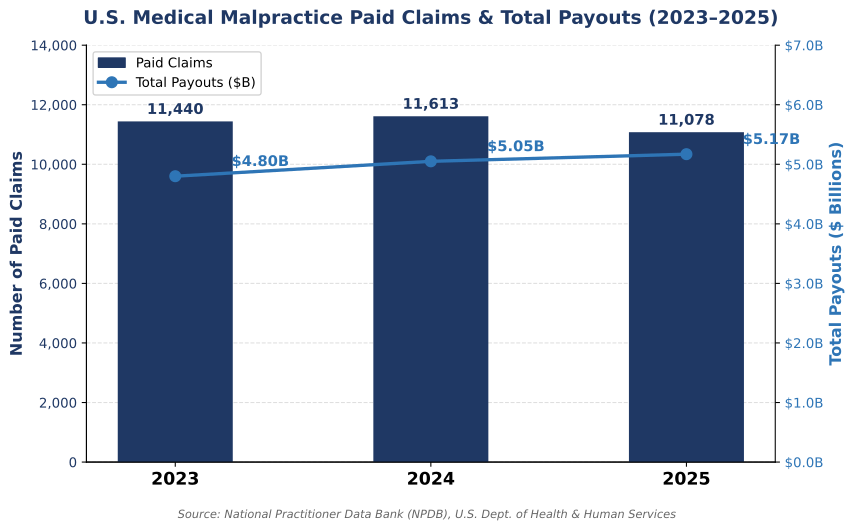
According to 2026 AMA data, approximately 29% of physicians have been sued for medical malpractice during their careers. An estimated 17,000 medical malpractice lawsuits are filed in the United States each year requiring the services of a medical malpractice lawyer, with $5.02 billion paid out in malpractice settlements in 2024 alone, according to the National Practitioner Data Bank.
Estimates of annual deaths attributable to medical errors in the US range from 44,000 to over 250,000, depending on the study and methodology. The lower figure comes from a 1999 Institute of Medicine report; the higher estimate from a 2016 Johns Hopkins study that has been widely cited but also challenged on methodological grounds. Medical errors are not classified as an official cause of death in CDC reporting, so the true figure remains uncertain.
This research compiles the most current medical malpractice statistics, drawing from the National Practitioner Data Bank, the American Medical Association, peer-reviewed studies, and federal data sources.
Medical Malpractice Events in 2025
- Nearly 1 in 3 physicians have been sued for malpractice during their careers (29%, per AMA 2026 data)
- An estimated 17,000 medical malpractice lawsuits are filed each year in the US
- $5.02 billion was paid in malpractice settlements in 2024 from 11,451 reported claims (NPDB)
- Estimated deaths from medical errors range from 44,000 to over 250,000 per year, depending on the study
- A 2023 Johns Hopkins study found that diagnostic errors alone cause approximately 795,000 deaths or permanent disabilities annually
- The medical liability system costs an estimated $55.6 billion per year (approximately $82 billion in 2025 dollars)
- Nearly 4 out of 5 malpractice claims do not result in a payment to the claimant
- Diagnostic errors are the most costly category of malpractice claims, accounting for about 1 in 3 payout dollars
- The average malpractice payout is approximately $439,000 per claim (2024); the median is significantly lower
- 45% of physicians over age 55 have been sued at least once (AMA 2026)
How Common Is Medical Malpractice?
According to the AMA’s 2026 Medical Liability Claim Frequency report, approximately 29% of physicians have been sued for malpractice at some point in their career. For physicians over age 55, that number rises to 45%, down from earlier estimates of 50% as younger physicians entering practice face lower claim frequency rates overall.
An estimated 17,000 medical malpractice lawsuits are filed in the United States each year. A nationwide analysis published in the New England Journal of Medicine found that nearly 4 out of 5 claims do not result in a payment to the claimant. However, many valid claims settle before trial, and the high dismissal rate also reflects the difficulty patients face in proving malpractice, not necessarily the absence of harm.
In 2024, the NPDB recorded 11,451 paid claims totaling $5.02 billion in settlements and judgments.
What Percentage of Medical Malpractice Cases Are Won?
Medical malpractice cases are among the most difficult personal injury claims to win. A nationwide analysis published in the New England Journal of Medicine found that 78% of all claims did not result in a payment to the claimant.
This figure reflects the high burden of proof in malpractice cases, which typically require expert medical testimony. Many cases with genuine merit settle before reaching a verdict. The average settlement amount for paid claims in 2024 is approximately $439,000.
How Many Deaths Are Caused by Medical Errors?
Estimates of annual deaths from medical errors vary widely depending on the study and methodology:
- The 1999 Institute of Medicine report “To Err Is Human” estimated between 44,000 and 98,000 deaths per year from preventable medical errors.
- A 2016 study by Johns Hopkins researchers (Makary & Daniel), published in The BMJ, estimated more than 250,000 deaths per year. The authors argued this would make medical errors the third leading cause of death in the US, behind heart disease and cancer.
- A 2023 study by researchers at the Johns Hopkins Armstrong Institute, published in BMJ Quality & Safety, found that diagnostic errors alone cause approximately 795,000 deaths or permanent disabilities in the US each year — including an estimated 371,000 deaths and 424,000 cases of permanent disability. This is the most current major peer-reviewed estimate available.
The 2016 Johns Hopkins figure has been subject to significant methodological criticism. Researchers writing in BMJ Quality & Safety argued that the estimate was based on extrapolation from smaller, older studies to the entire US hospital population and that the “third leading cause of death” framing overstates what the data support. Medical errors are not classified as an official cause of death in the CDC or ICD coding systems, so this ranking does not appear in any official government statistics.
Regardless of the exact number, there is a broad consensus among researchers that preventable medical errors cause tens of thousands of deaths annually in the US.
What Is the Average Medical Malpractice Settlement?
The average medical malpractice settlement is approximately $439,000 per paid claim in 2024, up from $420,000 in 2023. A small number of very large verdicts ($10 million+) pull the average up significantly, so the median payout is considerably lower. Of the 11,451 claims paid in 2024, over 3,200 settled for less than $100,000, while only about 1,300 exceeded $1 million.
Payouts vary depending on the severity of the injury, the type of error, and the state where the claim is filed. Cases involving death or severe permanent injury consistently result in the largest payments.
The broader cost of the medical liability system, including defensive medicine, was estimated at $55.6 billion per year in a Harvard School of Public Health study (approximately $82 billion in 2025 dollars, adjusted for inflation). This remains the most recent comprehensive estimate available.
Of that $55.6 billion, $45.6 billion was attributed to defensive medicine, where physicians order additional tests and procedures to reduce their liability risk. The concept of defensive medicine costs is debated, as some researchers argue that many of these additional tests provide genuine clinical value.
What Are the Most Common Types of Medical Malpractice?
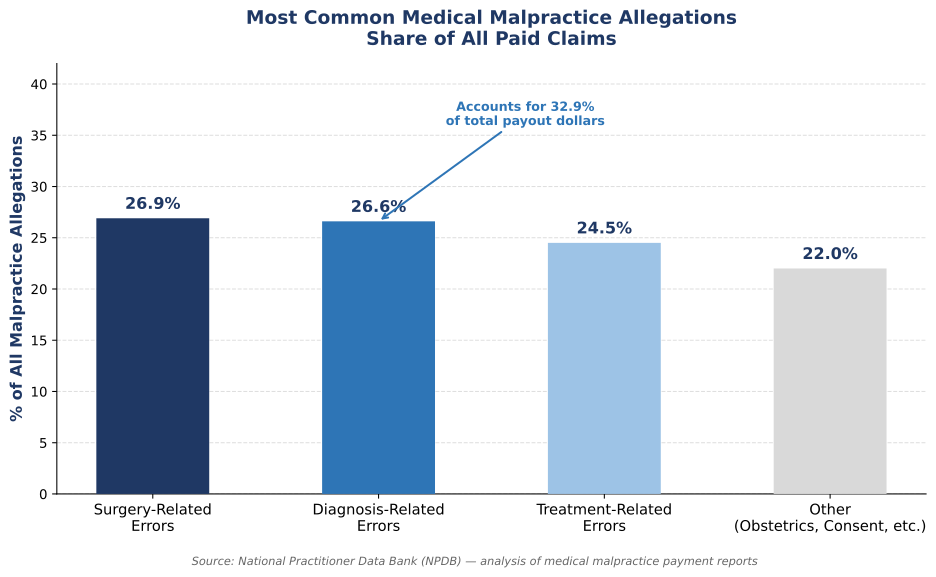
According to an analysis of nearly two decades of NPDB malpractice payment reports, the most common allegation types in paid malpractice claims are:
- Diagnosis-related errors (misdiagnosis, delayed diagnosis, failure to diagnose): approximately 26.6% of allegations, and the largest share of total payments (32.9%)
- Surgery-related errors (wrong-site surgery, retained instruments, nerve damage): approximately 26.9% of allegations
- Treatment-related errors (medication errors, wrong treatment, delayed treatment): approximately 24.5% of allegations
- Obstetrics-related injuries (birth trauma, cerebral palsy, shoulder dystocia)
- Failure to obtain informed consent
Misdiagnosis alone affects an estimated 12 million Americans per year in outpatient settings, according to a study published in BMJ Quality & Safety. Approximately half of these misdiagnoses have the potential to cause harm. A more recent 2023 study from the Johns Hopkins Armstrong Institute, also published in BMJ Quality & Safety, found that serious diagnostic errors — those resulting in death or permanent disability — affect approximately 795,000 Americans annually.
Which Medical Specialties Face the Most Malpractice Claims?
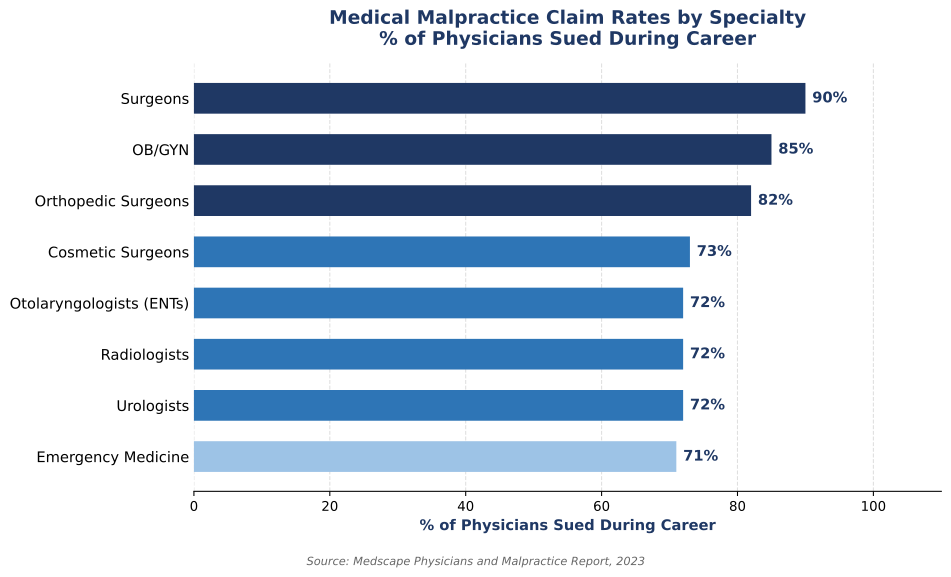
Not all physicians face equal risk. According to the Medscape Malpractice Report (2023), which surveyed thousands of physicians, the specialties most likely to have faced a malpractice suit during their career are:
- Surgeons: 90%
- OB/GYN and women’s health specialists: 85%
- Orthopedic surgeons: 82%
- Cosmetic surgeons: 73%
- Otolaryngologists (ENTs): 72%
- Radiologists: 72%
- Urologists: 72%
- Emergency medicine physicians: 71%
The AMA’s 2026 Medical Liability Claim Frequency report, which tracks formal malpractice claims specifically, puts career rates somewhat lower: 53% for general surgeons and 60% for OB/GYN physicians. The difference likely reflects how each survey defines a claim — Medscape surveys include any lawsuit or legal involvement, while AMA data tracks formal malpractice payments. At the other end, dermatologists and psychologists face the lowest rates of malpractice claims.
How Much Does Medical Malpractice Insurance Cost?
Medical malpractice insurance premiums vary significantly by specialty and location. Premiums have been rising for seven consecutive years, representing the longest sustained upward trend since the early 2000s, according to the AMA’s May 2026 premium analysis. In 2025, 39.9% of reported premiums increased year-over-year.
Examples of 2024 manual premiums by specialty and region:
- OB/GYN in Miami-Dade, FL: $243,988 per year
- OB/GYN in Philadelphia, PA: $122,906 per year
- General surgery in Miami-Dade, FL: $243,988 per year
- General surgery in Philadelphia, PA: $94,361 per year
- Internal medicine in Miami-Dade, FL: $59,736 per year
- Internal medicine in Los Angeles, CA: $8,274 per year
Florida, New York, Illinois, and Pennsylvania consistently have the highest premiums. California’s premiums are notably lower, likely due to its cap on noneconomic damages. In 2024, Pennsylvania saw 94.1% of reported premiums increase, with the largest single increase at 22.5%.
Do Medical Errors Affect All Patients Equally?
Research consistently shows that medical errors and adverse outcomes do not affect all patient populations equally. Racial and ethnic minorities, patients with limited English proficiency, and those with lower socioeconomic status experience higher rates of preventable harm.
Key findings from peer-reviewed research:
- Black women die from pregnancy-related complications at approximately 3 times the rate of white women (44.8 vs. 14.2 deaths per 100,000 live births), according to CDC final 2024 data released in March 2026. These disparities persist even after controlling for income and education level.
- A study of over 100,000 Medicare discharges found that Black patients had a 34% higher rate of hospital-acquired infections and a 29% higher rate of adverse drug events compared to white patients in the same hospitals.
- The Agency for Healthcare Research and Quality’s 2023 report found that racial and ethnic minorities received worse care on approximately 40% of quality measures compared to white patients.
These disparities in patient safety outcomes are relevant to medical malpractice because they indicate that certain populations face an elevated risk of the types of errors and adverse events that give rise to malpractice claims.
How Does Medical Malpractice Vary by State?
Medical malpractice laws, claim rates, and payouts vary significantly by state. States with tort reform caps on damages tend to have lower average payouts, while states without caps often see higher settlements and verdicts.
Medical Malpractice Payouts by State
Key state-level variations:
- At least 31 states limit noneconomic damages in medical liability cases
- States with damage caps tend to have lower malpractice insurance premiums
- Statute of limitations ranges from 1 to 6 years depending on the state
- Pennsylvania follows a 2-year statute of limitations for medical malpractice claims, with a 7-year statute of repose
If you believe you or a family member may have been harmed by a medical error, a qualified medical malpractice attorney at Munley Law can help evaluate your case. Most medical malpractice attorneys work on a contingency fee basis, meaning you pay nothing unless your case is successful.
Sources
All statistics in this article are drawn from the following primary sources. Where figures have been updated from earlier versions of this article, the update date and source are noted.
- National Practitioner Data Bank (NPDB) — Data Analysis Tool — U.S. Department of Health and Human Services, HRSA. Annual Medical Malpractice Payment Report data for 2023, 2024, and 2025. Figures include total paid claims and total dollar amounts. Data accessed June 2026.
https://www.npdb.hrsa.gov/analysistool/ - American Medical Association — Medical Liability Claim Frequency Report (2026) — Hardiman A. Medical Liability Claim Frequency Among U.S. Physicians. AMA Policy Research Perspectives. Published April 2026. Source for: 29% career malpractice rate; 45% of physicians over age 55 sued; annual claim rate of 1.8% in 2024.
https://www.ama-assn.org/about/ama-research/medical-liability-market-research - American Medical Association — Medical Liability Insurance Premium Analysis (2026) — AMA. ‘For 7th straight year, medical liability insurance premiums climb.’ Published May 4, 2026. Source for: seven consecutive years of rising premiums; state-level premium figures; 39.9% of premiums increased in 2025.
https://www.ama-assn.org/practice-management/sustainability/7th-straight-year-medical-liability-insurance-premiums-climb - CDC National Center for Health Statistics — Maternal Mortality Rates in the United States, 2024 — Hoyert DL. Maternal Mortality Rates in the United States, 2024. NCHS Health E-Stats. Released March 2026. Source for: Black women 44.8 deaths per 100,000 live births; White women 14.2 per 100,000.
https://www.cdc.gov/nchs/data/hestat/hestat113.htm - Newman-Toker DE, et al. — BMJ Quality & Safety (2023) — Newman-Toker DE, et al. Burden of serious harms from diagnostic error in the USA. BMJ Quality & Safety. Published July 17, 2023. Source for: 795,000 Americans die or are permanently disabled by diagnostic errors annually (371,000 deaths; 424,000 permanent disabilities).
https://qualitysafety.bmj.com/content/32/12/685 - Medscape Malpractice Report (2023) — Medscape. Physicians and Malpractice Report 2023. Source for: career malpractice rates by specialty (surgeons 90%, OB/GYN 85%, orthopedic surgeons 82%, etc.). No 2024 or 2025 update available as of June 2026.
https://www.medscape.com/resource/medical-malpractice - Institute of Medicine — To Err Is Human (1999) — Kohn LT, Corrigan JM, Donaldson MS, eds. To Err Is Human: Building a Safer Health System. Washington, DC: National Academy Press; 1999. Source for: 44,000–98,000 preventable deaths per year estimate.
- Makary MA, Daniel M — The BMJ (2016) — Makary MA, Daniel M. Medical error — the third leading cause of death in the US. BMJ. 2016;353:i2139. Source for: 250,000+ deaths per year estimate. Note: this figure has been subject to methodological criticism.
https://www.bmj.com/content/353/bmj.i2139 - Mello MM, et al. — Health Affairs (2010) — Mello MM, Chandra A, Gawande AA, Studdert DM. National Costs Of The Medical Liability System. Health Affairs. 2010;29(9):1569–1577. Source for: $55.6 billion annual cost of the medical liability system (2008 data); ~$82 billion in 2025 dollars, inflation-adjusted.
https://www.healthaffairs.org/doi/10.1377/hlthaff.2009.0807 - Singh H, et al. — BMJ Quality & Safety (2014) — Singh H, et al. The frequency of diagnostic errors in outpatient care: estimations from three large observational studies involving US adult populations. BMJ Quality & Safety. 2014;23(9):727–731. Source for: 12 million Americans affected by outpatient diagnostic errors annually.
- Agency for Healthcare Research and Quality — 2023 National Healthcare Quality and Disparities Report — AHRQ. National Healthcare Quality and Disparities Report 2023. Source for: racial and ethnic minorities received worse care on approximately 40% of quality measures compared to white patients.
https://www.ahrq.gov/research/findings/nhqrdr/index.html - New England Journal of Medicine — Malpractice litigation study — Studdert DM, et al. Claims, Errors, and Compensation Payments in Medical Malpractice Litigation. N Engl J Med. 2006;354:2024–2033. Source for: 78% of malpractice claims do not result in payment to the claimant.
Note: Dollar figures from the NPDB are reported in millions in the Data Analysis Tool. All conversions to billions in this article reflect standard rounding. The $55.6 billion medical liability system cost is from 2008 data; the ~$82 billion figure represents an inflation adjustment to 2025 dollars and is not a figure published by any primary source.

Marion Munley
Marion Munley has been practicing personal injury law for nearly 40 years. She is triple board-certified by the National Board of Trial Advocacy for Truck Accident Law, Civil Trial Law, and Civil Practice Advocacy. She currently serves as Vice President of the American Association for Justice, an organization dedicated to safeguarding victims’ rights. Marion has won many multimillion-dollar recoveries for her clients, including one of the largest trucking accident settlements in history. She has been named a Top 10 Super Lawyer in Pennsylvania since 2023, a Best Lawyer in America, and was recently inducted to the Lawdragon Hall of Fame.
 Call us at (844) 686-5397