Are Uber and Lyft Drivers in Pittsburgh Held to a Higher Legal Standard Than Regular Motorists?
Uber and Lyft drivers transporting passengers in Pittsburgh are required to operate their vehicles safely and responsibly, just like every other driver on Pennsylvania roads.
The state regulates rideshare companies as Transportation Network Companies, not as common carriers. This means that the higher duty the law places on taxis and Port Authority buses does not automatically attach to the rideshare driver who picks you up in Oakland or on the South Side.
What changes after a rideshare crash is not the standard of care. It is the insurance behind the driver, and the question of who you can hold responsible.
What Does a Higher Legal Standard Actually Mean?
 A higher legal standard refers to the common carrier doctrine. Under Pennsylvania law, businesses that hold themselves out to carry the public for a fee, traditional taxis and buses among them, have long owed their passengers the highest degree of care.
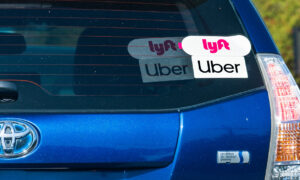
Uber and Lyft spent years arguing they are technology platforms rather than transportation companies, and Pennsylvania’s rideshare law, Act 164 of 2016, created a separate category for them: the Transportation Network Company.
Because a TNC driver is not classified as a common carrier, the ordinary negligence standard applies. The driver who runs a red light coming off the Fort Pitt Bridge is judged the same way any other driver would be. Did they act as a reasonably careful person behind the wheel? That is the question, and it is the same question a jury would ask about any Pittsburgh motorist.
The distinction is important because rideshare driving carries its own pressures. A driver rushing to close out one fare and grab the next, or glancing at the app for the next pickup, can fall below the ordinary standard just as easily as any distracted commuter, and the law treats the lapse the same way.
If the Standard is the Same, What Changes After a Pittsburgh Rideshare Crash?
The insurance changes based on the driver’s app status at the time of the crash.
Act 164 built a tiered system:
- When the app is off, the driver’s personal auto policy applies, just as for any motorist on the Parkway East.
- When the app is on and the driver is waiting for a request, Uber and Lyft provide limited liability coverage of $50,000 per person and $100,000 per accident, plus $5,000 in first-party medical benefits.
- Once the driver accepts a trip and has a passenger, the companies carry at least $1 million in liability coverage. This broader policy is intended to protect passengers, pedestrians, cyclists, and occupants of other vehicles.
Therefore, a wreck on I-376 during the evening rush can fall under completely different coverage depending on whether the driver had picked anyone up yet.
Pennsylvania is also a “choice” no-fault state, meaning an injured passenger’s medical bills often run first through available personal injury protection benefits before the larger liability question is resolved. Untangling which coverage leads, and in what order, is a priority after a rideshare crash, and it is rarely as simple as the companies make it sound.
Can You Hold Uber or Lyft Itself Responsible, Not Just the Driver?
Usually not directly, and that is by design. Pennsylvania’s rideshare law treats drivers as independent contractors, not employees, shielding the companies from the vicarious liability an employer would normally bear for a worker’s mistake.
In practice, the $1 million policy is where most passenger claims are resolved when the driver was on an active trip. The company itself can still be pursued when its own conduct is at fault, for instance, if it failed to screen or monitor a driver it allowed on the road. These claims are harder. They depend on the company’s decisions before the crash, not the driver’s split-second error on Liberty Avenue.
A Pittsburgh rideshare accident lawyer will look closely at the driver’s app status and trip record, because these records often determine which insurance applies and how much money is available to an injured person. Where a claim against the company itself has traction, it usually centers on negligent hiring or retention; whether Uber or Lyft kept a driver on the road, it should have screened them off.
The trip and telematics data the apps quietly collect can also show speed and movement in the seconds before impact, which sometimes carries more weight than either side’s account of what happened.
Why Does Pittsburgh See So Many Rideshare Trips in the First Place?
Pittsburgh is a city of hills, rivers, bridges, and two major tunnels, and parking in Oakland, downtown, and the South Side is scarce, so residents and visitors lean on Uber and Lyft instead of driving. Students at the University of Pittsburgh and Carnegie Mellon make Oakland one of the region’s busiest rideshare corridors, and East Carson Street fills with app pickups every weekend night.
Trips to and from Pittsburgh International Airport in Findlay Township add thousands more, and downtown game nights at Acrisure Stadium, PNC Park, and PPG Paints Arena send rideshare demand spiking while pickup zones overflow. Add the Liberty and Squirrel Hill tunnels, where traffic backs up daily, and the volume of trips on tight, unpredictable roads climbs fast. 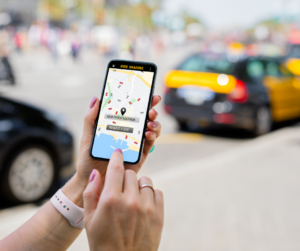
The city also has unusual roots in the industry. Uber launched its first self-driving car pickups here in 2016, drawing on Carnegie Mellon’s robotics program, which kept Pittsburgh at the center of the rideshare story for years. More trips on crowded, complicated streets means more crashes, and more questions about which rules apply.
What Should You Do After a Rideshare Accident in Pittsburgh?
Document the ride, not just the crash. Take a screenshot of the app showing the trip and the driver, since the app status determines which insurance tier applies. Get the names and insurance details for every driver involved, photograph the scene and the vehicles, and make sure the crash is reported so there is an official record with the responding police department.
See a doctor even if you feel only shaken, since some injuries surface days later. If a claim follows, it may be filed in the Allegheny County Court of Common Pleas, and the trip record you saved in the first few minutes can become one of the most important pieces of evidence in the case.
Be careful about giving a recorded statement to the rideshare company’s insurer before you understand which policy applies, because what you say early on can be used to limit the claim later.
A rideshare crash adds a layer of confusion most people never expect, with extra insurance policies and an out-of-state company standing behind the person who hit you. Knowing that the driver is held to the same standard as anyone else, and that the real fight is often over which policy applies, makes that confusion easier to manage. Munley Law has fought for injured Pennsylvanians for nearly 70 years and represents clients across Allegheny County. Call now for a free consultation.

Marion Munley
Marion Munley has been practicing personal injury law for nearly 40 years. She is triple board-certified by the National Board of Trial Advocacy for Truck Accident Law, Civil Trial Law, and Civil Practice Advocacy. She currently serves as Vice President of the American Association for Justice, an organization dedicated to safeguarding victims’ rights. Marion has won many multimillion-dollar recoveries for her clients, including one of the largest trucking accident settlements in history. She has been named a Top 10 Super Lawyer in Pennsylvania since 2023, a Best Lawyer in America, and was recently inducted to the Lawdragon Hall of Fame.
 Call us at (844) 686-5397
 Posted in Car Accidents.