



The short answer is yes, you can still pursue a personal injury claim if a hit and run driver isn’t found. The key is understanding where your compensation actually comes from.
When a hit and run driver is never identified, you cannot file a claim against their insurance or sue them directly. But that does not mean you have no claim. It means your claim runs through a different channel: your own auto insurance policy, and in some cases, third parties connected to the crash.
Injured in a hit and run accident in Bethlehem? Our car accident attorneys can help. Contact Munley Law today to schedule a free consultation. There is no fee unless we win your case.
Can I Recover Through My Own Uninsured Motorist Coverage If the Driver Is Never Found?
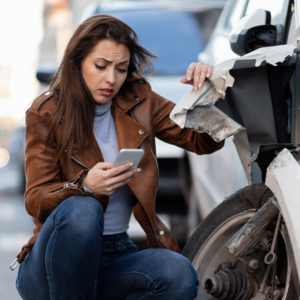 Pennsylvania law classifies an unidentified hit and run driver as an uninsured motorist. This is the legal hook that makes your own UM coverage available to you even though you never have a name or policy number for the at-fault driver.
What this means practically: if you purchased uninsured motorist (UM) coverage as part of your Pennsylvania auto policy, you can file a UM claim with your own insurer. Your insurer then steps into the role the at-fault driver’s insurer would have played by evaluating liability, reviewing your damages, and negotiating a settlement.
UM coverage can compensate you for:
- Medical expenses, including emergency care, hospitalization, surgery, and ongoing treatment
- Lost wages and reduced earning capacity if your injuries affect your ability to work
- Pain and suffering and other non-economic damages
- Future care costs if your injuries require long-term treatment or rehabilitation
However, Pennsylvania does not require drivers to carry UM coverage. Insurers are required to offer it, and drivers must affirmatively reject it in writing if they do not want it. However, many people sign those rejection forms without fully understanding what they are giving up.
If you declined UM coverage when you purchased your policy, you cannot retroactively add it after an accident. Before assuming you do not have UM coverage, have our Bethlehem car accident attorney review your full policy, as coverage may exist you are unaware of, including stacked coverage across multiple vehicles.
Stacked vs. Unstacked UM Coverage
If you have more than one vehicle on your policy, Pennsylvania gives you the option to “stack” your UM coverage, meaning the coverage limits from each vehicle combine into a larger pool. For example, if each vehicle carries $50,000 in UM coverage and you have three vehicles, stacked coverage would give you up to $150,000 in available coverage for a single claim.
Unstacked coverage limits you to the per-vehicle amount regardless of how many vehicles are on the policy. If you stacked your coverage, this distinction matters enormously in serious injury cases. Again, this is something worth verifying carefully, because many policyholders do not know which option they selected.
 Call Us At 844-686-5397
 Medical Benefits Will Cover Your Medical Treatment
Separate from UM coverage, your Pennsylvania auto policy includes Medical Benefits (MedPay) or Personal Injury Protection (PIP) coverage. Unlike UM coverage, Medical Benefits are mandatory under Pennsylvania law; every auto policy must include at least $5,000 in medical coverage.
MedPay pays for your medical treatment regardless of fault and regardless of whether the at-fault driver is ever identified. They apply immediately after the accident and cover:
- Emergency room treatment
- Ambulance costs
- Hospitalization and surgical expenses
- Follow-up care, physical therapy, and specialist visits
- Prescription costs related to the accident
Medical Benefits do not cover lost wages or pain and suffering. But they are your first line of financial protection and can keep medical bills from compounding while your UM claim is being evaluated.
How Insurers Evaluate UM Claims in Bethlehem Hit and Run Cases
Filing a UM claim against your own insurer is not always straightforward. Even though your insurer is your own company, it has a financial interest in limiting what it pays. In hit and run cases specifically, there are several points where insurers commonly challenge or reduce claims.
The “Physical Contact” Requirement
Some UM policies include a physical contact requirement, meaning the hit and run vehicle must have made actual physical contact with your vehicle or your body for a UM claim to be valid. This requirement exists to prevent fraudulent claims. Without it, someone could theoretically fabricate a hit and run that never occurred.
If your accident was a forced-off-the-road situation where a driver caused you to crash without striking your vehicle, your insurer may attempt to deny the UM claim on physical contact grounds. Pennsylvania courts have addressed this issue, and the outcome depends heavily on the specific policy language and the facts of the accident. This is an area where legal representation makes a significant difference.
Timely Reporting Requirements
Most UM policies require you to report a hit and run accident to your insurer promptly – sometimes within 24 hours, a few days, or simply “as soon as practicable”. Failing to report in time can give your insurer grounds to deny or reduce your claim.
Reporting the accident to the police is a prerequisite. Insurers will request the police report as part of the claims process, and the absence of one is a red flag that will prompt them to question the validity of the claim.
Causation and Injury Disputes
In any UM claim, your insurer will evaluate whether your injuries were actually caused by the accident — and whether the claimed severity is consistent with the nature of the crash. Insurers may order independent medical examinations (IMEs), request surveillance, or challenge the necessity of ongoing treatment.
This is the same adversarial dynamic that exists in any third-party liability claim, except here it is your own insurer doing the scrutinizing. Having an attorney manage communications with your insurer and having thorough, consistent medical documentation is critical to protecting the value of your claim.
When Third-Party Liability May Apply
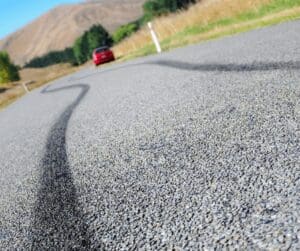 In some hit and run cases, a party other than the fleeing driver may share legal responsibility for the accident. These avenues do not require identifying the driver, and they are worth investigating depending on the circumstances.
Dangerous Road Conditions
If a road defect contributed to the accident — a malfunctioning traffic signal, inadequate lighting, obscured signage, a pothole, or a poorly designed intersection — the government entity responsible for that road may bear liability. In Bethlehem, this could involve the City, Northampton County, or PennDOT, depending on the road involved.
Important: Claims against government entities in Pennsylvania require filing a formal notice within six months of the accident under the Pennsylvania Political Subdivision Tort Claims Act. This deadline is significantly shorter than the standard two-year statute of limitations for personal injury claims. Missing it can permanently bar your claim.
Dram Shop Liability
Pennsylvania’s Dram Shop Act (47 P.S. § 4-493) imposes liability on licensed alcohol vendors who serve alcohol to a visibly intoxicated person who later causes an accident. If evidence — witness accounts, surveillance footage, or the circumstances of the crash itself — suggests the hit and run driver may have been intoxicated, the bar or restaurant that served them could be a liable party even if the driver is never identified.
Employer Liability for Commercial Vehicles
If the vehicle that struck you appears to be a commercial vehicle such as a delivery truck, a marked company vehicle, or any vehicle operated in the course of employment — the driver’s employer may be liable under respondeat superior, even if the driver’s identity is unknown. Commercial vehicle involvement can sometimes be established through witness descriptions, surveillance footage, or physical evidence left at the scene.
The Statute of Limitations on Bethlehem Hit and Run Accident Claims
Pennsylvania’s general statute of limitations for personal injury claims is two years from the date of the accident. For hit and run cases, this clock starts running on the date of the crash, regardless of whether the driver is ever identified. However, different rules may apply when the injured party is a minor. In many cases, the statute of limitations is paused until the child turns 18, potentially extending the time available to file a claim to age 20.
Two years to file a personal claim sounds like ample time, but in hit and run cases, evidence degrades quickly. Surveillance footage is typically overwritten within days to weeks. Witnesses become harder to locate and their memories less reliable. Physical evidence at the scene disappears. The sooner an attorney can begin investigating, the stronger your claim will be, whether it ultimately runs through UM coverage, a third-party claim, or both.
Frequently Asked Questions About Hit and Run Claims in Bethlehem, PA
Does My UM Coverage Apply If the Hit and Run Driver is Never Identified?
Yes. Pennsylvania treats an unidentified hit and run driver as an uninsured motorist, which triggers your UM coverage, provided you purchased it and meet the reporting requirements in your policy.
Will Bethlehem Police Investigate a Hit and Run Accident?
Yes. The Bethlehem Police Department will investigate reported hit and run accidents by gathering witness statements, reviewing nearby surveillance footage, documenting vehicle debris, and entering information about the fleeing vehicle into law enforcement databases. If the crash occurred on a state highway or involved multiple jurisdictions, other agencies may also assist with the investigation.
Even if the driver is never identified, filing a police report is essential. Most uninsured motorist insurance policies require prompt reporting, and the police report serves as key evidence when pursuing compensation through your own insurance or exploring other sources of recovery.
What Happens If the Hit and Run Driver Is Found Later?
If your insurer pays out a UM claim and the hit and run driver is later identified, your insurer will typically pursue subrogation, meaning it seeks to recover what it paid from the at-fault driver or their insurer. This does not affect your compensation; you keep what you received. But it does mean the case may take longer if there is any possibility the driver is eventually found.
Can I Still Recover Compensation If I Was a Pedestrian or Cyclist in a Bethlehem Hit and Run?
Yes. If you were walking or riding a bicycle when a hit and run driver injured you, you may still have options for recovering compensation. In many cases, your own uninsured motorist (UM) coverage can apply even though you were not inside your vehicle at the time of the crash, provided your policy includes this protection.
If you do not have your own auto insurance, you may also be covered under the policy of a household family member or through another applicable insurance policy. Because pedestrian and cyclist hit and run claims often involve multiple potential sources of coverage, it is important to have an attorney review every available option before accepting that compensation is unavailable.
Can My Insurer Deny a UM Claim Even Though I’m Their Own Customer?
Yes. Your insurer’s interests are not perfectly aligned with yours — it has a financial incentive to limit payouts. Insurers commonly challenge hit and run UM claims on physical contact grounds, late reporting, causation disputes, or injury severity. This is why having an attorney handle communications with your insurer matters.
Bethlehem Hit and Run Accident Lawyer
If you were injured in a hit and run accident in Bethlehem and the driver was never found, Munley Law can review your insurance coverage, identify every avenue for compensation, and manage the claims process on your behalf.
Contact us today for a free consultation. We handle hit and run cases on a contingency fee basis — you pay nothing unless we recover compensation for you.

James Christopher Munley
James Christopher Munley is a multi-award winning auto accident lawyer and advocate for auto accident plaintiffs. Chris has been named to Best Lawyers in America since 2012, and was also named a Pennsylvania Super Lawyer the following year in 2013. Alongside this, he was named to the Top 25 Motor Vehicle Trial Lawyers by the National Trial Lawyers Association. Chris has helped in the recovery of millions in damages for auto accident victims, including notable cases such as a $17.5 million jury verdict for a teen death caused by a car accident, and a $6.9 Million Settlement when a garbage truck crashed into a car.