



A collision between a bus and another vehicle is the most common and often the most deadly type of bus accident. Occupants of other vehicles account for the majority of bus accident fatalities. Pedestrian accidents are also a serious concern, particularly around school buses during pickup and drop-off times. Other types include rear-end collisions, side-impact crashes at intersections, and rollover accidents, caused by driver error, mechanical failure, or hazardous road conditions.
Bus accident cases in New York require different legal approaches depending on the type of bus and the entity responsible for its operation. Strict notice requirements govern claims involving municipal transit systems, while accidents involving commercial carriers or private operators are subject to different liability and insurance rules. Navigating these distinctions requires experience litigating against specific defendants in Broome County courts.
For over 65 years, our Binghamton bus accident attorneys have represented all types of bus accident victims throughout the Southern Tier, handling cases involving municipal transit agencies, school districts, commercial carriers, and private shuttle operators. Munley Law understands New York case law, federal motor carrier regulations, and the evidence that proves liability for each crash.
City Transit Bus Accidents Involving BC Transit
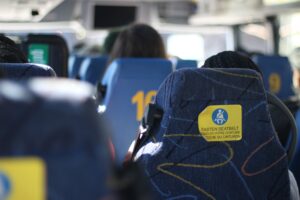 Broome County Transit operates fixed routes through Binghamton, Vestal, Johnson City, and surrounding municipalities. Frequent stops in high-traffic areas create collision risks at intersections where motorists fail to yield or misjudge bus acceleration patterns. Transit buses navigate tight residential turns where parked vehicles and narrow lanes restrict sightlines.
Passenger injuries in BC Transit accidents occur when sudden braking or impact throws riders from their seats. Most city buses lack seatbelts, leaving standing passengers vulnerable during emergency stops. Front-seated passengers may strike the fare box or windshield during frontal collisions. Rear-seated passengers commonly sustain whiplash injuries from rapid deceleration.
Pedestrians face elevated collision risks near BC Transit routes, particularly at Court Street and Front Street stops where foot traffic intersects with vehicle congestion. Transit buses have blind spots that extend several feet forward, increasing the risk of pedestrian accidents during afternoon peak hours.
School Bus Accidents in Southern Tier Districts
The Binghamton City School District, Vestal Central Schools, and Johnson City schools operate school bus routes that involve frequent residential stops. The illegal passing of stopped school buses with extended stop arms can cause crashes, particularly on rural two-lane roads.
Pickup and drop-off injuries occur when children cross in front of buses or enter blind zones adjacent to the vehicle. Children under the age of 10 may not recognize forward blind spots, which creates a risk of collisions when buses begin moving prematurely. Boarding injuries include falls from icy steps or poor lighting during winter hours of darkness.
Highway collisions involving school buses on Route 17 or Interstate 81 result in more severe injuries, despite the buses’ reinforced construction. Occupants seated at the impact point face the highest risk of injury, especially during side-impact collisions where structural protection is reduced.
If your child was injured in a school bus crash, an experienced school bus accident lawyer at Munley Law can help you navigate the complex legal process and pursue compensation for medical bills, pain and suffering, and other damages.
Shuttle Bus Accidents at Binghamton University
Binghamton University operates shuttles connecting the main campus, off-campus housing, downtown locations, and the West Gym facility. High student volume during class transitions and late-night service creates schedule pressure that may lead to excessive speeds or premature departure before passengers are seated.
Late-night accidents often correlate with driver fatigue at the end of a shift. Winter conditions on campus hills, including Bunn Hill and routes near the Nature Preserve, cause loss-of-control incidents when roads ice despite salt treatment. Shuttles may slide into parked vehicles or fixed barriers.
Standing passengers on crowded shuttles sustain injuries when drivers brake abruptly or take turns at unsafe speeds. Wet or snow-covered floors, heavy backpacks that affect balance, and insufficient handholds all increase the risk of falls, which can result in head injuries or fractures. These injuries establish liability claims even in the absence of a vehicle-to-vehicle collision.
Charter and Tour Bus Accidents on Interstate Routes
Interstate 81 carries commercial motorcoach traffic between New York City, Syracuse, Buffalo, and destinations in Pennsylvania. Long-distance operations pose a risk of driver fatigue when operators attempt to meet demanding schedules. Federal Hours of Service regulations limit driving time, but violations occur when carriers pressure drivers or when logbook falsification goes undetected.
The I-81/Route 17 interchange near Binghamton frequently experiences charter bus crashes when drivers unfamiliar with the local geometry misjudge merging lanes or fail to anticipate the heavy volume of commercial trucks. High-speed impacts between multi-ton buses and passenger vehicles can result in catastrophic injuries.
Tour bus rollover accidents stem from excessive speed on curved highway sections combined with a high center of gravity. When drivers maintain highway speeds through interchange ramps or exit curves, vehicle geometry creates a risk of tip-over. Black ice on bridges and overpasses during winter storms triggers loss of control.

“At Munley Law, our mission is simple: to provide all injury victims equal access to justice, even against the most powerful entities. For almost 70 years, we have been the voice for the injured, the forgotten, and those who need someone to stand beside them in their darkest hour.”
Marion Munley

 Call us at (844) 686-5397
 Pedestrian and Cyclist Collisions with Buses
The Court Street and State Street intersection in downtown Binghamton is a high-risk location for pedestrian bus accidents. Turning buses can strike pedestrians in marked crosswalks when drivers fail to check forward blind spots, which extend several feet beyond the front bumper. Complex intersection geometry increases cognitive load during turning maneuvers.
Cyclists on streets without dedicated bike lanes face collision risks when buses pull curbward to discharge passengers, potentially pinning cyclists against parked vehicles. Aerodynamic effects from passing buses can destabilize cyclists and cause them to enter traffic lanes. Chenango Street provides minimal clearance between bus and bicycle traffic, leaving no margin for error when drivers drift toward the curb or change lanes without performing mirror checks.
Bus stop accidents occur when drivers misjudge stopping distance or experience brake failure. Pedestrians waiting near curbs may be struck by the sides of the bus during the approach. Passengers exiting when buses stop away from curbs step into active traffic lanes. Elderly and mobility-impaired passengers face an elevated risk of falls due to balance difficulties combined with high bus entry steps.
Bus Rollover Accidents and Stability Failures
Rollover bus crashes produce the most severe injuries when multi-ton vehicles overturn with dozens of unrestrained occupants. Buses have a higher center of gravity than passenger vehicles, increasing their susceptibility to tipping over during sharp turns, evasive maneuvers, or excessive speed on curves. Rollovers eject unbelted passengers or trap them beneath overturned vehicles, often leading to catastrophic injuries.
Southern Tier winter weather increases the risk of rollover bus crashes. Snow accumulation on Route 17 and Interstate 81 reduces traction during lane changes and downhill grades. Fully loaded buses require extended stopping distances and demonstrate reduced effectiveness during emergency maneuvers.
Tire blowouts at highway speeds cause rollover bus crashes through sudden steering disruption. Front axle tire failure results in a severe loss of directional control, potentially leading to driver overcorrection and initiating a rollover. Suspension or steering component failures may remain undetected until an in-service failure occurs.
Rear-End and Side-Impact Collisions at Intersections
Rear-end bus collisions occur when following vehicles fail to account for buses’ slower acceleration and extended stopping distances. Vehicles following BC Transit buses too closely cannot react when buses stop to board passengers. These impacts injure rear-seated bus passengers. Rear-end crashes also occur when buses stop suddenly for forward traffic, and following vehicles are unable to brake adequately in time.
Side-impact collisions at Binghamton intersections typically involve red-light violations or right-of-way failures. Vehicles striking the sides of the bus directly impact the passenger compartment, unlike frontal crashes, where the engine compartments provide structural buffer zones. Passengers seated at impact points face severe injury from vehicle intrusion or from being thrown across the bus interiors.
The Vestal Parkway and Court Street corridors pose an elevated side-impact risk due to high traffic volumes and complex intersection configurations. Drivers misjudging traffic gaps or attempting to clear yellow signals strike buses already in the intersection. Bus mass and braking physics make collision avoidance impossible when motorists violate traffic control devices.
Slip-and-Fall Injuries During Boarding and Exit
Boarding and alighting injuries present distinct liability challenges because no vehicle collision occurs. Inadequately maintained stairs with worn treads or missing slip-resistant surfaces create hazards during wet conditions. High entry steps pose a challenge to elderly passengers and those with mobility impairments, particularly when handrails are damaged or poorly positioned.
Sudden stops during boarding or alighting can cause passengers to lose their balance, potentially resulting in falls to the sidewalk or bus floor. When drivers accelerate before all passengers are seated, standing passengers may fall backward down the entry steps or strike other passengers. Common injuries include hip fractures, wrist fractures from fall-arrest attempts, and head trauma from striking floors or vertical poles.
Winter conditions increase boarding risks when ice forms on steps and adjacent sidewalks. Transit operators must maintain ice- and snow-free steps, but rapid storm accumulation creates hazardous conditions between maintenance cycles. Inadequate lighting at evening stops prevents passengers from clearly assessing surface conditions. Passengers wearing low-traction footwear may slip on icy steps, fall onto curbs, or into active roadways where vehicle traffic creates a secondary collision risk.
Identifying Accident Type for Compensation Claims
The type of bus accident determines the scope of the investigation and the type of evidence required. Rollover claims require driver qualification files, hours-of-service logs, and vehicle maintenance records. Slip and fall claims require maintenance schedules, inspection reports, and photographic documentation of stairs and handrails. Understanding accident mechanics identifies potentially liable parties. For example, school bus accidents involving illegal passing may create claims against both the passing driver and potentially the school district if vehicle safety equipment was inadequate or non-functional.
Injury severity varies by accident type. Rollover passengers typically sustain more severe trauma requiring extended treatment and generating higher medical costs than passengers in minor rear-end collisions.
The kind of accident also determines the number of potential defendants. Interstate charter bus accidents may involve the motor coach operator, vehicle or component manufacturers (if defects contributed to the incident), and other drivers whose negligence may have triggered the incident.
Insurance coverage differs substantially by accident type and operator category. Municipal transit agencies typically carry different liability policy limits than private tour operators, which affects the maximum available compensation. New York school districts require notice of claim within 90 days and may have governmental immunity defenses not applicable to commercial operators. Understanding these distinctions allows injury victims to pursue all available sources of compensation.
Prompt legal consultation preserves time-sensitive evidence before vehicle repairs occur and witness availability diminishes. Evidence requirements vary by accident type. Rollover investigations require weather records, documentation of road conditions, and downloads from the vehicle event data recorder.
Boarding injury claims require photographs that document the stair condition, the position of the handrail, and the adequacy of lighting. Representation familiar with accident-specific evidence requirements and defendant-specific liability frameworks increases the probability of full compensation recovery for medical expenses, wage loss, and non-economic damages.
Contact Munley Law for Bus Accident Representation in Binghamton
If you sustained injuries in any type of bus accident in Binghamton or the Southern Tier, Munley Law’s attorneys can evaluate your case at no cost. Our legal team handles BC Transit claims, school bus accidents, university shuttle cases, and commercial motor coach collisions throughout Broome County. We understand the notice deadlines that apply to municipal defendants under New York law and the evidence required to prove liability against transit operators, school districts, and commercial carriers.
Call or complete our online contact form to schedule a free case evaluation. New York imposes strict deadlines for filing claims against government entities. Early consultation ensures compliance with all procedural requirements while evidence remains available.
Marion Munley
Marion Munley has been practicing personal injury law for nearly 40 years. She is triple board-certified by the National Board of Trial Advocacy for Truck Accident Law, Civil Trial Law, and Civil Practice Advocacy. She currently serves as Vice President of the American Association for Justice, an organization dedicated to safeguarding victims’ rights. Marion has won many multimillion-dollar recoveries for her clients, including one of the largest trucking accident settlements in history. She has been named a Top 10 Super Lawyer in Pennsylvania since 2023, a Best Lawyer in America, and was recently inducted to the Lawdragon Hall of Fame.