




The Pennsylvania bicycle accident lawyers at Munley Law are among the most respected and successful trial attorneys in the state, with a proud record of securing compensation for accident victims since 1959. Our injury law firm has fought for the rights of cyclists who have been struck by cars, hit by commercial vehicles, injured by dangerous road conditions, and harmed in other devastating bicycle crashes throughout Pennsylvania.
With more than 250 years of combined legal experience and five board-certified trial lawyers, Munley Law stands apart as a proven powerhouse in bicycle accident litigation. Our lawyers understand the challenges cyclists face on Pennsylvania roads and have the experience, resources, and results that few law firms can match. We work diligently to hold negligent drivers accountable, navigate complex insurance claims, and secure the compensation you need to cover medical bills, lost wages, and long-term care as you recover.
We understand how overwhelming and frustrating this time can be, and we want to help. Bicycle accidents often result in catastrophic injuries that can change your life in an instant. Don’t wait to protect your rights. Contact the bicycle accident attorneys at Munley Law today for a complimentary consultation and learn how we can help you move forward. We’re available 24/7, and you won’t pay a fee unless we win your case.
 Call Us At 844-686-5397
 Common Causes of Bicycle Accidents in Pennsylvania
The number one cause of bicycle accidents in Pennsylvania is usually attributed to driver error. According to the latest statistics from the Pennsylvania Department of Transportation, the number of bicycle accidents throughout the state has been steadily increasing for the past five years, from 819 in 2020 to 1,271 in 2024.
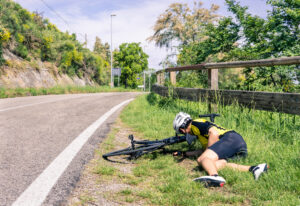 Some of the most common causes of accidents on these roadways include:
Driver Negligence
Driver error is the primary cause of bicycle-vehicle collisions throughout Pennsylvania. Distracted driving, whether from mobile devices, GPS adjustments, or eating, significantly reduces driver awareness of nearby cyclists. When drivers speed, they have less time to react to cyclists and are more likely to cause severe injuries in the event of an impact.
Three types of negligence-related collisions occur with particular frequency across the state:
- Right-hook accidents happen when right-turning vehicles strike cyclists traveling straight through intersections.
- Left cross collisions occur when left-turning drivers fail to yield to oncoming cyclists.
- Dooring incidents occur when occupants of parked vehicles open their doors directly into a cyclist’s path, particularly in urban areas with on-street parking.
Road Infrastructure Defects
Poor road conditions affect cyclists in communities throughout Pennsylvania. Potholes, surface irregularities, and debris push riders into traffic lanes or cause loss of control. Construction zones often lack adequate warning signage for cyclists, while existing bike lanes may be poorly maintained or blocked by illegally parked vehicles.
Rural roads present additional infrastructure challenges across much of the state. Many lack paved shoulders entirely, forcing cyclists to share narrow lanes with motor vehicles. Curves and hilltops with limited sight distances exacerbate these dangers by reducing visibility for both cyclists and drivers, a common issue on Pennsylvania’s mountainous terrain and winding country roads.
Commercial Vehicle Hazards
Commercial vehicles, including delivery trucks, buses, and tractor-trailers, pose heightened risks to cyclists throughout Pennsylvania. These vehicles have larger blind spots and require significantly longer stopping distances than passenger cars.
The rapid growth of e-commerce has increased the density of delivery vehicles in communities across the state, thereby multiplying the opportunities for cyclist-vehicle conflicts. When collisions do occur, the size and mass disparity between commercial vehicles and bicycles results in catastrophically severe injuries.
Pennsylvania Bicycle Laws and Cyclist Rights
Pennsylvania Vehicle Code Title 75 treats bicycles as vehicles, granting cyclists the same road use rights as motor vehicle operators while imposing corresponding responsibilities.
Road Use Rights and Passing Requirements
Pennsylvania law entitles bicycles to full lane use on public roadways. Section 3303 requires motorists to maintain a minimum passing distance of four feet when overtaking cyclists—a standard that exceeds the three-foot requirement found in many other states. This additional clearance acknowledges the vulnerability of cyclists and the dangers created by close-proximity passing.
Equipment Requirements
Pennsylvania Title 75 Section 3507 establishes mandatory safety equipment standards for bicycles operating on public roads. All bicycles must have working brakes capable of stopping on dry, level pavement. During darkness, cyclists must use a white front lamp visible from 500 feet and a red rear reflector visible from the same distance.
Section 3510 requires the use of helmets for all operators and passengers under the age of 12. While Pennsylvania does not mandate helmet use for adult cyclists, wearing a helmet substantially reduces the severity of traumatic brain injuries in accidents.
Traffic Rules and Sidewalk Regulations
Cyclists must obey all traffic control devices, including stop signs and traffic signals, just as motor vehicle operators do. Operators should ride on the right side of the roadway except when passing other cyclists, avoiding hazards, or preparing for left turns. Hand signals help communicate intended movements to other road users and motorists.
Sidewalk riding regulations vary by municipality. Some Pennsylvania communities prohibit sidewalk cycling entirely, while others permit it with specific restrictions. Cyclists should familiarize themselves with local ordinances in the areas where they ride.
Comparative Negligence and Insurance
Pennsylvania applies a modified comparative negligence rule with a 50% bar under 42 Pa.C.S. § 7102. This means injured cyclists can recover damages only if their fault does not exceed 50% of the total fault for the accident. When a cyclist bears some responsibility, their compensation is reduced proportionally by the percentage of fault attributed to them. Cyclists found to be 51% or more at fault cannot recover any damages.
Insurance coverage plays a critical role in bicycle accident claims. Uninsured and underinsured motorist (UM/UIM) coverage applies to hit and run incidents and collisions with drivers who lack adequate insurance. Cyclists can access UM/UIM benefits through their own automobile insurance policies, even when they were riding a bicycle rather than driving at the time of the accident.
E-Bike Accidents in Pennsylvania
The adoption of electric bicycles has surged in recent years among commuters, delivery workers, and recreational riders throughout Pennsylvania. This growth has brought a corresponding increase in emergency department visits for e-bike-related injuries, as these vehicles present distinct safety challenges compared to traditional bicycles.
E-bikes differ from conventional bicycles in ways that increase the risk of accidents. With motor assistance, e-bikes can maintain speeds of 20-28 mph with minimal physical effort, which is significantly faster than the typical speeds of a pedal bicycle.
This speed advantage is combined with substantially greater mass, as e-bikes typically weigh 50-70 pounds, compared to 20-30 pounds for conventional bicycles. The added weight requires longer stopping distances and makes loss-of-control incidents more dangerous.
The near-silent operation of electric motors creates another hazard by reducing driver awareness of approaching cyclists. Perhaps most concerning, motor assistance enables inexperienced riders to travel at speeds that exceed their skill level and reaction time, creating situations in which they cannot safely handle their vehicles.
Pennsylvania E-Bike Regulations
Pennsylvania takes a unique regulatory approach to e-bikes. Rather than adopting the three-class system used by many states, Pennsylvania 75 Pa.C.S. § 102 defines e-bikes by specific operational criteria.
To qualify as a legal e-bike in Pennsylvania, a vehicle must:
- Have functional pedals
- Weigh no more than 100 pounds
- Use a motor rated at 750 watts or less
- Achieve a maximum speed of 20 mph on motor power alone on level surfaces.
E-bikes meeting these specifications are treated as conventional bicycles under state law and do not require registration, licensing, or insurance.
Liability in E-Bike Cases
E-bike accidents raise complex liability questions that differ from traditional bicycle crashes. Liability can depend on:
- E-bike operators must also be at least 16 years old. Underage operation creates potential liability for parents or guardians who allow minors under 16 to ride.
- Non-compliant vehicles that exceed Pennsylvania’s weight, power, or speed specifications may be classified as motor vehicles rather than bicycles, triggering entirely different insurance and liability rules.
- Driver misjudgment frequently contributes to e-bike accidents. Motorists entering traffic often underestimate how quickly e-bikes approach, leading to collisions at intersections and driveways.
- Product defects have also caused injuries, including brake failures, throttle malfunctions, and battery fires, resulting in severe burns and other harm.
- Retailers can face liability for engaging in illegal sales practices, particularly when selling non-compliant e-bikes to minors or marketing vehicles that exceed Pennsylvania’s specifications as compliant e-bikes.
Insurance coverage classification becomes critical in these cases, as whether an e-bike is classified as a bicycle or motor vehicle affects which policy benefits apply and requires careful legal analysis.
Types of Bicycle Accident Injuries
Without the safety features that enclosed vehicles provide, cyclists absorb the full impact of collisions, often sustaining multiple injuries simultaneously. Common injuries from bicycle crashes include: 
Head and Brain Injuries
Traumatic brain injuries represent the leading cause of cycling fatalities. These injuries range from concussions to skull fractures and permanent brain damage. Closed head injuries present particular dangers because symptoms may not appear immediately after the accident.
Victims can experience long-term cognitive impairment, personality changes, and permanent physical disabilities that affect their ability to work, maintain relationships, and perform daily activities.
Spinal Cord Injuries
The impact forces in bicycle-vehicle collisions can cause vertebral fractures and spinal cord damage with life-altering consequences. Complete spinal cord injuries result in paralysis below the injury site, requiring extensive medical care and long-term assistance with daily living.
Incomplete spinal cord injuries lead to partial mobility loss, chronic pain, and reduced function that may improve with intensive rehabilitation but often leave permanent limitations. Intervertebral disc herniation from collision trauma typically requires surgical intervention and causes persistent pain that can last for years.
Bone Fractures
Cyclists commonly sustain fractures to the clavicle, ribs, and pelvis during collisions. Rib fractures carry serious complications, including pneumothorax (collapsed lung) that requires immediate medical treatment.
Pelvic fractures can damage internal organs and blood vessels while limiting long-term mobility even after healing. Crush injuries occur when vehicle tires roll over a cyclist, causing severe damage to bones, muscles, and soft tissue that may require multiple surgeries.
Internal Organ Damage
Blunt force trauma from vehicle impacts can cause internal hemorrhaging and organ damage without producing visible external injuries. Splenic rupture, liver lacerations, and kidney damage require immediate surgical intervention and can be life-threatening if not quickly identified and treated.
The delayed presentation of internal injury symptoms makes prompt medical evaluation essential after any bicycle-vehicle collision.
Facial Injuries
Injuries to the face and jaw typically require reconstructive surgery and may result in permanent disfigurement despite treatment. Facial nerve damage can cause chronic pain and affect a victim’s ability to eat, speak, and express emotions.
Psychological Impact
The physical injuries from bicycle accidents often accompany significant psychological trauma. Victims commonly develop post-traumatic stress disorder, anxiety disorders, and depression following collisions. Many develop persistent fears of cycling or being near traffic, limiting their mobility and quality of life long after physical injuries heal.

“At Munley Law, our mission is simple: to provide all injury victims equal access to justice, even against the most powerful entities. For almost 70 years, we have been the voice for the injured, the forgotten, and those who need someone to stand beside them in their darkest hour.”
Marion Munley

Determining Liability in Pennsylvania Bicycle Accidents
Establishing liability in bicycle accident cases requires thorough investigation and careful analysis of all available evidence. Pennsylvania law recognizes that multiple parties may share responsibility for a single collision, and identifying all liable parties is essential to securing full compensation for injured cyclists.
Driver Liability
Driver negligence is the primary cause of most bicycle accidents. When a driver causes a collision while operating under the influence, Pennsylvania law may support punitive damage claims in addition to standard compensatory damages. These enhanced damages serve to punish egregious conduct and deter similar behavior.
Municipal Liability
Government entities can be held liable when roadway defects or inadequate infrastructure contribute to bicycle accidents. Municipalities may bear responsibility for defective pavement conditions, inadequate bike lane maintenance, missing or unclear signage, and hazardous intersection designs that create foreseeable dangers for cyclists.
Pennsylvania’s Political Subdivision Tort Claims Act governs claims against government entities and imposes specific procedural requirements, including strict notice deadlines that injured cyclists must meet to preserve their claims. These cases require prompt action and careful attention to statutory requirements.
Manufacturer Liability
Defective products sometimes cause or contribute to bicycle accidents and resulting injuries. Failures in bicycles themselves, as well as critical components like brakes and wheels, batteries in e-bikes, and safety equipment, can all lead to crashes.
Pennsylvania law allows strict liability claims against manufacturers, distributors, and retailers when defective products cause harm. This means injured cyclists may recover damages without proving negligence if they can establish the product was faulty and caused their injuries.
Property Owner Liability
Private property owners may face liability when conditions on their property contribute to bicycle collisions. Vegetation that obstructs sight lines at driveways or intersections creates hazards for both cyclists and motorists. Poorly designed parking facilities and unmaintained private access roads that connect to public streets can also lead to dangerous situations.
Property owners have a duty to maintain their premises in a reasonably safe condition and may be held responsible for failing to address known hazards.
Joint and Several Liability
When multiple parties share fault for a bicycle accident, Pennsylvania’s joint and several liability rules allow injured cyclists to recover from each responsible party based on their degree of fault. In cases with multiple defendants, careful fault allocation becomes critical.
Recoverable Damages in Bicycle Accident Cases
Pennsylvania law permits injured cyclists to recover both economic damages for financial losses and non-economic damages for physical and emotional harm. Understanding the full scope of available compensation helps ensure that victims receive fair recovery for all accident-related losses.
Medical Expenses
Injured cyclists can recover compensation for all reasonable and necessary medical treatment related to their injuries. This includes emergency treatment at the accident scene and in emergency departments, hospitalization costs, surgical procedures, diagnostic imaging such as X-rays and MRIs, specialist consultations, and physical therapy and rehabilitation services.
When injuries require ongoing treatment, victims can also recover future medical expenses. These claims require expert medical testimony to establish that future treatment is reasonably probable and to provide reliable cost estimates based on current medical standards and anticipated care needs.
Rehabilitation and Assistive Equipment
Serious bicycle accidents often require extensive rehabilitation beyond initial medical treatment. Long-term rehabilitation costs can include physical therapy to restore mobility and strength, occupational therapy to relearn daily living skills, and cognitive rehabilitation for brain injury victims.
Many severely injured cyclists require assistive devices such as wheelchairs, prosthetics, and orthotic braces to maintain mobility and independence.
Lost Income and Earning Capacity
Bicycle accident victims can recover compensation for wages lost during their recovery period. When permanent impairments prevent return to prior employment or reduce the ability to earn at previous levels, victims can also claim damages for reduced future earning capacity.
Pain and Suffering
Pennsylvania tort law recognizes that accident victims are entitled to compensation for non-economic losses that cannot be precisely quantified. Pain and suffering damages compensate victims for physical pain endured during recovery, loss of life enjoyment when injuries prevent participation in previously valued activities, and overall reduced quality of life.
Psychological Damages
The psychological impact of bicycle accidents can be as severe as physical injuries. Victims commonly develop post-traumatic stress disorder, anxiety disorders, and depression following serious collisions. Mental health treatment costs are recoverable as part of the overall damages.
Permanent scarring or disfigurement creates additional psychological harm, affecting self-image, social interactions, and emotional well-being in ways that deserve separate recognition and compensation.
Property Damage
Bicycle accidents typically destroy or damage the bicycle itself along with safety equipment, electronics, and clothing. Victims can recover the cost of repairing or replacing their bicycle or e-bike and other damaged personal property.
Accessibility Modifications
Beyond initial home modifications, permanently disabled victims may require vehicle adaptations to maintain independence and mobility. Specialized controls, wheelchair lifts, and other modifications enable disabled individuals to drive or be transported safely.
Wrongful Death Damages
When bicycle accidents result in death, Pennsylvania law allows surviving family members to pursue wrongful death claims.
Recoverable damages include funeral and burial expenses, loss of the deceased’s financial support and contributions to the household, loss of companionship and consortium that the deceased provided, and loss of parental guidance for minor children who must grow up without a parent.
Punitive Damages
In addition to compensatory damages, Pennsylvania law permits punitive damages in cases involving willful misconduct or reckless indifference to the safety of others under 42 Pa.C.S. § 8528.
DUI collisions typically support punitive damage claims because driving while intoxicated demonstrates the kind of reckless disregard for others’ safety that punitive damages are designed to punish and deter. Unlike compensatory damages that aim to make victims whole, punitive damages serve to punish wrongdoers and discourage similar conduct by others.
Why Choose Munley Law for a Pennsylvania Bicycle Accident Case?
Munley Law has practiced personal injury law in Pennsylvania for nearly seven decades. Our Pennsylvania personal injury attorneys hold board certification in civil trial advocacy—a credential held by fewer than 2% of attorneys in Pennsylvania. Board certification requires substantial trial experience, peer review, and a written examination.
We have handled Pennsylvania bicycle law claims, including driver negligence, municipal road defect liability, product liability, and insurance coverage disputes. Our cases have involved permanent impairments requiring lifetime care. We consult with medical experts, life care planners, economists, and vocational rehabilitation specialists to ensure you receive the full compensation you deserve.
Our attorneys have received recognition from Best Lawyers, Super Lawyers, and U.S. News & World Report Best Law Firms. We work on a contingency fee basis, which means our clients pay attorney fees only if we successfully recover.
Free case evaluations are available for bicycle and e-bike accident claims. The Pennsylvania statute of limitations imposes a two-year filing deadline for personal injury claims, so do not delay.
Contact Munley Law to schedule a free consultation today.