




Finding the right Pittsburgh tractor-trailer accident lawyer can mean the difference between just compensation and unnecessary hardship after you’ve been involved in an accident with these heavy trucks in Allegheny County. Thankfully, with Munley Law, legal representation you can trust is in easy reach. Our board-certified attorneys have championed the rights of injured Pennsylvanians since 1959, helping them recover more than $1 billion in damages.
All our lawyers are members of the Pennsylvania Bar Association and the American Association for Justice. Two of our lawyers have led the association’s Trucking Litigation Group, and all our partners have received Martindale-Hubbell’s highest ratings, AV Preeminent. Our firm and our lawyers are routinely recognized by some of the most respected legal organizations, including Super Lawyers, Best Lawyers, Best Law Firms, Irish Legal 100, and the International Society of Barristers.
If you or a loved one was injured in a truck accident, our experienced team of Pittsburgh truck accident lawyers can help guide you through the litigation process. The trucking lawyers at Munley Law have the experience and the resources to handle your case. Call today to schedule a free consultation.
Contact a Truck Accident Lawyer at Munley Law
 Call Us At 844-686-5397
 What Causes Tractor Trailer Accidents in Pittsburgh? 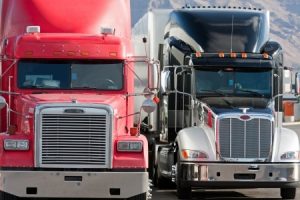
Various factors can contribute to tractor trailer accidents. Some common causes of truck accidents are:
- Inadequate Training or Experience: Driving a large truck safely requires specific skills and knowledge. If drivers lack proper training or experience, they might not respond correctly to specific situations, leading to accidents.
- Equipment Failure: This can include brake failure, tire blowouts, steering failure, and other mechanical problems. Some of these may be due to manufacturing defects, but many result from poor maintenance. According to the Pennsylvania Department of Transportation (PennDOT), 278 heavy truck accidents were caused by equipment or vehicle failures in 2024.
- Driver Fatigue: Tractor trailer drivers often work long hours and cover long distances, which can lead to fatigue. Federal Motor Carrier Safety Administration regulations limit the hours a truck driver can be on duty and drive each day and week, but fatigue can still be a factor, especially if a driver is not adhering to these regulations. Drowsiness was a factor in 2,591 accidents in Pennsylvania in 2024, according to PennDOT.
- Negligent Hiring Practices: Trucking companies can be at fault for an accident if they neglect to vet and train their drivers correctly or knowingly hire drivers with a history of reckless behavior.
- Improper Loading: Tractor trailers carrying loads that are not adequately distributed or too heavy are more likely to be involved in accidents, as they can be harder to control.
Many tractor trailer accidents result from a combination of factors, but understanding these common causes can be helpful in both prevention and in determining liability when accidents do occur. We will investigate every aspect of your tractor-trailer accident to determine who was responsible and hold them accountable for their negligence
What Are the Most Common Types of Tractor Trailer Accidents?
The size of big tractor-trailers requires certain skills for them to be driven safely. However, accidents still happen. Some of the most common types of trucking accidents are:
- Rollover or tip-over truck accidents. Due to their high center of gravity and heavy loads, tractor-trailers can be prone to rollovers, especially during sharp turns, sudden maneuvers, or on slopes.
- Jackknife truck accidents. This type of accident occurs when the truck trailer swings out to the side, resembling a folding pocketknife. This often happens when the driver brakes suddenly, and the momentum causes the trailer to skid and swing out.
- Underride truck accidents. These are hazardous accidents where a smaller vehicle slides under the rear or side of a tractor trailer. They often occur if a truck stops suddenly and the following vehicle cannot stop in time.
- Blind spot truck accidents. Tractor trailers have large blind spots, or “no-zones,” on all four sides of the vehicle. Accidents often occur when other motorists aren’t aware of these blind spots, and the truck driver fails to see them when changing lanes or turning.
- Rear-end collisions. Given the large size and weight of tractor-trailers, they require more distance than smaller vehicles to come to a complete stop. If a truck driver cannot stop quickly, it may result in a rear-end collision.
- Tire blowout accidents. A blown-out tire can cause a truck driver to lose control of the vehicle, potentially leading to a severe accident. This can happen due to overuse, poor maintenance, or truck overload.
- Lost load accidents. If a tractor-trailer’s cargo isn’t secured correctly, it can fall onto the roadway, causing accidents.
Understanding these types of accidents can help determine the cause of a tractor-trailer accident and establish liability in legal proceedings. Always consult a knowledgeable truck crash attorney at Munley Law Personal Injury Attorneys if you’re involved in a truck accident.
How Often Do Tractor Trailer Accidents Occur? 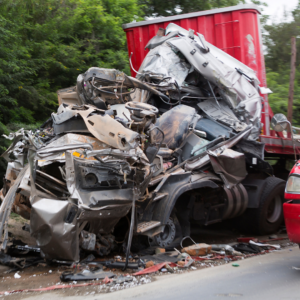
Thousands of accidents involving large trucks, including tractor-trailers, occur annually across the United States. The Pennsylvania Department of Transportation estimates that there were 10,214 motor vehicle accidents in Allegheny County in 2024, making it one of the top counties in Pennsylvania for traffic accidents.
Who Can Be Held Responsible For Tractor Trailer Accidents?
Tractor-trailer accidents in the Pittsburgh area can be complex, and determining liability can involve multiple parties. Here are several potential parties who can be held responsible in such cases:
- Truck Driver. The truck driver can be held liable if their negligence or misconduct led to the accident. This could include factors like speeding, driving under the influence, fatigue, distraction, or other forms of reckless behavior.
- Trucking Company: The company that employs the driver can also be held responsible. This is particularly true if they neglect to maintain the vehicles properly, fail to train drivers adequately, push drivers to work beyond legally allowed hours, or hire drivers with poor safety records.
- Truck Owner: If the truck is owned by a different entity than the company operating it, the owner could be held liable for not properly maintaining the vehicle or ensuring its safety.
- Cargo Loading Company: If the cargo was improperly loaded or secured, which contributed to the accident, the company responsible for loading the cargo could be held liable.
- Manufacturer of the Truck or its Parts: If a defect in the truck or one of its components led to the accident, the manufacturer could be liable. This would fall under product liability law.
- Maintenance Company: If a company was contracted to maintain the truck and did not do so correctly, leading to an accident, it could be held responsible.
- Government Entities: In some cases, a local or state government might be liable if poor road design or maintenance contributed to the accident.
Determining responsibility in a tractor-trailer accident can be complicated and requires an in-depth investigation. It often involves examining driver logs, maintenance records, the truck’s black box data, and more. Moreover, liability might not fall entirely on one party; it could be shared among multiple parties based on their fault. As such, it’s often helpful for those involved in a tractor trailer accident to seek legal counsel to navigate these complexities.
What Is the Statute of Limitations For a Tractor Trailer Accident?
Under 42 Pa. C.S.A. § 5524 (2), Pennsylvania has a two-year statute of limitations for personal injury cases, meaning you have two years from the incident date to file your lawsuit. If you have any concerns or questions about the statute of limitations, you should contact a lawyer or seek advice to ensure you do not file your claim too late.
Why Should You Choose Munley Law as Your Pittsburgh Truck Accident Lawyers?
If you are considering filing a legal claim for tractor trailer accident injuries, one of the many experienced lawyers on our team can help. Hiring an experienced trucking accident attorney will take the burden of proving your case away from you.
We have more than 250 years of combined legal experience handling tractor-trailer accident cases in Pittsburgh and throughout Pennsylvania, and are recognized across the US as authorities on these cases. Munley Law is the only law firm with three attorneys, including Marion Munley, Daniel Munley, and Katie Nealon, who are board-certified in Truck Accident Litigation by the National Board of Trial Advocacy in the Keystone State. The board has also board-certified Marion Munley, Daniel Munley, J. Christopher Munley, and John Mulcahey in Civil Trial Law and Civil Practice Advocacy. Additionally, Marion Munley and Daniel Munley are board-certified by the Academy of Truck Accident Attorneys.
Marion Munley currently serves as the Vice President of the American Association for Justice (AAJ), and she and Daniel Munley have both served as chairs of the association’s Trucking Litigation Group. They, along with several of our other attorneys, have received numerous awards or other accolades from the AAJ, Lawdragon, Litigation Counsel of America, and the Million Dollar Advocates Forum/Multi-Million-Dollar Advocates Forum. The National Trial Lawyers named all our partners among the Top 100 Trial Lawyers in Pennsylvania and named Marion Munley and Daniel Munley among the Top 10 Trucking Trial Lawyers in the state.
Frequently Asked Questions About Pittsburgh Tractor-Trailer Accidents
What Should I Do After a Tractor-Trailer Accident in Pittsburgh?
After a tractor-trailer accident in Pittsburgh, you should seek medical attention immediately, even if your injuries don’t appear to be serious. You should also report the crash to law enforcement, gather evidence such as photos and witnesses’ contact details, and avoid speaking with insurance adjusters before consulting an attorney.
How are Tractor-Trailer Accidents Different From Regular Car Accidents?
Tractor-trailer accidents are different from regular car accidents because they are more complex. They often involve multiple liable parties, federal trucking regulations, and severe injuries. Commercial trucking companies and their insurers also typically have aggressive legal teams working to reduce payouts.
Can I Still Recover Compensation if I was Partially at Fault for the Tractor-Trailer Accident?
You may be able to recover compensation if you were partially at fault for the tractor-trailer accident. Under 42 Pa. C.S. § 7102, Pennsylvania’s comparative negligence law, you can recover compensation if you were less than 51% at fault. However, the amount of compensation you receive may be reduced based on your percentage of fault. For example, if you are awarded $20,000 in compensation but are 20% responsible, you will only receive $16,000.
What Evidence is Important in a Tractor-Trailer Accident Case?
In a tractor-trailer accident case, important evidence can include police reports, black box data, driver logbooks, truck maintenance records, witness statements, dashcam footage, and photographs from the scene. Trucking companies are required to maintain certain records, but this evidence can disappear quickly if you don’t take action as soon as possible.
Contact Munley Law’s Pittsburgh Tractor Trailer Accident Lawyers
We know that we can reach the settlement you deserve. We’ve helped other clients by obtaining settlements and verdicts such as $26 million, $19.8 million, and $19 million truck accident settlements, and we can help you. We work on a contingency fee basis, so you’ll only need to pay legal fees if we win your case and successfully recover compensation for you.
Call Munley Law today or contact us online for a free case evaluation.

Daniel W. Munley
Daniel W. Munley is a nationally recognized, leading truck accident lawyer. He has been board certified in Truck Accident Law by the NBTA as well as being a charter member for the American Association for Justice Trucking Litigation Group. Daniel often takes part in speaking engagements presenting the latest cutting-edge technology and trial techniques to help attorneys nationwide protect the rights of truck accident victims. Additionally, Daniel has secured numerous multi-million dollar settlements for victims, including the largest truck accident settlement for an individual plaintiff on record in Northern Pennsylvania, at $26 million.