



A truck’s Gross Vehicle Weight Rating (GVWR) is the maximum total weight the truck can safely carry, set by the manufacturer. It includes the weight of the empty truck plus its fuel, passengers, and cargo. When a truck is loaded past its GVWR, it takes longer to stop and is harder to control, and if it causes a crash, exceeding the GVWR makes it easier to prove the trucking company was negligent.
Munley Law’s truck accident attorneys, including three lawyers board-certified in truck accident law, have recovered over $1 billion for clients injured by large commercial trucks, including those carrying overloaded cargo. Contact us today to schedule a free consultation.
Contact a Truck Accident Lawyer at Munley Law
 Call Us At 844-686-5397
 What Does the Gross Vehicle Weight Rating Mean?
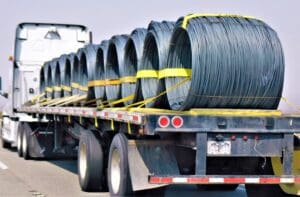 The rating is not arbitrary. It reflects what the truck’s brakes, tires, axles, and frame were engineered to handle safely, which is why exceeding it is so dangerous. You can find a vehicle’s GVWR on the door-jamb sticker or in the owner’s manual.
GVWR is easy to confuse with related numbers. The Gross Combined Weight Rating (GCWR) is the maximum weight of a truck and its trailer together, while the GVWR covers the truck and its load alone. In addition to the manufacturer’s rating, each state sets its own legal weight limits that a vehicle cannot exceed on public roads.
What Do the Key Truck Weight Terms Mean?
A few related terms come up alongside GVWR, and they are easy to mix up:
- Curb weight: the weight of the vehicle body with no passengers, cargo, or trailer attached.
- Payload capacity: the total weight a truck carries on top of its curb weight, including cargo, passengers, fuel, and added equipment.
- Tongue weight: the downward force a trailer puts on the towing hitch; the right tongue weight keeps steering and handling balanced.
- Towing capacity: the maximum weight a truck can pull behind it when towing a trailer.
What Are the GVWR Truck Classifications?
Commercial trucks are grouped into weight classes based on their GVWR. The class determines which federal safety rules apply:
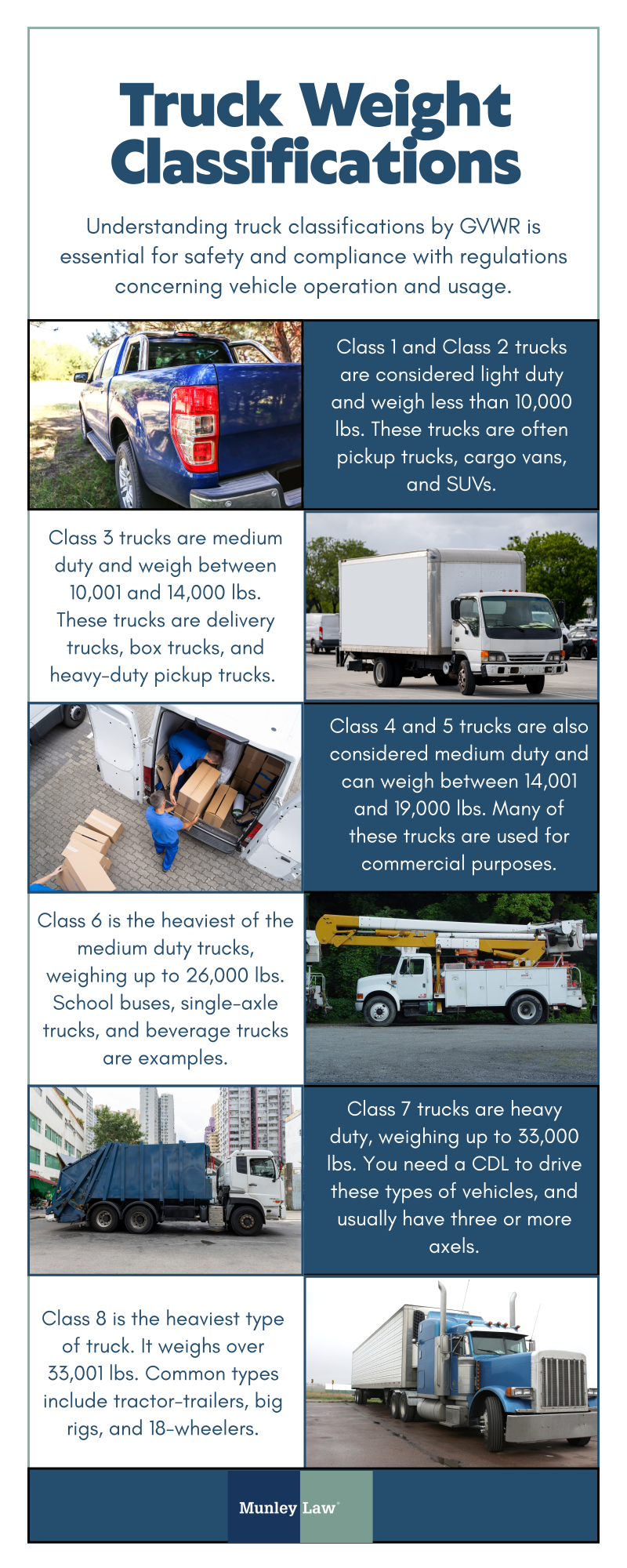
The heavier the class, the more momentum the truck carries and the longer it needs to stop, which is why heavy-duty trucks face the strictest federal oversight.
How Does GVWR Affect Truck Safety?
GVWR limits exist to keep a truck controllable. A loaded truck already needs far more room to stop than a car, and pushing past the rating makes that worse in several ways:
- Overloading: carrying more than the GVWR strains the truck beyond what it was built to handle, wearing out brakes, tires, and suspension faster.
- Braking distance: an overloaded truck needs much more room to stop and can overheat or overwhelm its brakes on a downgrade.
- Stability: too much weight, or weight loaded too high or unevenly, leads to poor steering, sway, and rollover risk.
- Accident prevention: staying within the GVWR lowers the risk of tire blowouts, brake failure, and loss of control that cause serious crashes.
What Are the Federal and Pennsylvania GVWR Rules?
The Federal Motor Carrier Safety Administration (FMCSA) regulates commercial trucks, and any vehicle with a GVWR over 10,000 lbs falls under its rules:
- Federal weight limit: 80,000 lbs for most vehicles on interstate highways without a special permit.
- Pennsylvania limit: the maximum allowable gross vehicle weight is also 80,000 lbs.
- Weigh stations: commercial trucks must stop so their weight can be checked against their rating and the legal limit.
- Penalties: violations can bring state and federal fines, vehicle impoundment, legal and financial liability, and in serious cases license revocation.
How Does GVWR Affect a Truck Accident Claim?
When a truck was loaded past its GVWR, that violation can become powerful evidence in an injury case. An overweight truck is not just unsafe, it is often proof that someone in the supply chain cut a corner.
- Proving negligence: exceeding the GVWR or a federal weight limit is a regulatory violation, which makes it easier to show the driver or trucking company was careless.
- Shared liability: depending on who loaded the truck, the driver, the carrier, the shipper, and the broker can all share responsibility for an overweight load.
- Evidence: weigh-station records, the bill of lading, cargo manifests, the electronic control module (black box), and brake and tire data can all show the truck was overloaded.
- Insurer pushback: trucking insurers investigate fast to limit what they pay, so an injured person needs their own investigation just as quickly.
This is why Munley Law uses a rapid-response protocol the firm calls “Get That Truck.” Within hours of being hired, our team works to secure the vehicle, obtain preservation orders, and lock down the black box, maintenance logs, and weight records before they can be lost or altered. In an overweight-truck case, that early evidence is often what proves the GVWR was exceeded.
What Are Common GVWR Violations?
Most GVWR problems trace back to a few avoidable failures:
- Overloading: going past the GVWR or an individual axle weight limit to fit more cargo on a run.
- Improper weight distribution: loading cargo unevenly or too high, which hurts braking and raises blowout and rollover risk.
- Documentation failures: missing or falsified records that hide how much the truck was actually carrying.
- Maintenance oversights: skipped inspection, maintenance, or repair reports on a truck already running heavy.
Injured in an Overloaded Truck Accident?
If you were hurt in a crash involving an overloaded or overweight truck, Munley Law can help. We are the only firm in Pennsylvania with three attorneys board-certified in truck accident law, and we investigate GVWR and weight violations as part of building every truck case. Call today for a free consultation with a truck accident lawyer.