How Philadelphia Hit and Run Victims Can Still Recover Damages Through Uninsured Motorist Coverage
Every night, somewhere in Philadelphia, a driver runs a light on Roosevelt Boulevard or clips a cyclist on Allegheny Avenue, slows for half a second, and drives off. The person left behind assumes the worst about their options. No driver, no insurance company to claim against, no case.
This assumption is wrong more often than it’s right. Pennsylvania insurance law treats an unidentified driver as an uninsured driver, which means the coverage that pays for a hit and run may already be included in your own auto policy, or in the policy of someone you live with.
Why a Hit and Run Doesn’t End Your Claim
Uninsured motorist coverage, UM on your policy paperwork, exists for exactly two situations:
- A driver who carries no insurance
- A driver who can’t be identified
Pennsylvania law treats the phantom driver who fled the scene the same way it treats a driver with no policy at all. If you carry UM coverage, your claim proceeds against your own insurer, which steps into the shoes of the driver who ran. 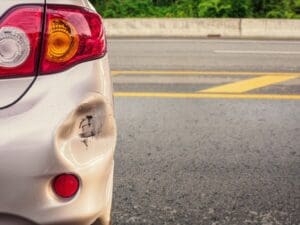
Every Pennsylvania auto policy includes first-party medical benefits, but the state minimum is $5,000, an amount a single emergency room visit can exhaust. UM coverage picks up where that runs out. It covers the remaining medical bills, lost wages, and compensation for pain and suffering. These are the same damages you could have pursued against the driver if they had stayed.
The catch is that UM coverage is optional in Pennsylvania. Insurers must offer it, but drivers can reject it in writing. Plenty of people waived it years ago to shave a few dollars off a premium without remembering they did.
The first practical step after any hit and run is checking your declarations page to find out what coverage you actually have. Many Philadelphians who assume they have no recourse are carrying coverage they’ve paid for over many years and never used.
The 30-Day Police Report Rule
Pennsylvania imposes one strict condition on phantom-driver claims. As of 2026, an unidentified vehicle is considered uninsured only if the crash is reported to the police or the proper authorities within 30 days. Miss that window, and the UM claim ends before it starts, no matter how serious the injuries are.
In practice, you need to call the police from the scene, every time, even when your injury looks minor, and even when you doubt anyone will catch the driver. Get the report number and the responding officers’ district before you leave, because you will need both to obtain the report later.
The report is not just about finding the driver. It is the document that keeps your insurance claim alive. Your policy will also have its own notice requirements for telling the insurer about the crash, and those clocks run shorter than most people expect. A hit and run is one situation where waiting to “see how you feel” carries a real legal cost.
UM Coverage Reaches Further Than Most People Expect
You do not have to be driving your car for your UM coverage to apply. A pedestrian struck in a crosswalk at Broad and Spring Garden can claim UM benefits under their own auto policy. A cyclist who was run off the road on Henry Avenue can do the same.
If you don’t own a car but live with a relative who does, their policy’s UM coverage may extend to you as a resident family member.
Stacking adds another layer of coverage. Pennsylvania allows policyholders to stack UM coverage across multiple vehicles on a policy, multiplying the available limits, unless stacking was waived in writing.
In a city where so many serious hit and run victims are on foot or on bikes, these household and stacking rules are often the difference between a small recovery and a real one. Insurers do not volunteer this analysis; it has to be done deliberately, policy by policy, household by household.
Where Hit and Runs Happen in Philadelphia and Why Gathering Evidence Quickly is Important 
Certain corridors generate a disproportionate share of the city’s hit and runs. Roosevelt Boulevard’s 12 lanes have made it one of the most dangerous urban roads in America for pedestrians, and the speed cameras installed along it are a result of that record. Kensington and Allegheny avenues, Broad Street, and the river drives all appear in crash data year after year.
The same density that makes Philadelphia traffic dangerous also makes it well-recorded. The Boulevard’s enforcement cameras, SEPTA vehicle and station cameras, intersection cameras, and the private cameras on every corner store and rowhouse porch capture a remarkable share of what happens on city streets. This footage identifies fleeing drivers more often than victims expect, and an identified driver means a standard liability claim on top of, or instead of, the UM claim.
But the footage is overwritten fast, sometimes within days. Canvassing for cameras is a first-week job, not a someday job, as records are quickly lost. Additionally, a civil claim should never wait on the police investigation, because the Philadelphia police caseload for these crashes is heavy, and the insurance deadlines keep running regardless.
Your Own Insurer Is Not on Your Side in a UM Claim
The hardest mental shift in a UM claim is the fact that the company you’ve paid premiums to for years now sits across the table. In a UM claim, your insurer takes the position that the fleeing driver would have taken, questioning fault, minimizing injuries, and probing whether the phantom vehicle existed at all. Expect a request for a recorded statement early on, and treat it as you would a statement to a stranger’s insurance company, because, functionally, it is one.
Pennsylvania law does require insurers to handle these claims in good faith, and an insurer that drags out or lowballs a legitimate UM claim can face consequences beyond the claim itself. But this protection only matters if the claim is documented properly from the start. This requires a prompt police report, same-day medical records from Temple, Jefferson, or Penn Presbyterian, photographs, and witness names gathered before everyone scatters.
A hit and run leaves people feeling like the system has no answer for them. But usually it does, and it is found in the paperwork most victims have never read. Munley Law has represented injury victims across Philadelphia for nearly 70 years and has recovered over $1 billion for clients in Pennsylvania. Contact our Philadelphia car accident attorneys today to schedule a free consultation.

Marion Munley
Marion Munley has been a practicing auto accident lawyer for nearly 40 years. During her career, she has helped clients across auto accident cases, winning multi-million dollar settlements for auto accident victims. Notable verdicts include a $17.5 million jury verdict for a teen death caused by a car accident, and a $1.9 million settlement for a family hit by a 16-year-old driver. Marion has also advocated for motor vehicle victims through speaking engagements such as “Pennsylvania Practice Program: Auto and Trucking Cases” and “Collision Investigation and Reconstruction in Motor Vehicle Cases”. Marion is also to become triple board-certified by the National Board of Trial Advocacy, alongside this, she is currently serving as Vice President of the American Association for Justice.
 Call us at (844) 686-5397
 Posted in Car Accidents.