Do Cars Have Black Boxes?
Yes. Most cars built in the last decade have a black box, though not every vehicle does. The device is officially called an event data recorder, or EDR, and federal rules (49 CFR Part 563) set what it records when a car is equipped with one.
The data it captures is narrow. An EDR records a few seconds of vehicle data around a crash, including speed, braking, throttle, and seatbelt use. It does not record conversations or track where you drive. After a serious accident, that short record can become objective evidence of what the vehicle was doing in the moments before impact, which is often the question at the center of a disputed claim.
Understanding what a car black box is, and more importantly, what it isn’t, can help car accident victims know what evidence may exist and why timing and accuracy matter after a collision.
What Is an Event Data Recorder? 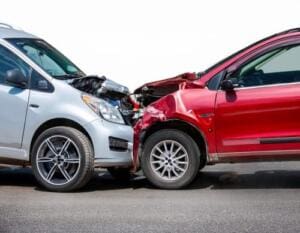
A “black box” is the common name for an event data recorder (EDR). While it shares a nickname with airplane black boxes, it works very differently.
An event data recorder is a vehicle system designed to record specific technical information related to a crash or near-crash event. Its purpose is safety analysis, not surveillance.
A car’s black box is:
- A component built into a vehicle’s electronic systems
- Designed to capture limited data around a collision
- Focused on vehicle performance, not driver behavior
It is not:
- A GPS tracker
- An audio or video recorder
- A device that monitors driving at all times
An EDR is typically integrated into the vehicle’s airbag control module or another safety-related electronic system. It isn’t a standalone box you can see or remove easily.
 Call Us At 844-686-5397
 Do All Cars Have Black Boxes?
The clear answer is no.
Not every vehicle has an EDR, and even among those that do, the capabilities vary.
Key differences include:
- Vehicle age: Older cars may not have EDRs at all
- Make and model: Some manufacturers adopted the technology earlier than others
- System design: Even similar vehicles may record different data points
EDRs began appearing more widely in passenger vehicles in the late 1990s, and their adoption increased in the 2000s. Federal regulations now require certain standardized EDR data elements in many newer vehicles, but this does not mean all cars record the same information.
Because of the differences across vehicles, the presence of black box data after a car accident is never guaranteed.
What Does a Car’s Black Box Record?
Under the federal standard (49 CFR 563.7), an event data recorder captures a short window of vehicle data around a crash. Most EDRs on the road today record about five seconds of pre-crash data, and under an updated federal rule, vehicles built after September 1, 2027 must record roughly 20 seconds. The data is sampled several times per second and
includes elements such as vehicle speed, throttle position, brake status, and seat-belt use.
Common data points include:
- Speed: Vehicle speed shortly before impact
- Braking or acceleration: Whether brakes were applied or the throttle position changed
- Seatbelt use: Whether seatbelts were engaged
- Airbag deployment: Timing and activation status
- Engine status: RPMs or system warnings
Car black boxes have a short recording window. Most event data recorders capture only a few seconds of information—often 5 to 20 seconds before a crash. They do not provide long-term driving history.

“At Munley Law, our mission is simple: to provide all injury victims equal access to justice, even against the most powerful entities. For almost 70 years, we have been the voice for the injured, the forgotten, and those who need someone to stand beside them in their darkest hour.”
Marion Munley

How Is Black Box Data Retrieved After a Crash?
Accessing car black box data is not as simple as plugging in a USB cable. Retrieval requires:
- Specialized tools and diagnostic software
- Manufacturer-specific access systems
- Technical knowledge of vehicle electronics
Important limitations:
- Data can be overwritten if the vehicle is driven after the crash
- Severe damage may destroy or corrupt the data
- Improper handling can result in data loss
This is why black box data retrieval is usually handled by trained professionals rather than vehicle owners or accident victims.
Who Uses Black Box Data After a Car Accident?
Several parties may seek access to vehicle crash data, often with different goals.
- Insurance companies: To evaluate claims and liability
- Law enforcement: During crash investigations
- Car accident lawyers: To assess evidence and build legal arguments
- Accident reconstruction experts: To analyze how the crash occurred
While the same data may be reviewed, interpretations can differ depending on who is analyzing it and why. Due to these competing interests, context matters as much as the raw numbers.
Who Owns Black Box Data and Who Can Access It?
In most cases, the vehicle owner controls access to the car’s black box data. Generally, the information recorded by a car’s event data recorder belongs to the vehicle owner or, in the case of a leased vehicle, the lessee. Because of this, owner consent is usually required before anyone can retrieve or review the data.
In limited circumstances, vehicle manufacturers may also access black box data for research or safety analysis, subject to specific legal or contractual conditions.
Police generally need owner consent, a court order, or a warrant, depending on the situation.
Insurers may request access, but permission is not automatic.
Because multiple parties may review the same vehicle crash data, understanding who investigates and determines fault can help accident victims see why interpretations sometimes differ.
Access Rules Can Vary
Access rules for black box data can also vary from state to state. Consent requirements are not uniform, and some states have enacted specific event data recorder privacy laws that limit who can obtain the information and how it can be used.
When disagreements arise, courts often step in to decide whether black box data can be accessed and whether it is admissible as evidence in a legal case.
How Accurate Is Black Box Data?
Car black box data is technical, not interpretive. 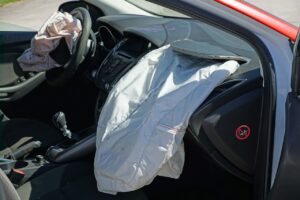
What it does well:
- Records system-generated vehicle data
- Provides objective time-stamped information
Limitations to consider:
- Data reflects vehicle systems, not human intent
- Sensors can malfunction or fail in extreme crashes
- Information may be incomplete or misleading without context
For accuracy, black box data must be compared with:
- Physical vehicle damage
- Skid marks and road conditions
- Scene photographs
- Witness statements
Can Black Box Data Be Used in a Personal Injury Claim?
Yes, but only as supporting evidence. Black box data alone rarely tells the full story of a collision, and it does not automatically establish liability.
While vehicle crash data can help clarify disputed facts such as speed or braking, questions about responsibility are ultimately legal determinations. In many cases, fault in a car accident is determined by a combination of evidence, including physical damage, witness statements, and applicable traffic laws.
Why interpretation matters:
- A recorded speed doesn’t explain why a driver accelerated
- Brake data doesn’t show visibility or road hazards
- Airbag deployment timing doesn’t establish fault by itself
When used properly, vehicle crash data can strengthen a personal injury claim by supporting other evidence, such as scene findings, vehicle damage, and witness statements. However, it should never be viewed in isolation, because numbers alone rarely tell the complete story of what caused an accident.
Because black box data reflects vehicle systems rather than human intent, both parties may still be at fault, depending on how the crash unfolded. This is why interpretation matters and why black box data should always be evaluated in context rather than viewed in isolation.
Taking early steps to preserve evidence, including black box data, can make a significant difference, which is why it’s important to know how to protect your rights after a car accident.
When to Consider Speaking With a Car Accident Lawyer
It may be worth seeking legal guidance when:
- Injuries are serious or long-lasting
- Fault is disputed
- Evidence, including black box data after a car accident, may be lost or challenged
In serious crashes, black box data can be lost or misinterpreted if it is not preserved early. At Munley Law, our car accident lawyers work with investigators and reconstruction professionals to evaluate available evidence so injured people can focus on recovery.
Contact us for a free consultation today.
Marion Munley
Marion Munley has been practicing personal injury law for nearly 40 years. She is triple board-certified by the National Board of Trial Advocacy for Truck Accident Law, Civil Trial Law, and Civil Practice Advocacy. She currently serves as Vice President of the American Association for Justice, an organization dedicated to safeguarding victims’ rights. Marion has won many multimillion-dollar recoveries for her clients, including one of the largest trucking accident settlements in history. She has been named a Top 10 Super Lawyer in Pennsylvania since 2023, a Best Lawyer in America, and was recently inducted to the Lawdragon Hall of Fame.
Posted in Car Accidents.