Slip and Fall on Ice: Who May Be Responsible?
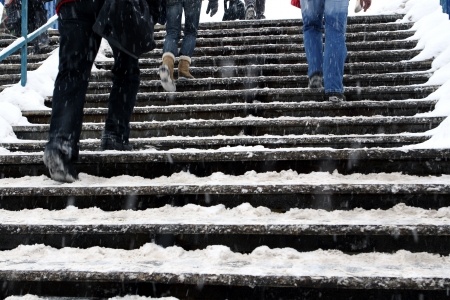 When someone slips and falls on ice, the first question is usually whether anyone can be held responsible.
Unlike tripping over a broken step or slipping on a wet floor inside a building, slip and fall accidents involving icy conditions can be difficult cases. Ice forms quickly, is susceptible to change, and depends heavily on the weather. It is a temporary hazard that can appear and disappear within hours.
Responsibility for an ice-related fall is not automatic. While property owners and businesses have obligations to maintain reasonably safe conditions, winter weather introduces factors that complicate these obligations.
Laws and standards also vary significantly by jurisdiction, meaning similar falls can be evaluated differently depending on the location.
Why Slip and Fall on Ice Cases Are Treated Differently
Ice creates environmental complexity that distinguishes these incidents from most other slip and fall scenarios.
Unlike a permanently damaged floor or a spill that persists until cleaned, an ice hazard can change constantly. This unpredictability makes it harder to assign responsibility than in fixed conditions.
The temporary nature of the hazard introduces variables that don’t exist with permanent structural problems or indoor maintenance issues.
 Call Us At 844-686-5397
 When a Property Owner or Business May Be Responsible for Ice
Certain situations increase the likelihood that a property owner or business may be considered responsible when someone slips and falls on ice.
Ice that remains after a winter storm has ended presents a different scenario than ice forming during active precipitation. Once weather conditions stabilize, property owners typically have more opportunity to fix hazardous conditions through salt treatment, removal, or warning measures.
Refreezing caused by poor drainage or melting snow that runs across walkways and then freezes can create responsibility concerns. When site conditions contribute to ice formation, such as downspouts directing water onto sidewalks or improperly graded surfaces, the hazard may be tied to property maintenance rather than weather alone.
Untreated entrances, walkways, and parking areas that remain icy for extended periods after precipitation ends often factor into responsibility evaluations. Ongoing icy conditions that persist across multiple days suggest the hazard was long-standing rather than sudden, and could have been removed.

“At Munley Law, our mission is simple: to provide all injury victims equal access to justice, even against the most powerful entities. For almost 70 years, we have been the voice for the injured, the forgotten, and those who need someone to stand beside them in their darkest hour.”
Marion Munley

When a Property Owner Is Often Not Responsible
Several circumstances commonly reduce or eliminate responsibility for ice-related falls.
Active or ongoing snow and ice accumulation presents challenges that property owners cannot immediately control. When precipitation is actively falling or has just stopped, the hazard is still forming and changing rapidly.
Sudden weather changes, such as an unexpected temperature drop or freezing rain, can create ice before anyone has a reasonable chance to respond. Slipping on ice that formed minutes or a couple of hours before the fall, especially during unpredictable weather, often falls into this category.
Ice that develops shortly before a fall does not support responsibility claims. When there has been little opportunity to discover the hazard or take corrective action, responsibility becomes less clear.
How Timing and Weather Conditions Affect Responsibility
Timing plays a critical role in evaluating responsibility after someone slips on ice. Understanding when precipitation began and ended helps determine how long ice may have existed before the fall.
The duration ice has been present matters significantly. Ice that formed overnight and remained unattended through the following day presents different considerations than ice that developed an hour before someone fell.
Temperature changes influence ice formation and persistence. Black ice—a thin, transparent layer that forms when temperatures hover near freezing—can appear suddenly and be nearly impossible to see.
These variables explain why similar falls can have different outcomes. Two people might slip on ice in the same parking lot on different days. Still, if one fall occurred during active snowfall and the other happened two days after the storm ended, the evaluation of responsibility may differ substantially.
Business, Apartment, and Residential Ice Responsibilities
Responsibility expectations vary based on property type and use.
- Businesses open to the public and commercial properties that invite customers in typically maintain higher obligations to address winter hazards, including potentially icy walkways.
- Apartment complexes and common areas present their own considerations. The question of who controls maintenance and snow removal—landlords, property management companies, or contracted services—affects how responsibility is evaluated.
- Private residences operate under different frameworks, particularly regarding social guests versus individuals providing services on the property.
Slip and Fall on Ice While Working or Making Deliveries
Slips and falls during work may be treated differently from falls by customers or visitors. When someone slips and falls on ice while performing their job, the classification of the incident can affect how responsibility is evaluated.
Delivery drivers, contractors, and workers whose jobs require outdoor work during winter are regularly exposed to icy conditions. Whether the fall occurred on the worker’s employer’s property or at a location they were visiting for work purposes influences the applicable framework.
What to Document After a Slip and Fall on Ice
Gathering information immediately after slipping on ice provides essential context for understanding what happened and can be used as evidence for a personal injury claim.
After a slip and fall on ice, you should document the following:
- Photographs of the ice and the surrounding area help document conditions at the time of the fall. Capturing the extent of ice coverage and appearance creates a visual record that may not be available later.
- Weather information and the specific time of day matter. Recording current conditions, recent precipitation, and temperature helps establish the environmental context.
- Noting whether the area appeared treated or untreated is significant. Evidence of salt, sand, or other ice-melting products suggests maintenance efforts.
- Collecting names and contact information for witnesses or property representatives preserves access to accounts from others who observed conditions or the incident.
Why are Ice-Related Slip and Fall Claims Often Disputed?
Many slip and fall accidents on ice lead to disputes over who is responsible. A common point of disagreement is how long the ice was present before the fall. Property owners often argue that the ice formed only moments earlier, while injured individuals believe it had been there long enough to be addressed.
Conflicting accounts of the weather further compound uncertainty. People may remember conditions differently, and weather can vary across different areas of the same property, making it harder to establish what conditions were like at the time of the fall.
Property owners frequently claim that the icy conditions were unavoidable or that they took all reasonable steps to prevent harm. As a result, arguments often center on whether additional measures could or should have been taken.
These cases become even more challenging when key information is not collected promptly. Without immediate photographs, witness statements, or other documentation, accurately reconstructing the conditions at the time of the fall can be difficult.
Slipping on Ice Does Not Automatically Mean Someone Is Responsible
Slipping on ice does not automatically establish that anyone is at fault.
Winter weather creates hazards that are sometimes unavoidable. Ice forms naturally, often rapidly, and even with reasonable efforts, cannot always be prevented or immediately eliminated. The mere presence of ice and the fact that someone fell do not, by themselves, mean that a property owner failed to meet their obligations.
Small details matter significantly. The timing of the fall relative to when precipitation ended, what clearing measures were attempted, how long the ice existed, and whether the hazard was reasonably discoverable all influence evaluations of responsibility.
These situations are fact-specific, and outcomes depend on particular circumstances rather than broad assumptions.
When to Get Help Understanding Responsibility After a Fall on Ice
When an ice-related fall causes injuries and responsibility is unclear, a slip and fall attorney at Munley Law can help explain how these general principles may apply to your specific situation.
Our award-winning slip and fall lawyers have over 250 years of combined experience and have won over $1 billion in personal injury settlements and verdicts. Contact us for a free consultation to find out if you have a claim after slipping on ice.
Posted in Premises Liability.