



Understanding where most Pennsylvania truck accidents occur can help make sense of what happened if you were involved in a collision. These collisions often happen in predictable locations, from busy interstates like I-80 and I-81 to congested urban corridors around Philadelphia and Pittsburgh. High traffic volumes, weather changes, construction zones, and heavy commercial trucking all contribute to where and why these crashes occur.
Knowing these high-risk areas gives a new perspective on why certain roads see more frequent truck crashes than others. Patterns across Pennsylvania show that both urban and rural routes can be dangerous, especially where fast-moving traffic meets large commercial vehicles. Understanding these patterns can also be useful when building a clearer picture of fault and responsibility.
When a truck accident upends your life, having the right legal support matters. Munley Law’s truck accident attorneys help injured people across Pennsylvania by investigating crash sites, reviewing key evidence, and identifying the causes of the collision. The goal is to provide clear guidance and steady support so you can focus on recovery while your case is handled with care and attention. Contact our personal injury attorneys for a free consultation.
Contact a Truck Accident Lawyer at Munley Law
 Call Us At 844-686-5397
 Where Are the Most Common Places Truck Accidents Occur in PA?
Truck accidents can happen across Pennsylvania, but certain roads and regions see far more crashes than others. When you consider the truck volume, road design, and weather conditions in some of these areas, it becomes clear why they carry a higher risk. Based on PennDOT crash data, these are some of the most common places truck accidents occur in Pennsylvania:
- Interstate 80 (I-80): This major east-west highway runs from the Ohio border to New Jersey and carries a steady stream of tractor-trailers. Crashes are especially common near major intersections and during winter storms.
- Interstate 81 (I-81): Running north to south through the center of the state, I-81 sees heavy truck traffic every day. Areas around Harrisburg, Wilkes-Barre, and Scranton have seen a high number of truck-related crashes.
- Interstate 76 (I-76): Also known as the Pennsylvania Turnpike, I-76 covers more than 350 miles across the state. It is a frequent site of truck accidents, especially near toll plazas and construction zones.
- Philadelphia Metro Area: High traffic volume and frequent congestion contribute to a high number of truck accidents in and around Philadelphia. Tight on-ramps and narrow lanes create extra risk.
- Pittsburgh and Surrounding Suburbs: Hills, sharp turns, and changing road conditions make this region especially dangerous for large commercial trucks.
- Allentown and Lehigh Valley: This area is a major transportation hub, with several distribution centers and busy roadways. The mix of commercial trucks and commuter traffic often leads to collisions.
- Erie Region: Lake-effect weather can lead to whiteout conditions and slick highways. Truck drivers unfamiliar with these patterns are especially at risk.
If your crash happened in one of these locations, you are likely dealing with patterns that traffic investigators and safety experts have studied for years. A truck accident lawyer on our team can use that data to help show what went wrong and who may be responsible.
What Causes Most Truck Accidents in Pennsylvania?
 There is usually more than one reason a truck crash happens — in Pennsylvania or elsewhere. Sometimes it is a mechanical issue. Other times, it is a combination of bad weather, traffic congestion, and a driver who is not fully focused.
Common Road and Driver Factors Behind Truck Accidents
A lot can go wrong on the road when a fully loaded truck is moving at highway speed. Fatigue, distraction, poor road maintenance, and sudden traffic changes can all increase the risk of a crash. Many truck drivers spend long hours behind the wheel, especially on routes like I‑80 or I‑81, where rest stops may be spaced far apart. Driving while tired slows down reaction time and can lead to delayed braking or drifting between lanes.
Distracted driving also plays a major part in truck accidents. Even one second of looking away from the road to check a GPS or grab food can lead to a serious collision. Add in blind spots, mechanical issues, and confusing construction zones, and the risk grows quickly. These problems are not limited to truck drivers, either. Smaller vehicles cutting in too closely or braking suddenly in front of a tractor‑trailer often cause rear‑end crashes.
Why Some Areas Have Higher Accident Rates
Certain parts of Pennsylvania are known for heavy traffic, poor weather, and tough driving conditions. Urban centers like Philadelphia, Harrisburg, and Pittsburgh have dense traffic patterns, narrow ramps, and more frequent stop‑and‑go driving. These conditions make it harder for large trucks to respond quickly, especially during rush hour or in work zones. Construction detours and temporary signage can confuse out‑of‑state drivers, especially those unfamiliar with city layouts.
Rural areas are not immune, either. Steep hills, sharp curves, and limited lighting can make highways more dangerous at night or during winter storms. The Pennsylvania Turnpike and I‑78 see frequent crashes, especially when roads are slick or visibility is low. A Pennsylvania car accident lawyer on our team will know how to identify the road factors that may have contributed to your crash and how to use that information to support your case.
What Are the Most Common Types of Trucking Accidents in PA?
Truck accidents in Pennsylvania happen in many different ways. Some involve poor decisions behind the wheel. Others come down to mechanical issues, shifting cargo, or road conditions that make it hard for a truck to stop in time. If you were involved in a crash, it may fall into one of the following categories:
- Jackknife accidents: A jackknife accident happens when the trailer swings wide and folds toward the cab, creating an L or V shape. This often happens when the driver brakes suddenly on a slick road or loses control while turning.
- Rear-end collisions: Large trucks need more stopping distance. If a driver follows too closely or misjudges traffic speed, they can slam into the back of another vehicle.
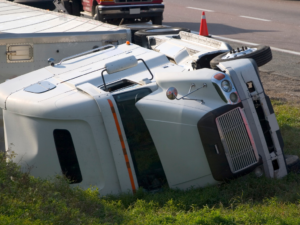
- Rollover accidents: Trucks can flip over if they take a turn too fast, swerve suddenly, or carry a load that is too top-heavy. Rollover crashes can block traffic or crush smaller vehicles nearby.
- Blind spot accidents: Trucks have large no-zones on all four sides. If a driver cannot see your vehicle and switches lanes, they can hit you without ever realizing you were there.
- Underride accidents: An underride crash occurs when a smaller vehicle is pushed under the trailer of a truck. These accidents are especially dangerous and can cause catastrophic injuries.
- Lost load incidents: Cargo that is not secured properly can fall onto the road, causing cars behind the truck to swerve or crash. In some cases, debris hits another vehicle directly.
Each of these accident types has its own set of risks and legal details. Our truck accident lawyers can recognize the pattern in your case, collect the right evidence, and build a claim that speaks to the kind of crash you experienced.
Pennsylvania Truck Accident Trends and Safety Statistics
Crash patterns across Pennsylvania show that truck accidents are not only increasing in number but also changing in where and how they occur. According to Pennsylvania truck accident statistics from PennDOT’s 2024 crash statistics, heavy trucks were involved in 6,805 crashes statewide, with 124 of those resulting in fatalities. Most truck collisions occurred on state highways and interstates, but there has also been an increase in rural crashes, especially where local roads meet high-speed corridors.
Seasonal conditions play a major part in these numbers.
- Winter weather tends to bring a spike in incidents along I‑80 and I‑81, particularly in northern and western regions where snow and ice are common.
- In the summer, higher traffic volumes and construction zones lead to more work zone crashes and rear-end collisions.
These trends also help explain where truck accidents happen most in PA, especially near high-traffic zones like Philadelphia, Scranton, and the Lehigh Valley.
Truck accident trends also show a connection to careless driving. When truck drivers speed, follow too closely, or fail to adjust to traffic or road conditions, they may be found in violation of 75 Pa. Cons. Stat. § 3714, which addresses careless driving. Our firm recognizes how these patterns, conditions, and violations can factor into a legal claim. If your crash happened under any of these circumstances, there may be state data and roadway history that supports your side of the story.
FAQs About Pennsylvania Truck Accidents
Why Are Interstate Highways So Dangerous for Truck Crashes?
Interstate highways carry large numbers of commercial trucks traveling at high speeds for long distances. Congestion, sudden traffic slowdowns, bad weather, and driver fatigue can all increase the risk of serious truck accidents on these roads.
Which Pennsylvania Cities See the Most Truck Traffic?
Philadelphia, Pittsburgh, Harrisburg, Allentown, Scranton, and Erie all experience heavy commercial truck traffic. These areas are important transportation and distribution hubs connected by major interstate highways.
What Should I Do After a Truck Accident in Pennsylvania?
After a truck accident, call 911, seek medical attention, and document the crash scene if you can do so safely. Taking photos, gathering witness information, and keeping medical records may help support your claim later.
Can Road Conditions Affect Liability in a Truck Accident Case?
Yes. Dangerous road conditions, such as poor lighting, construction zones, potholes, or icy pavement, may contribute to a truck accident. However, truck drivers and trucking companies are still expected to operate safely, taking into account road and weather conditions.
How Our PA Truck Accident Lawyers Can Help
Munley Law specializes in trucking litigation. We are the only law firm in the state with three attorneys board-certified in Truck Accident Law by the National Board of Trial Advocacy. Our firm has spent nearly 70 years helping victims across Pennsylvania obtain compensation for truck accident injuries. We have handled some of the most complex cases in the state and secured life-changing results for our clients. If you were hit by a commercial truck, our team can gather crash data, review driver logs, and work with experts to prove what happened and why.
Our fees are contingent upon winning your case, so you aren’t liable for attorney fees unless we secure compensation for you. We are a client-centric family firm passionate about pursuing justice for all deserving clients. We have the experience, expertise, and resources to build a strong case and secure the highest compensation possible.
You can contact us to speak with a Pennsylvania personal injury lawyer who knows all too well the pressure you are under and what it takes to hold trucking companies accountable. We are ready to help you move forward with a plan that protects your health, your time, and your financial future.

Marion Munley
Marion Munley is one of the nation’s most decorated and respected truck accident lawyers. Having contributed to numerous publications and spoken at numerous conferences, she has advocated for truck accident victims nationwide. Marion is Board Certified in Truck Accident Law by the NBTA and is the first woman to become Chair of the AAJ Trucking Litigation Group in 2018 – additionally, she was named “Top 10 Trucking Trial Lawyers” by the National Trial Lawyers Association. Marion has assisted in several landmark truck accident settlements, including a $26 million settlement for a single mother of three who was critically injured when a tractor trailer collided with her car.