Why I-376 and Route 28 Are Pittsburgh’s Most Dangerous Freight Corridors
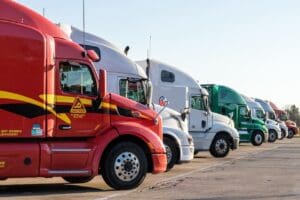 If you drive through Pittsburgh regularly, you already know that I-376 and Route 28 don’t behave like typical highways. They are narrow, congested, and built around terrain that limits visibility and reaction time.
Annual state collision data shows that I-376 and Route 28 were the site of heavy truck crashes, numbers that reflect what Pittsburgh drivers already know: these corridors see a high volume of serious truck-related incidents.
The Pittsburgh truck accident attorneys at Munley Law are prepared to respond quickly to crashes on these corridors, preserve critical evidence, and help injured victims understand their legal options after serious truck collisions.
Two Roads at the Center of the Problem
I-376 cuts directly through Pittsburgh, connecting downtown to the airport and surrounding suburbs. But unlike a standard interstate, it is defined by bottlenecks and abrupt transitions. The Squirrel Hill Tunnels and Fort Pitt Tunnel compress traffic instantly, while curves near Oakland and Bates Street reduce visibility and control, especially for large trucks navigating downhill grades.
Route 28 presents a different kind of risk. Running along the Allegheny River through Millvale, Etna, and Harmar Township, it functions like a highway but lacks the infrastructure to support that speed. Pittsburgh’s location as a regional freight hub means a steady flow of tractor-trailers moving through tight, outdated infrastructure. That combination creates consistent risk.
Steep elevation changes along I-376 force trucks to brake aggressively, particularly when approaching tunnels or congested interchanges. Tight curves and limited sightlines reduce reaction time, while sudden traffic slowdowns near tunnel entrances create frequent rear-end collision scenarios.
On Route 28, high speeds combined with short merge distances create constant lane conflicts. Trucks have limited space to maneuver, and passenger vehicles often misjudge how much room or time is needed to merge safely around them.
The Typical Accidents, and Why They’re Severe
On I-376 and Route 28, truck crashes tend to follow predictable patterns tied directly to roadway design and traffic behavior:
- Rear-end collisions in stop-and-go traffic approaching tunnels
- Multi-vehicle pileups triggered by sudden slowdowns
- Sideswipe accidents during tight merges and lane shifts
- Jackknife crashes on curves or during abrupt braking
- Run-off-road incidents on sharp bends or downhill grades
When a passenger vehicle is involved in a crash with a fully loaded truck, the injuries are often significant, especially on roads with limited space and high traffic density like I-376 and Route 28.
Common injuries in these crashes include:
- Traumatic brain injuries (TBI)
- Spinal cord injuries and paralysis
- Multiple fractures and crush injuries
- Internal bleeding and organ damage
- Severe whiplash and soft tissue injuries
The lack of shoulders, barriers that limit escape routes, and the likelihood of chain-reaction collisions all contribute to the severity.
The Pittsburgh Factor: Geography + Infrastructure
What makes Pittsburgh different is not just traffic volume, it is how geography shapes the roads themselves.
Highways are built through hills, along rivers, and around dense urban development. That limits expansion and forces modern freight traffic onto corridors that were never designed for the size and volume of today’s trucks.
The result is a system where congestion, elevation changes, and tight roadway design all intersect in a way that consistently increases crash risk.
Truck accidents on I-376 and Route 28 are rarely straightforward. The conditions that cause these crashes like tight merges, sudden slowdowns, and limited visibility often involve multiple vehicles and overlapping factors.
Responsibility may extend beyond the driver to include the trucking company, maintenance providers, or other third parties involved in operations. Because of this, early evidence collection is critical. Traffic camera footage, onboard truck data, and driver logs can all play a role in determining what actually happened.
How Munley Law Handles Pittsburgh Truck Accident Cases
Munley Law has handled truck accident cases throughout Pittsburgh and Allegheny County, including crashes along I-376 and Route 28.
These cases are approached with a focus on how local conditions affect liability. That includes investigating roadway design, analyzing truck data, and working with reconstruction experts familiar with Pittsburgh’s infrastructure.
Few firms can point to nationally recognized credentials in truck accident litigation, but Munley Law can. The firm has three attorneys board-certified in Truck Accident Law by the National Board of Trial Advocacy, making it the only law firm in Pennsylvania with that distinction.
Consultations are free, and cases are handled on a contingency basis. If you were injured in a truck accident in Pittsburgh, contact Munley Law.

Marion Munley
Marion Munley has been practicing personal injury law for nearly 40 years. She is triple board-certified by the National Board of Trial Advocacy for Truck Accident Law, Civil Trial Law, and Civil Practice Advocacy. She currently serves as Vice President of the American Association for Justice, an organization dedicated to safeguarding victims’ rights. Marion has won many multimillion-dollar recoveries for her clients, including one of the largest trucking accident settlements in history. She has been named a Top 10 Super Lawyer in Pennsylvania since 2023, a Best Lawyer in America, and was recently inducted to the Lawdragon Hall of Fame.
 Call us at (844) 686-5397
 Posted in Truck Accidents.