



When a doctor’s or medical provider’s negligence causes your child to suffer a lifelong disability such as cerebral palsy, you need an experienced birth injury lawyer in Allentown on your side.
At Munley Law, our personal injury attorneys have won multi-million-dollar settlements, including $5 million, $4.35 million, and $3.5 million in medical malpractice cases. Our senior partner, Marion Munley, has been named Best Lawyers’ Lawyer of the Year for Medical Malpractice Law and Personal Injury Litigation, and eight of our lawyers are listed as Super Lawyers. Our partners all feature in Lawdragon’s 500 Leading Plaintiff Consumer Lawyers list and have Martindale-Hubbell AV Preeminent Ratings, and Caroline Munley is one of the NTLA’s Top 25 Medical Malpractice Trial Lawyers in Pennsylvania and Top 25 Women Trial Lawyers in Pennsylvania.
If your child suffered a birth injury that resulted in cerebral palsy, Munley Law’s Allentown birth injury lawyers are here for you. Contact us today for a free case evaluation and compassionate guidance.
What Causes Cerebral Palsy?
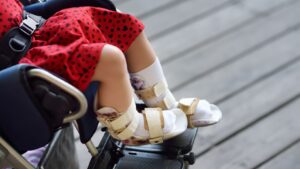 The Centers for Disease Control and Prevention defines cerebral palsy as a group of disorders that can impact a person’s movement, balance, and posture. Cerebral palsy is most often caused by abnormal brain development in utero, but it can also occur due to a birth injury.
There are four main types of cerebral palsy. They include:
- Spastic Cerebral Palsy
- Dyskinetic Cerebral Palsy
- Ataxic Cerebral Palsy
- Mixed Cerebral Palsy
According to the Centers for Disease Control (CDC), cerebral palsy affects between 1 and 4 out of every 1,000 live births globally, and about 1 in 345 children in the United States are diagnosed with the condition, making it the most common childhood motor disability.
 Call Us At 844-686-5397
 What is Spastic Cerebral Palsy?
Considered the most common form of cerebral palsy, spastic cerebral palsy causes the individual to have increased muscle tone, resulting in stiff, awkward movements. Medically, spastic cerebral palsy is defined by which portion of the body is impacted.
Data from the CDC notes that around 41% of children with cerebral palsy have limitations in their abilities to crawl, walk, run, and play, and a further 31% require the use of special mobility equipment like wheelchairs and walkers. North American Community Hub Statistics also notes that spastic cerebral palsy accounts for as many as 83% of all CP cases.
What is Spastic Diplegia/Diparesis?
Spastic diplegia is a form of cerebral palsy that primarily affects muscle stiffness in the legs. Individuals with spastic diplegia may have trouble walking because their hips and leg muscles are tight. This results in the legs pulling together, turning inward, and crossing at the knee, almost in a scissor motion. According to CerebralPalsy.org, spastic diplegia accounts for 22.4% of cerebral palsy cases.
What is Spastic Hemiplegia/Hemiparesis?
Spastic hemiplegia only impacts one side of a person’s body, typically with most difficulties in the arm. CerebralPalsy.org cites the incidence of spastic hemiplegia at 22.6% of all CP diagnoses.
What is Spastic Quadriplegia/Quadriparesis?
Spastic quadriplegia, recognized as a type of catastrophic injury, is the most severe form of spastic cerebral palsy, affecting all four limbs, the trunk, and the face. It accounts for around 25% of all cerebral palsy cases. In general, people with this form of cerebral palsy cannot walk. They may have developmental disabilities, as well as suffer from seizures and problems with vision and depth perception, hearing, or speech.
What is Dyskinetic Cerebral Palsy?
Dyskinetic cerebral palsy most commonly results in issues controlling movements in the hands, arms, feet, and legs, which can make it more challenging to sit and walk. Movements can either be slow and writhing or more rapid and jerky in appearance. In some instances, the face and tongue can also be affected, making it hard to suck, swallow, or speak.
In individuals with dyskinetic cerebral palsy, muscle tone can change from too tight to too loose throughout the day. This is a relatively rare form of CP, constituting around 2.6% of all cases.
What is Ataxic Cerebral Palsy?
Ataxic cerebral palsy impacts balance and coordination, making individuals unsteady while walking. Movements that require a lot of control can be difficult as well. The incidence of ataxic CP is cited at around 2.4% of cases.
What is Mixed Cerebral Palsy?
Mixed cerebral palsy is found in roughly 15.4% of CP cases. Some individuals may experience symptoms of multiple forms of cerebral palsy. Most commonly, spastic-dyskinetic cerebral palsy is seen.
What Are The Needs Of A Child With Cerebral Palsy?
Cerebral palsy has no cure, making this diagnosis a lifelong commitment of care for the parents and children. Most commonly, children diagnosed with cerebral palsy quickly begin therapy to help with movement as well as learning, speech, hearing, and social and emotional development.
Many individuals will also require medical devices like leg braces and wheelchairs. Some children may also require a G-tube or pump to get medications and/or nutrients.
In some cases, surgery can be utilized to help with hip dislocation and scoliosis, which is common in cerebral palsy patients. Depending on the overall mobility of the individual, the home may also need to be modified to support their needs.

“Honoring those who came before us, Munley Law proudly continues our family tradition of innovation, caring, and integrity. Three generations of Munleys have built this firm on one belief: that injured people deserve the same fierce advocacy that the powerful receive as a matter of course. That belief still drives everything we do.”
Caroline Munley

How Do I Know If My Child’s Cerebral Palsy Was Caused By Negligence?
While cerebral palsy, in many cases, is congenital, meaning it occurs before or during birth, sometimes it is caused by medical negligence in the labor and delivery process.
Cerebral palsy caused by negligence often occurs when the baby experiences oxygen deprivation during birth. This may occur if the baby is stuck in the birth canal or behind the pelvis, which can result in the oxygen supply being cut off.
If this occurs and the brain does not get the oxygen it needs, brain cells die, resulting in the death of some functions.
However, oxygen deprivation and other birth injuries can occur due to medical errors or negligence during delivery. They include, but are not limited to:
- Failing to recognize fetal distress and, in turn, performing a cesarean section or c-section
- Failing to diagnose high blood pressure or toxemia in the mother before or during delivery
- Failure to detect a prolapsed umbilical cord
- Excessive use of vacuum extraction or forceps
- Delaying delivery
- Failure to recognize/treat infant seizures
- Failure to diagnose/treat jaundice or meningitis in a newborn
When your child’s treatment caused cerebral palsy or other lifelong complications because of negligent medical care, you need an experienced cerebral palsy lawyer to help you in your medical malpractice claim.
When Should I Contact a Cerebral Palsy Attorney in Allentown?
 If you suspect your child’s cerebral palsy diagnosis was a result of medical negligence, there are a few steps you should take before beginning a cerebral palsy lawsuit.
First, speak with your child’s pediatrician, as they will emphasize the importance of detailed medical documentation regarding your child’s condition.
Next, think back to the day of the birth. What did your child look like? Was there any sign of distress? If there were, you’d then want a review of your child’s Apgar scores. The Apgar score helps medical providers determine if the baby has breathing or heart trouble after birth. It stands for appearance, pulse, grimace, activity, and respiration. A low score indicates some difficulty at birth and shortly thereafter.
Lastly, call an Allentown medical malpractice lawyer. Medical malpractice claims, especially those related to birth injury, are highly complex. Not every medical malpractice law firm takes on cerebral palsy cases, so connect with a law firm like Munley Law.
Once we’ve reviewed your case, we can begin the process for legal action for your baby’s brain damage, developmental delays, and other health complications due to cerebral palsy.
Who Can File a Birth Injury Lawsuit for My Child’s Cerebral Palsy?
Birth injuries caused by negligence involve minors, so parents must seek legal options on their child’s behalf. However, under the Pennsylvania statute of limitations for birth injury cases, it is up to the age of 20 years old.
However, waiting that long to recover compensation for your child’s birth injury can impact your financial compensation, as much of the evidence will be gone; further, the more time that passes, the more that is likely to be forgotten.
By contacting our birth injury attorneys as soon as you suspect medical negligence, you are more likely to get the compensation you need to care for your child now and in the future.
Our Cerebral Palsy Attorneys in Allentown Can Help
When your child’s life is altered because of negligent medical professionals, you and your family deserve to have recourse taken against the doctor, hospital, or other medical professional. At Munley Law, we have a track record of standing up against negligent doctors and bringing justice to those who have been wronged.
With nearly seven decades of experience in law, our experts have won over $1 billion in settlements for our clients, including millions in medical malpractice and birth injury cases. Robert Munley III, Caroline Munley, and Marion Munley have been added to the Million Dollar Advocates Forum for achieving these verdicts.
All our lawyers are named to the Top 100 Trial Lawyers in Pennsylvania list, with Caroline Munley named to the Top 25 Medical Malpractice Trial Lawyers in Pennsylvania and Top 25 Women Trial Lawyers in Pennsylvania lists. All five partners have AV Preeminent Ratings from Martindale-Hubbell and have been featured in the Lawdragon 500 Leading Plaintiff Consumer Lawyers list, and eight of our lawyers are Super Lawyers, with Marion Munley listed to the Top 10 Super Lawyers in Pennsylvania, Top 100 Super Lawyers in Pennsylvania and Top 50 Women Pennsylvania Super Lawyers directories.
Additionally, all our attorneys hold honors from the American Association for Justice and Best Lawyers, including Marion Munley, who is the Vice President of the AAJ and has been named Best Lawyers’ Lawyer of the Year for Product Liability Litigation, Medical Malpractice Law, and Personal Injury Litigation. Four of our lawyers have earned Civil Trial Law and Civil Trial Advocacy board certification from the National Board of Trial Advocacy, highlighting our dedication to pursuing justice.
Families affected by negligent medical professionals need to call Munley Law for their cerebral palsy lawsuits. Our attorneys can help you by collecting evidence like medical files and expert testimonials, working with medical professionals to determine the cost of lifelong care, and taking your case to court if a settlement cannot be reached for your loved one.
Frequently Asked Questions About Cerebral Palsy in Allentown, PA
How Common is Cerebral Palsy in Pennsylvania?
Pennsylvania-specific cerebral palsy data is not currently published. However, nationally, the CDC reports that about 1 in 345 children is diagnosed with cerebral palsy.
What are the Most Prevalent Forms of Cerebral Palsy?
According to data from the Cerebral Palsy Guide, spastic cerebral palsy is the most common form of the condition, accounting for up to 83% of all cerebral palsy cases.
What Causes Cerebral Palsy in Allentown, PA?
Cerebral palsy can be congenital, meaning that it develops during pregnancy, but it can also be caused by birth injuries like trauma to the brain during birth and neonatal anoxia. If your baby’s cerebral palsy was caused by a medical negligence-related birth injury, you could be entitled to compensation.
What Types Of Damages Can I Seek for My Child’s Birth Injury and Cerebral Palsy?
In Pennsylvania, you can pursue economic and non-economic compensation, and in specific instances, you could receive punitive damages as well, although these are rarely available in ordinary negligence-based birth injury cases. Your settlement for economic and non-economic damages will not be capped, allowing you to seek compensation for the true lifetime cost of caring for your child. You could receive benefits to cover their lifetime medical expenses, specialized care costs, special education costs, and compensation for loss of earning capacity, as well as damages for your family’s pain and suffering.
How Do I Prove That My Child’s Cerebral Palsy was Caused by Medical Negligence?
Cerebral palsy can be caused by medical errors like C-section delays, oxygen deprivation, or poor use of medical tools. If your doctors failed to identify fetal distress or treat a neonatal infection, you may be able to prove medical malpractice. An experienced cerebral palsy lawyer can review your baby’s medical records and investigate your case to prove that your doctors breached their duty of care and caused your child’s cerebral palsy.
Need a Medical Malpractice Lawyer? Call Munley Law
If your child was diagnosed with cerebral palsy or brain damage as a result of medical error, fetal distress in the birth canal, or another labor complication, call Munley Law for a no-obligation, free consultation. Our lawyers work on a contingency basis, which means there are no upfront costs.
Our experienced cerebral palsy lawyers have helped other families seek compensation, and we can help you recover compensation for your child’s diagnosis, too. Contact an Allentown cerebral palsy attorney today.
Caroline Munley
Caroline Munley is one of the Top 25 Medical Malpractice Trial Lawyers in Pennsylvania as ranked by the National Trial Lawyers Association. A fierce and compassionate voice for medical malpractice victims, Caroline has, in her career as a medical malpractice lawyer, assisted in several multimillion-dollar settlements and verdicts. Caroline has additionally been twice honored by the National Trial Lawyers Association in Pennsylvania, once as a Top 100 Trial Lawyer and second as a Top 25 Women Trial Lawyer.
Reviewed by Bernadine Munley, Esq., Personal Injury Attorney at Munley Law, on June 4, 2026.