How Effective Is Automatic Emergency Braking in a Commercial Truck?
Automatic Emergency Braking (AEB) has become one of the most promising safety technologies in modern vehicles. Designed to detect an impending collision and automatically apply the brakes if the driver fails to react, AEB has been shown to reduce rear-end crashes in passenger cars, and it’s increasingly making its way into commercial trucks.
But while AEB can help prevent some accidents, it’s not a substitute for safe driving. Like any technology, it has limitations, and serious truck accidents can still occur when drivers, trucking companies, or equipment manufacturers fail to do their part.
If you’ve been injured in a commercial truck accident, understanding how AEB works and when it should have prevented a crash can be an important part of determining liability.
What is Automatic Emergency Braking?
Automatic Emergency Braking is an advanced driver assistance system that uses sensors, cameras, radar, or a combination of technologies to monitor traffic ahead of a vehicle. 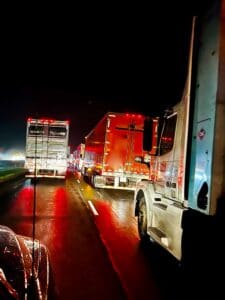
If the system detects that a collision is likely, it works in stages:
- It alerts the driver with visual, audible, or haptic warnings.
- If the driver doesn’t respond, it may pre-charge the braking system.
- If a crash appears imminent, the system automatically applies the brakes to reduce speed or avoid the collision altogether.
In commercial trucks, AEB is designed primarily to help prevent front-end crashes, particularly rear-end collisions with slower or stopped traffic.
How Effective Is AEB in Commercial Trucks?
Research consistently shows that AEB can significantly reduce certain types of crashes.
According to the Insurance Institute for Highway Safety (IIHS), forward collision warning and automatic emergency braking systems substantially reduce rear-end crashes involving large trucks. These systems are particularly effective when traffic suddenly slows or stops, and the driver has insufficient time to react.
Even when a collision cannot be avoided, reducing a truck’s speed before impact can dramatically lessen the severity of injuries and property damage.
However, AEB is not designed to prevent every type of truck accident. It is one layer of protection and not a replacement for an attentive, properly trained driver.
What Types of Truck Accidents Can AEB Help Prevent?
Automatic emergency braking is most effective in situations involving:
- Rear-end collisions
- Slow-moving or stopped traffic
- Highway congestion
- Driver inattention
- Delayed braking response
Some newer systems can also detect:
- Pedestrians
- Cyclists
- Motorcycles
- Vehicles crossing the truck’s path
Capabilities vary depending on the manufacturer, vehicle model, and sensor package installed on the truck.
What Are the Limitations of Automatic Emergency Braking?
Although AEB is an important safety feature, it cannot overcome every dangerous situation.
Performance may be affected by:
Severe Weather
Heavy rain, snow, fog, or ice can interfere with radar and camera systems or reduce tire traction, limiting braking performance.
Road Conditions
Sharp curves, steep hills, construction zones, and uneven pavement may affect the system’s ability to detect hazards accurately.
Vehicle Speed
At higher highway speeds, there may simply not be enough distance for automatic braking to completely avoid a collision.
Sensor Obstruction
Dirty sensors, damaged cameras, or poor maintenance can reduce the system’s effectiveness.
Driver Overreliance
Perhaps the greatest limitation is assuming the technology can replace attentive driving. Commercial truck drivers must remain alert and prepared to brake or steer at all times.
Are Commercial Trucks Required to Have Automatic Emergency Braking?
Historically, AEB has been optional on many commercial trucks, though numerous fleets have voluntarily adopted it for its proven safety benefits.
In recent years, federal regulators have taken steps toward requiring automatic emergency braking on new heavy vehicles. As safety standards evolve, more commercial trucks are expected to include AEB as standard equipment.
However, many trucks currently on the road may not have these systems, or they may use earlier-generation technology with more limited capabilities.
Can AEB Data Be Important in a Truck Accident Investigation?
Yes. Following a commercial truck accident, investigators often examine the truck’s electronic systems to determine what happened in the moments before the collision.
Depending on the vehicle, evidence may include:
- Whether AEB was installed
- Whether the system detected a hazard
- Whether collision warnings were issued
- Whether automatic braking is activated
- Vehicle speed before impact
- Driver braking input
- Event data recorder (“black box“) information
This information can help accident reconstruction experts determine whether driver error, equipment failure, inadequate maintenance, or another factor contributed to the crash.
Can a Trucking Company Be Liable if AEB Failed?
Potentially, but not simply because a crash occurred. Liability depends on why the system failed or whether it should have been functioning properly. 
For example, a trucking company may bear responsibility if it:
- Failed to properly maintain the truck’s safety systems
- Ignored manufacturer maintenance recommendations
- Continued operating a vehicle with known equipment problems
- Failed to repair damaged sensors or cameras
In other situations, responsibility may rest with the truck driver, another motorist, a maintenance provider, or a manufacturer if a defective AEB system contributed to the collision.
Determining liability requires a thorough investigation of the truck, its electronic data, maintenance records, and the circumstances surrounding the crash.
What Should You Do After a Commercial Truck Accident?
If you’ve been injured in a crash involving a commercial truck:
- Seek medical attention immediately.
- Call law enforcement and obtain a police report.
- Take photographs of the vehicles and the accident scene if possible.
- Avoid discussing fault with insurance companies before speaking with an attorney.
- Preserve any evidence related to the crash.
Commercial trucking cases often involve complex evidence that can disappear quickly, including electronic data from the truck itself.
How Munley Law Investigates Truck Accident Claims
Modern commercial trucks generate an enormous amount of electronic information. At Munley Law, our truck accident lawyers work with accident reconstruction experts and trucking specialists to determine exactly what happened before, during, and after a collision.
When appropriate, we investigate whether advanced safety technologies, including automatic emergency braking, were installed, functioning properly, or may have played a role in the crash. We also examine driver records, maintenance logs, inspection reports, and other evidence to identify every potentially liable party.
Contact Munley Law After a Commercial Truck Accident
Automatic emergency braking has made commercial trucks safer, but no technology can eliminate every crash. Negligent driving, poor maintenance, equipment failures, and trucking company safety violations continue to cause serious accidents across Pennsylvania and nationwide.
If you or a loved one has been injured in a commercial truck accident, contact Munley Law for a free consultation. We’ll investigate every aspect of your case, explain your legal options, and fight for fair compensation for your losses.

Marion Munley
Marion Munley is one of the nation’s most decorated and respected truck accident lawyers. Having contributed to numerous publications and spoken at numerous conferences, she has advocated for truck accident victims nationwide. Marion is Board Certified in Truck Accident Law by the NBTA and is the first woman to become Chair of the AAJ Trucking Litigation Group in 2018 – additionally, she was named “Top 10 Trucking Trial Lawyers” by the National Trial Lawyers Association. Marion has assisted in several landmark truck accident settlements, including a $26 million settlement for a single mother of three who was critically injured when a tractor trailer collided with her car.
 Call us at (844) 686-5397
 Posted in Truck Accidents.