How Important is Black Box Data After a Truck Accident?
Truck black box data can be the difference between winning and losing a serious injury case.
When a commercial truck is involved in a crash, most people focus on the visible evidence, such as skid marks, damage to vehicles, and witness statements. But some of the most powerful evidence in a truck accident lawsuit isn’t visible at all. It’s stored electronically inside the truck itself and can tell a clearer story of what happened than any eyewitness ever could.
Munley Law has successfully handled truck accident cases since opening our doors in 1959. We know how to find this evidence, preserve it, and use it to hold negligent trucking companies accountable.
If you or a family member were seriously injured in a commercial truck crash, understanding how electronic evidence works and why it matters to your claim is one of the most important things you can do.
For more information and for a free consultation, contact a Munley Law truck accident lawyer. We’ll guide you through the claims process, answer your questions, and get to work on your case.
Contact a Truck Accident Lawyer at Munley Law
 Call Us At 844-686-5397
 What Is a Truck Black Box?
Most people hear the term “black box” and think of an airplane. The truth is, the term “black box” describes a range of onboard electronic systems that record data. 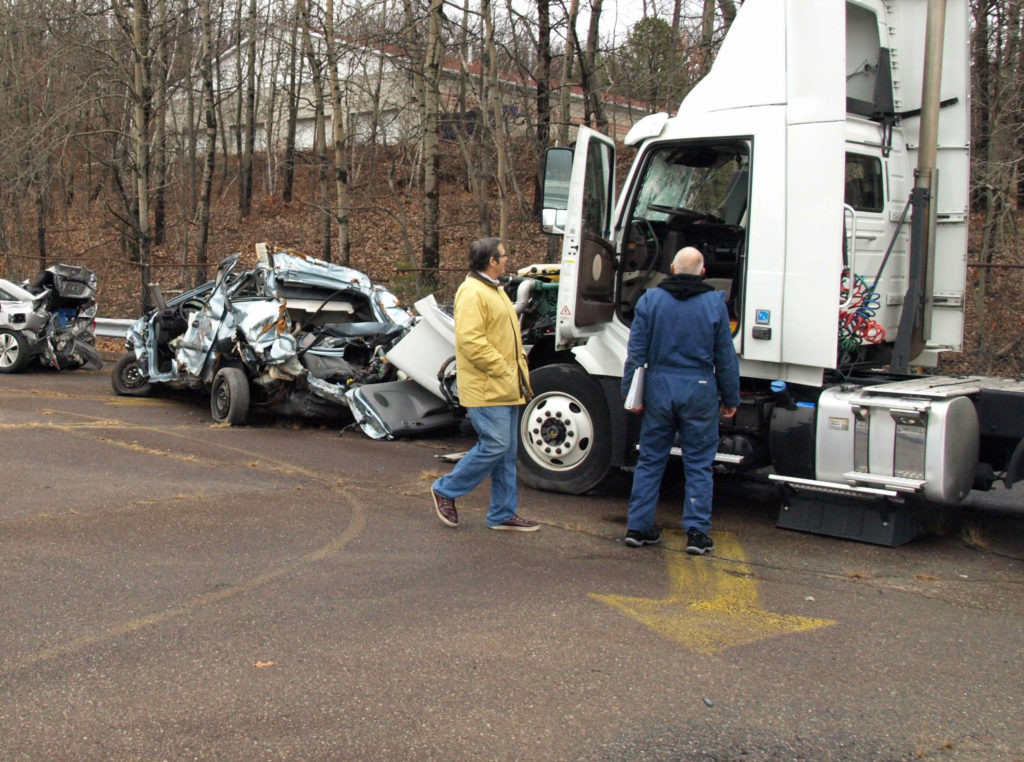
Commercial trucks have several of these systems. They record data about how a truck is operating, where it’s been, and what happened in the moments before a crash.
These systems don’t work together as one device. Each records different information, and each serves a different purpose in a truck accident investigation.
Understanding the difference between these electronic systems matters to a truck accident victim. While you’re litigating your claim, you need the right data from the right system.
The Five Electronic Systems That Matter in a Truck Crash
In commercial trucks, there are five electronic systems that will hold valuable information pertaining to your truck accident claim:
Event Data Recorder (EDR)
The Event Data Recorder is the closest thing a truck has to an airplane’s flight data recorder. It captures a snapshot of what the truck was doing in the seconds before and during a collision. It records vehicle speed, brake application, throttle position, seatbelt use, and whether any safety systems were engaged.
EDR data is triggered by sudden deceleration or impact force, making it one of the most direct sources of evidence in a truck crash investigation.
Engine Control Module (ECM)
The Engine Control Module records ongoing engine performance data, not just crash-event data. This includes RPM, fuel consumption, cruise control use, and hard braking events over time.
The ECM can show a pattern of aggressive or reckless driving in the days or weeks before an accident, extending beyond the crash itself. In cases where a driver has a history of unsafe behavior, ECM data can be critical.
Electronic Logging Device (ELD)
Since 2017, the Federal Motor Carrier Safety Administration (FMCSA) has required most commercial truck drivers to use an Electronic Logging Device. ELDs track hours of service, duty status, and driving time. These devices replaced paper logbooks, which were easy to falsify.
ELD data after a crash is often the first place truck accident attorneys look when driver fatigue is a factor. If a driver was behind the wheel longer than federal regulations allow, the ELD will show it.
Telematics and Fleet Tracking Systems
Many carriers use telematics systems that go beyond what the FMCSA requires. These platforms track GPS location, route history, real-time speed, and in some cases, driver behavior scores. Importantly, this data is controlled by the trucking company, not the driver.
This means if a carrier knew its driver was behaving dangerously and did nothing, telematics records can help prove it.
Dashcam Systems
Dashcams aren’t universally required on commercial trucks, but they’re increasingly common. Forward-facing cameras can capture road conditions, traffic patterns, and the crash itself. Cab-facing cameras record driver behavior. Were they distracted? Did they seem drowsy? Were they on their phone? When dashcam footage exists, it can be among the most compelling electronic evidence in a truck accident case.

“At Munley Law, our mission is simple: to provide all injury victims equal access to justice, even against the most powerful entities. For more than 65 years, we have been the voice for the injured, the forgotten, and those who need someone to stand beside them in their darkest hour.”
Marion Munley

What Data Does a Truck Black Box Record?
These systems can paint a remarkably complete picture of what happened before, during, and after a truck accident.
Specific data points that attorneys look for include:
- Vehicle speed at the time of impact
- Hard braking events in the days before the crash
- Steering inputs in the seconds before collision
- Total hours driven without rest
- GPS coordinates and route history
- Engine fault codes that may indicate mechanical problems
- Whether safety systems like automatic emergency braking were active
One important detail: not all of this data lasts forever. EDR systems typically capture only a short window, sometimes just a few seconds of crash-event data. ELD records, on the other hand, may go back weeks.
Some systems automatically overwrite older data, which is why acting quickly after a serious truck accident is so important. Once data is gone, it’s often gone for good.
How Does Black Box Data Prove Liability?
This is where truck accident electronic evidence becomes a litigation tool. Black box data doesn’t have a memory. It doesn’t get nervous under cross-examination. It can’t be coached or contradicted by a well-paid defense expert without hard numbers to back it up. That’s what makes it so valuable to your claim.
Here’s how specific types of data connect to specific liability arguments:
- Speeding: EDR data showing the truck was traveling above the speed limit at the time of impact directly supports a negligence claim. It removes the “he said, she said” problem that plagues many accident cases.
- Driver fatigue: ELD data showing a driver exceeded federal hours-of-service limits is evidence of both driver negligence and potential carrier liability. If the trucking company pressured drivers to stay on the road past legal limits, that pressure may show up in the records, too.
- Mechanical failure: ECM data showing unresolved engine or brake fault codes, especially if those codes were flagged before the crash, can prove the carrier failed to maintain the vehicle properly.
- Negligent supervision: Telematics data showing a pattern of hard braking, speeding, or dangerous maneuvers can demonstrate that the carrier knew about a driver’s unsafe behavior and failed to act. That opens the door to claims beyond simple negligence.
- Distracted driving: Combined dashcam and EDR data can show that a driver was not braking, not reacting, and potentially not paying attention in the moments before impact.
An inexperienced truck accident attorney will use all the data from the truck’s black box to prove fault on the part of the truck driver, the trucking company, the truck mechanics, or the cargo loaders.
How Do Lawyers Preserve Black Box Evidence?
It is extremely important for you, the victim, to understand that electronic systems begin overwriting data within days of a crash. Others may be wiped during routine maintenance if the truck is returned to service. In serious cases, data can be deliberately deleted. 
Experienced truck accident attorneys move quickly. This typically means retaining accident reconstruction specialists who can extract and authenticate data from EDR, ECM, and ELD systems using certified tools. It may also mean working to take the truck itself out of service so that onboard data isn’t lost before it can be secured.
If a trucking company destroys or deletes electronic data after an accident, especially after they should have reasonably known a lawsuit was coming, courts can impose serious consequences. These include sanctions and jury instructions that allow them to infer that the missing data was unfavorable to the trucking company.
Munley Law’s attorneys are nationally recognized leaders in truck accident litigation, including the use of telematics and electronic evidence. In fact, Munley’s senior partners have lectured on these exact issues at conferences across the country.
When black box data is at risk, we move fast. Contact Munley Law today to protect your evidence before it disappears.
Is Black Box Data Admissible in Court?
Yes, in the vast majority of truck accident cases, properly obtained black box data is admissible as evidence. Courts across the country have consistently accepted EDR and ELD data as reliable, so the admissibility of black box data is rarely the central fight. What matters more is how it was obtained and how it’s presented.
Admissibility generally depends on three things:
- Chain of custody (proving the data wasn’t altered after extraction)
- The method used to extract it (proprietary manufacturer tools or certified third-party systems are standard)
- Proper authentication through expert testimony
That’s why truck accident attorneys typically work with accident reconstructionists or digital forensics specialists who can testify about how the data was collected and what it means. Raw numbers from an ECM or EDR don’t explain themselves in a courtroom.
A qualified expert can translate that data into a clear, persuasive narrative that a judge or jury can understand.
Contact a Personal Injury Lawyer at Munley Law
Truck Accident Black Box Data FAQ
What Does a Truck’s Black Box Record?
A truck’s black box (which is actually several electronic systems) records a wide range of data depending on the device.
- The Event Data Recorder captures crash-related information, such as speed and braking.
- The Engine Control Module tracks engine performance and driving patterns over time.
- The Electronic Logging Device records hours of service. Telematics systems log GPS location and driver behavior.
Together, they can provide a detailed record of what the truck and driver were doing before and during a crash.
Can Trucking Companies Delete Black Box Data After an Accident?
Technically, yes, the data can be overwritten or deleted. But once a trucking company reasonably anticipates litigation, they have a legal obligation to preserve that evidence. Deliberately destroying data after an accident can result in court sanctions and instructions that allow the jury to draw negative conclusions about the missing evidence.
How Does ELD Data Help After aTruck Crash?
ELD data is particularly valuable when driver fatigue is suspected. Federal law limits the number of hours a commercial truck driver can operate a vehicle without rest. ELD records show exactly how long a driver was on duty and whether those limits were exceeded. In cases involving fatigued driving, this data can directly support claims against both the driver and the carrier.
Is Black Box Data Used in Truck Accident Lawsuits?
Yes, regularly. Truck accident electronic evidence, including EDR, ECM, and ELD data, is now a standard part of serious truck accident litigation. It provides objective, timestamped records that are far more difficult to challenge than eyewitness accounts or driver statements. In many cases, this data is the most important evidence in the entire lawsuit.
How Long Does Black Box Data Last After a Truck Accident?
It depends on the system. EDR data may only capture a few seconds of crash-event information. ELD records typically go back several weeks. Some systems automatically overwrite older data as new data is recorded. This is why it’s important to contact an attorney as soon as possible after a serious truck crash.
Munley Law Knows How to Secure and Use Critical Truck Crash Evidence
Electronic evidence wins truck accident cases, and Munley Law knows how to use it. As one of the few firms in the country with three board-certified truck accident attorneys, we’ve spent nearly 70 years securing evidence, downloading black box data, and fighting for injured victims.
We move fast, and we know exactly what it takes. If you or a loved one was injured in a truck crash, contact Munley Law today for a free consultation.
Posted in Truck Accidents.