




In most cases, the answer is no, you generally cannot sue Uber or Lyft directly following a rideshare accident in Pennsylvania. These companies classify drivers as independent contractors, which shields the companies from most direct liability.
But that doesn’t mean you’re stuck paying for everything on your own. You can file a claim against the at-fault driver, another careless driver, or, in certain situations, you may be able to sue Uber or Lyft if the company itself played a part in causing the crash. This could involve unsafe hiring practices, poor oversight, ignored safety warnings, or problems with the app that made driving dangerous.
Rideshare accident claims can get complicated fast. Different insurance rules apply depending on what the driver was doing at the moment of the crash, and each company has its own protections and policies. At Munley Law, our award-winning Uber and Lyft attorneys have over 250 years of combined experience. They can help riders, drivers, and families understand their options and fight for the full compensation they deserve.
How Uber/Lyft Liability and Driver Classification Works in PA
Understanding how rideshare cases work in Pennsylvania starts with one key point: Uber and Lyft classify their drivers as independent contractors, not employees. That single detail shapes almost everything about whether you can sue them. 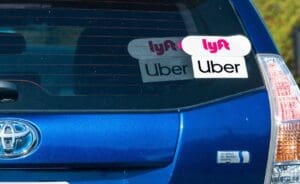
Independent Contractor Status
Uber and Lyft call their drivers independent contractors. This means:
- Drivers choose their own hours
- They use their own cars
- They control how they drive
- The company does not supervise them as closely as employees
Because of this setup, Uber and Lyft argue they shouldn’t be held responsible for most driver mistakes. Pennsylvania courts generally agree, which makes direct lawsuits against the companies harder.
Pennsylvania’s Rideshare Law
Under PA Rideshare Law, Chapter 57A, Uber and Lyft are considered Transportation Network Companies (TNCs). This law requires them to follow rules on:
- Background checks
- Vehicle standards
- Insurance coverage
- How drivers operate while logged into the app
- Reporting and safety duties
While the law regulates TNCs, it also reinforces that drivers are not employees. That classification shields the companies from a large portion of direct liability.
How TNC Insurance Works
Uber and Lyft have different insurance levels depending on whether the driver:
- Is offline → Only personal auto insurance applies
- Is online but waiting for a ride → Limited TNC insurance
- Has accepted a ride or has a passenger → Up to $1 million in coverage
This is why most claims are settled through insurance instead of lawsuits against the companies.
Why Uber and Lyft Driver Classification Matters
The driver’s status determines:
- Whether you can sue Uber or Lyft
- What damages may be available
- What insurance policies apply
- Whether the company’s actions contributed to what happened
At Munley Law, we examine app logs, timestamps, location data, trip records, and witness statements to figure out exactly which laws and insurance rules apply to your case.

“At Munley Law, our mission is simple: to provide all injury victims equal access to justice, even against the most powerful entities. For almost 70 years, we have been the voice for the injured, the forgotten, and those who need someone to stand beside them in their darkest hour.”
Marion Munley

 Call us at (844) 686-5397
 When Can You Sue Uber or Lyft Directly in Pennsylvania?
While most car accidents don’t lead to lawsuits against the rideshare company, there are situations where Munley Law can pursue Uber or Lyft directly. These cases focus on the company’s mistakes, not just on the driver’s actions. When a company fails to protect passengers, ignores warnings, or uses unsafe technology, it can be held responsible, just like any other business operating in Pennsylvania.
Negligent Hiring or Failure to Supervise
Uber and Lyft are required to run background checks on their drivers. If they ignore warning signs or skip parts of the process, they may be responsible.
Examples include:
- Approving a driver with a known violent or criminal history
- Ignoring DUIs or serious traffic violations
- Allowing a driver with repeated safety complaints to stay on the platform
- Failing to remove a driver after multiple passenger warnings
If the company should have known a driver was unsafe but allowed them to keep driving anyway, a lawsuit may be possible. In these cases, our attorneys review company records, prior complaints, and the steps the company failed to take. These cases often reveal a pattern, rather than a one-time mistake, which strengthens your claim.
App Problems, Glitches, or Unsafe Design
Sometimes it’s the technology, not the driver, that causes a crash. Rideshare apps are constantly running while the driver is in motion, and they can create hazardous situations. Examples include: 
- GPS errors or misrouting
- App features that force drivers to tap or swipe while driving
- Freezing screens that cause sudden stops
- Notifications that pull a driver’s eyes off the road
- Delayed or duplicate alerts
When the app pulls a driver’s attention away from the road, Uber or Lyft may share the blame. These cases often require expert review of phone logs, app behavior, or design flaws, which Munley Law handles on your behalf.
Ignoring Known Safety Risks
Uber and Lyft keep detailed data on driver performance, including:
- Passenger complaints
- Driving behavior patterns
- Prior crash reports
- Safety warnings
If either company knew a driver was dangerous but continued to keep them active, they can be sued for putting passengers at risk. This is especially common in cases involving assault, harassment, or drivers with a history of reckless driving. These cases demonstrate that the risk wasn’t unexpected; the company failed to take action.
Misrepresenting Safety Policies
Uber and Lyft may also be liable if they mislead riders or fail to adhere to their own rules. Examples include:
- Advertised strong safety protections they didn’t follow
- Claimed all vehicles met specific standards when they didn’t
- Gave inaccurate or misleading information after an accident
- Broke their own written safety procedures
If a company says one thing publicly but does another privately, it can be held accountable for its actions. Misrepresentation claims often increase available damages, especially when safety promises influenced a passenger’s decision to use the service.
When Can’t You Sue Uber or Lyft?
While Munley Law challenges these companies whenever the law allows it, there are also clear situations where a direct lawsuit simply isn’t possible. Understanding these limits helps you avoid wasting time on the wrong legal path and lets you focus on the options that will work for your case.
Independent Contractor Shield
The most significant barrier in most cases is the “independent contractor” rule. Because Uber and Lyft drivers are not employees, the companies are usually shielded from responsibility for a driver’s everyday mistakes. Courts in Pennsylvania have consistently upheld this structure.
This means Uber or Lyft typically cannot be sued when the driver causes a crash because of factors like:
- Speeding
- Running red lights
- Failing to yield
- Distracted driving
- Simple negligence
These everyday driving mistakes fall on the driver and not on the company.
When Insurance Covers the Claim
Another major reason you cannot sue Uber or Lyft directly is that most cases are resolved through insurance as per 53 Pa.C.S. § 57A07. Rideshare companies are required to carry large insurance policies, and these usually provide sufficient coverage to settle claims without filing a lawsuit against the company.
The available coverage often includes:
- The driver’s personal insurance policy
- Uber/Lyft’s $1 million policy
- Uninsured/underinsured motorist coverage
Since the available coverage is usually high, many victims receive full compensation without ever having to file a lawsuit against the company.
When the Driver Was Off the App
This is one of the most common reasons Uber or Lyft cannot be sued. If the driver was not logged into the app at the time of the crash, then:
- No TNC coverage applies
- Uber or Lyft isn’t connected to the crash
- It becomes a regular car accident claim
In this situation, the case proceeds the same way as any other Pennsylvania car accident. You would bring the claim against the at-fault driver and their personal auto insurance. There is no legal link to Uber or Lyft unless the app is active.
After an Accident, Who Can You Sue Instead of Uber or Lyft?
Even when you can’t sue Uber or Lyft directly, that doesn’t mean you’re out of options. Several other parties may still be legally responsible for what happened, and Pennsylvania law allows you to pursue claims against any person or entity whose negligence contributed to the crash.
The Uber or Lyft Driver
If the rideshare driver caused the collision through careless or dangerous behavior, such as texting behind the wheel, speeding, rolling through a stop sign, or making an unsafe lane change, they can be held financially responsible for your injuries. The type of insurance that applies will depend on whether they were logged into the app at the time. If they weren’t, their personal auto policy applies; if they were, Uber or Lyft’s coverage may step in.
Other At-Fault Drivers
If the rideshare driver caused the collision through careless or dangerous behavior, they can be held financially responsible for your injuries. According to the National Highway Traffic Safety Administration (NHTSA), distracted driving alone causes more than 3,000 deaths in the U.S. each year, and rideshare crashes often involve the same types of in-vehicle distractions. Which insurance applies will depend on whether the driver was logged into the app at the time. If they weren’t, their personal auto policy applies; if they were, Uber or Lyft’s coverage may step in.
Other Possible Responsible Parties
Sometimes liability extends beyond the drivers. A defective vehicle part may indicate a manufacturing defect. A poorly designed intersection or a missing sign may place responsibility on a city or township. And if a bar overserves a drunk driver, a Dram Shop claim may be applicable. At Munley Law, we thoroughly investigate every potential source of fault to ensure that no responsible party is overlooked.
How Pennsylvania Law Applies to Rideshare Lawsuits
Statute of Limitations — 42 Pa.C.S. §5524
In Pennsylvania, you have two years to file a lawsuit. If you miss the deadline, you lose the right to sue. Acting early also helps preserve:
- App data
- GPS records
- Witness statements
- Vehicle information
- Digital trip logs
Comparative Negligence — 42 Pa.C.S. §7102
Pennsylvania follows the modified comparative negligence rule. This means:
- You can recover money if you are less than 51% at fault
- Your award is reduced by your percentage of fault
Example: If you are 20% at fault and you suffered $60,000 in damages, you could still recover $48,000.
Limited Tort vs. Full Tort — 75 Pa.C.S. §1705
Your choice of auto insurance tort coverage affects your rights.
Full Tort
- You can sue for pain and suffering.
Limited Tort
- You can only sue for pain and suffering in certain situations—but rideshare passengers often qualify for exceptions, because they weren’t driving their own vehicle.
At Munley Law, we review your policy to make sure your rights are protected.
Why Pennsylvania Law Matters for Your Uber or Lyft Accident Case
Rideshare claims are not simple. They involve multiple insurance policies, app data, and companies with strong legal teams. Here’s why understanding the rules helps your case:
Insurance vs. Lawsuits
Most crashes settle through insurance, but companies often:
- Delay claims
- Blame victims
- Offer low settlements
- Hide or limit evidence
A lawsuit may be necessary to obtain the full amount you are entitled to.
When Lawsuits Lead to Higher Compensation
A lawsuit may increase compensation when:
- Injuries are severe or permanent
- A bar overserved a drunk driver
- App problems caused the crash
- Uber/Lyft ignored safety complaints
- Insurance coverage is not enough
Munley Law gathers evidence early, including app records and driving histories.
Munley Law’s Approach
Munley Law has handled complex transportation and injury cases across Pennsylvania for nearly seven decades, and we have won over a billion dollars in personal injury settlements and verdicts. We know how to deal with large companies like Uber and Lyft, and we work on a contingency fee, meaning you pay no fees or discovery costs upfront and only pay if we win.
Contact us for a free consultation today.
Frequently Asked Questions About Suing Uber or Lyft in PA
Can I sue Lyft if the driver was drunk?
Yes. If a Lyft driver was drunk and caused the crash, you can sue them just like any other impaired driver. If the driver was logged into the app or was carrying a passenger, Lyft’s insurance may also apply. In some cases, Pennsylvania’s Dram Shop law may apply. This law allows victims to sue bars or restaurants that over-served a visibly drunk person who later caused an accident. Munley Law investigates these cases from every angle to find all possible sources of compensation.
What if the app distracted the driver?
Many rideshare crashes involve drivers taking their eyes off the road to accept rides, follow GPS directions, or deal with app alerts. If the app design forced the driver to tap too many buttons, look away from traffic, or respond to messages while driving, you may have a claim against Uber or Lyft for creating an unsafe system. These cases usually require reviewing app logs, phone data, or company records, which Munley Law handles as part of our investigation.
Can I sue for emotional distress?
Yes. Emotional distress is a valid part of a personal injury claim in Pennsylvania. This includes anxiety, fear, nightmares, trouble riding in cars, or emotional trauma from the crash. You do not need visible physical injuries to experience long-term emotional effects. Munley Law works with medical experts and counselors to show how the crash changed your daily life.
Do I need to have full tort coverage to sue?
Not always. Even if your own auto insurance is limited tort, you may still sue for pain and suffering if you were a rideshare passenger. Most people qualify for exceptions because they were not driving their own car at the time. Our team can check your insurance policy to confirm your rights.
Can passengers sue both Uber and the driver?
Yes. If the accident involved mistakes by the driver and failures by the company—for example, ignored complaints or unsafe app design—you may sue both. Pennsylvania law allows victims to file claims against all responsible parties. Munley Law identifies everyone who may share responsibility so you can pursue the full amount you deserve.