Pedestrian Deaths at Philadelphia Intersections: Which Crosswalks Are Most Dangerous and Who Is Liable
Philadelphia pedestrian accident victims face some of the most dangerous streets in Pennsylvania. In 2024, 125 people were killed in traffic crashes across the city, with pedestrians making up nearly half of all fatalities. If you or a family member was struck at a Philadelphia intersection, understanding where these crashes cluster and who bears legal responsibility is the first step toward recovering compensation for your injuries.
The pedestrian accident attorneys at Munley Law represent injury victims throughout Philadelphia and southeastern Pennsylvania. Our firm has secured millions of dollars for injured victims and the families of those killed in traffic crashes.
Why Philadelphia’s Intersections Are So Dangerous
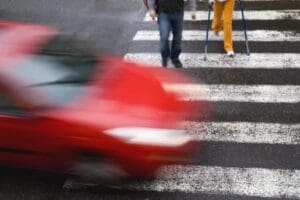
Philadelphia’s pedestrian death toll reflects conditions that have worsened significantly since 2019. The city’s 2024 Vision Zero Annual Report found that while total fatal crashes have declined slightly from their 2023 peak, pedestrian and vulnerable road user deaths remain well above pre-pandemic levels. Deaths among people walking increased 65 percent compared to the 2015–2019 average. Severe crashes are also more likely to result in death than they were before 2020, with 29 percent of severe crashes being fatal in 2023, compared to 17 percent in 2019.
Several conditions explain why intersections in Philadelphia are particularly deadly:
- Intersections with heavy turning traffic. Left and right turns at intersections are among the most common scenarios for pedestrian strikes. Drivers focused on gaps in oncoming traffic frequently fail to check crosswalks before completing a turn.
- High-speed arterial roads. Roosevelt Boulevard, Broad Street, and other wide multi-lane corridors push traffic through residential neighborhoods at highway speeds. When a vehicle traveling at 40 or 50 mph strikes a pedestrian, the injuries are almost always catastrophic.
- Low-light conditions. Philadelphia crash data shows that a significant share of pedestrian fatalities occur at night or in areas without adequate street lighting. Pedestrians struck in low-light conditions suffer far higher rates of fatal injuries than those hit during daylight hours.
- Infrastructure that prioritizes vehicles over people. Many of Philadelphia’s major corridors were designed decades ago for vehicle throughput, not pedestrian safety. Short crossing intervals, narrow sidewalks, and insufficient pedestrian signals leave walkers exposed.
Philadelphia’s Most Dangerous Intersections for Pedestrians
The City of Philadelphia has identified a High Injury Network, the 12 percent of streets where 80 percent of all traffic deaths and serious injuries occur. Several intersections on this network appear repeatedly in crash reports:
Roosevelt Boulevard Crossings. The Boulevard is widely recognized as one of the most dangerous roads in the country. Twelve lanes of traffic, high speeds, and complex inner/outer drive configurations make crossings hazardous. Automated speed enforcement cameras installed in 2020 have reduced speeding violations by over 95 percent and pedestrian crashes by 50 percent on Roosevelt Boulevard, but the road remains among the deadliest for walkers in the city. Key intersections flagged by city safety studies include Red Lion Road and Cottman Avenue, both of which have long histories of fatal and serious injury crashes.
Broad Street and Hunting Park Avenue. This North Philadelphia intersection has seen multiple fatalities in recent years. In June 2024, two people died in a single crash here. It is one of ten locations named as a Priority Intersection in the Vision Zero Capital Plan 2025.
B Street in Kensington. Part of one of the city’s most crash-prone corridors, this area combines narrow sidewalks, heavy foot traffic, and speeding vehicles. In 2024, a minivan jumped the curb and struck three pedestrians on B Street, leaving one critically injured.
15th Street and Vine Street. Located where highway ramps meet downtown traffic, this intersection near the Vine Street Expressway has a documented history of serious crashes.
62nd Street and Walnut Street. This West Philadelphia intersection sits in a mixed commercial and residential area with transit stops, and city police reports cite multiple severe collisions in the area.
These are not isolated problem spots. They represent a pattern: high-traffic corridors, intersections where driver speeds remain too high for pedestrian safety, and locations where infrastructure has not kept pace with the volume of both vehicle and foot traffic.
 Call Us At 844-686-5397
 Who Is Liable When a Pedestrian Is Killed or Injured at a Philadelphia Intersection?
Determining liability in a Philadelphia pedestrian accident requires examining the specific actions of everyone involved. Pennsylvania law assigns duties to both drivers and pedestrians, and fault can be shared.
Driver Liability
Under Pennsylvania Vehicle Code, drivers must yield to pedestrians in both marked crosswalks and unmarked crosswalks at intersections when no traffic signal is present or operating. Drivers must also exercise due care to avoid striking pedestrians even when the pedestrian is not in strict compliance with traffic rules.
Drivers face liability in pedestrian accidents when they:
- Fail to yield at a crosswalk, marked or unmarked
- Make a left or right turn without checking for pedestrians crossing in the crosswalk
- Drive distracted (including cell phone use, which is verifiable through phone records)
- Exceed posted speed limits, reducing reaction time and increasing impact severity
- Drive impaired by alcohol or drugs
- Pass a vehicle stopped at a crosswalk, which is prohibited under Pennsylvania law
Government and Municipal Liability
When dangerous intersection design or inadequate maintenance contributes to a crash, government entities may share responsibility. Claims against municipalities in Pennsylvania require strict compliance with specific notice provisions and shorter filing timelines than standard personal injury claims. A pedestrian killed because a traffic signal was broken, sight lines were obstructed, or a crosswalk was improperly marked may have a claim against the city or PennDOT — but only if the proper legal steps are taken quickly.
Third-Party Liability
In some cases, other parties bear responsibility:
- Property owners whose vehicles, signage, or landscaping obstruct driver sight lines at an intersection
- Employers whose employees struck a pedestrian while driving for work purposes
- Vehicle manufacturers, if a defective braking system or other mechanical failure contributed to the crash
How Pennsylvania’s Comparative Negligence Law Affects Your Claim
Pennsylvania follows modified comparative negligence. This means an injured pedestrian can recover compensation as long as their share of fault does not exceed 50 percent. If a pedestrian is found 51 percent or more at fault, they recover nothing. If they are found partially at fault, their damages are reduced by that percentage.
For example, a jury awards $200,000, and the pedestrian is found 20 percent at fault for crossing outside the designated crosswalk lines. The pedestrian recovers $160,000.
Insurance companies and defense attorneys regularly argue that pedestrians contributed to their own injuries. Common arguments include:
- The pedestrian was crossing outside a marked crosswalk
- The pedestrian ignored a “Don’t Walk” signal
- The pedestrian was wearing dark clothing at night
- The pedestrian was distracted by a phone
These arguments are designed to push the pedestrian’s fault percentage higher and reduce the payout. Countering them requires evidence, such as traffic camera footage, witness statements, the police accident report (Form AA-600), signal timing records, and in some cases accident reconstruction analysis.
One additional protection worth noting: even if the at-fault driver carried limited tort auto coverage, that limitation does not bind the pedestrian. Pedestrians struck by vehicles retain full tort rights under Pennsylvania law, meaning they can pursue compensation for pain and suffering without meeting the serious injury threshold that applies to some vehicle-occupant claims.
What Families Can Recover After a Pedestrian Fatality
When a pedestrian is killed at a Philadelphia intersection, Pennsylvania law provides two avenues for surviving family members.
A wrongful death claim allows recovery for funeral and burial expenses, lost income the deceased would have earned, and loss of companionship and guidance. A survival action allows the estate to pursue the claims the deceased would have had (medical expenses incurred before death, pain and suffering, and other damages).
These claims have a two-year statute of limitations in Pennsylvania. Evidence preservation is time-sensitive. Traffic camera footage is routinely overwritten within days or weeks. Skid mark measurements, signal timing data, and witness recollections fade. Sending preservation notices to the city and any private property owners near the crash scene immediately after an accident can be the difference between having evidence and losing it.
How Munley Law Represents Philadelphia Pedestrian Accident Victims
Pedestrian accident cases in Philadelphia often involve multiple liable parties, contested fault percentages, and the added complexity of potential municipal claims against the city or PennDOT. They also require fast action to preserve evidence before footage is deleted and scene conditions change.
For decades, Munley Law has represented seriously injured victims and the families of those killed in pedestrian accidents throughout Pennsylvania. Our attorneys understand how to investigate intersection crashes, identify all responsible parties, and build the evidence necessary to counter insurance company arguments about pedestrian fault. Contact our firm today if you or a loved one has been involved in a pedestrian accident.

Marion Munley
Marion Munley is a highly compassionate and driven wrongful death lawyer. Knowledgeable in various fields of personal injury law, Marion has extensive experience pursuing wrongful death claims of all kinds. Marion has delivered multi-million-dollar verdicts and settlements in cases involving wrongful death, including a $17.5 Million Jury verdict in a teen’s death caused by a car accident and a $1.4 million settlement in an ER wrongful death case. Marion is also highly accredited, being one of the very few to become Triple Board Certified by the National Board of Trial Advocacy and a Lawdragon 2026 Hall of Fame Inductee.
Posted in Pedestrian Accidents.