Is Tailgating Considered Aggressive Driving in Atlanta, GA?
Tailgating and aggressive driving in Georgia often start with a driver following just a little too closely. At first glance, it may seem like impatience, but under Georgia law, following another vehicle too closely can lead to serious legal consequences, especially if a crash occurs.
Drivers are required to maintain a safe distance from the vehicle ahead so they have enough time to react to changing traffic conditions. When that space disappears, even a small reduction in speed can quickly lead to a rear-end collision and questions about fault.
The law also distinguishes between ordinary traffic violations and aggressive driving. When a motorist follows too closely while angry or attempts to pressure another driver, the behavior may go beyond a simple citation and create more serious legal issues after a crash.
If you were injured in a collision caused by a tailgating driver, it may raise questions about fault and liability that an Atlanta car accident attorney at Munley Law can answer.
Contact a Car Accident Lawyer at Munley Law
 Call Us At 844-686-5397
 Georgia Law Requires Drivers to Avoid Following Too Closely
Georgia traffic law directly addresses tailgating. The rule appears in O.C.G.A. § 40-6-49, which states that drivers must not follow another vehicle more closely than is reasonable and prudent, considering speed and traffic conditions. 
The following too closely Georgia statute applies statewide and does not set an exact number of feet or seconds. What matters is whether the distance allows a driver to stop safely. Factors include vehicle speed, road and weather conditions, and traffic flow.
A driver who ignores these conditions and stays too close to another vehicle may be cited for violating O.C.G.A. § 40-6-49 for following too closely.
How Close Is Too Close Under Georgia Traffic Law?
Many drivers ask how close is too close under Georgia traffic law. The answer depends on whether a driver leaves enough space to stop safely if the vehicle ahead slows or brakes suddenly.
The National Highway Traffic Safety Administration has reported that rear-end crashes are among the most common types of collisions and often occur when drivers fail to maintain a sufficient distance to stop in time.
Traffic safety agencies often recommend that drivers maintain a safe following distance. One common way to judge this distance is to use spacing based on a fixed reference point: when the vehicle ahead passes a marker such as a road sign or telephone pole, begin counting aloud; if you reach that same point before you finish counting to a reasonable number, you are likely following too closely. The Georgia Department of Driver Services explains this spacing method in its driver safety guidelines and notes that drivers should increase following space in heavy traffic, bad weather, or reduced visibility.
While Georgia law does not prescribe an exact number of seconds, the idea behind safe spacing reflects the state’s following‑distance rule. When drivers ignore this space and crowd another vehicle’s bumper, they increase the risk of a rear‑end accident.
Tailgating vs Aggressive Driving Under Georgia Law
Many drivers assume tailgating automatically counts as aggressive driving. Under Georgia law, the situation is more nuanced.
The aggressive driving statute appears in O.C.G.A. § 40-6-397, which defines aggressive driving as operating a vehicle with the intent to annoy, harass, intimidate, injure, or obstruct another person.
This distinction is important for understanding tailgating vs aggressive driving under Georgia law.
When Tailgating Is Only a Traffic Violation
Tailgating alone usually falls under O.C.G.A. § 40-6-49. A driver may be distracted, impatient, or misjudge the distance between vehicles.
In those cases, police typically issue a citation for following too closely. The driver may still be liable if the behavior causes a crash.
When Tailgating Becomes Aggressive Driving
Tailgating can rise to aggressive driving if the behavior shows intent to intimidate another driver.
Examples include:
- Repeatedly riding a driver’s bumper while flashing headlights
- Following dangerously close after a lane dispute
- Using tailgating to pressure another driver to move over
- Combining tailgating with other threatening actions
When intent is present, the conduct may fall under O.C.G.A. § 40-6-397 rather than a simple traffic offense.
This distinction matters because aggressive driving can carry stronger penalties and may influence how liability is viewed after a crash.

“At Munley Law, our mission is simple: to provide all injury victims equal access to justice, even against the most powerful entities. For more than 65 years, we have been the voice for the injured, the forgotten, and those who need someone to stand beside them in their darkest hour.”
Marion Munley

The Connection Between Tailgating and Road Rage
Tailgating is strongly linked to road rage in many crashes.
Drivers who become angry in traffic often close the distance between vehicles to pressure or intimidate another motorist. This behavior can escalate quickly.
Common signs of road rage related to tailgating include:
- Repeated horn use
- Sudden lane changes to block another driver
- Brake checking
- Gestures or yelling between drivers
Once emotions enter the situation, the risk of a crash rises significantly.
Understanding whether tailgating involved anger or intimidation can affect how a claim is evaluated.
Why Tailgating Causes So Many Rear-End Collisions
Rear-end crashes often happen when a driver follows too closely and has little time to react to slowing traffic. Reduced reaction time, stopping distance, and congested highways all contribute.
The Federal Highway Administration (FHWA) also notes that rear-end crashes are one of the most common types of traffic collisions in the United States.
Because of this pattern, investigators often start with the assumption that the trailing driver may be responsible.
How is Liability Determined for Georgia Tailgating Accident Cases?
Determining liability for a tailgating accident in Georgia cases usually focuses on the driver who was following too closely. 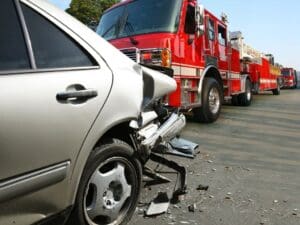
While this can support a negligence claim, fault is not automatic. Factors such as sudden braking, multi-vehicle crashes, mechanical issues, or road hazards can affect liability. Investigators review police reports, vehicle damage, dash cam footage, and witness statements to determine if the driver violated the following too closely Georgia statute, or engaged in aggressive behavior.
What Evidence Often Appears In Tailgating Accident Claims?
Tailgating crashes often leave physical and digital evidence. Common sources include traffic and highway camera footage, vehicle data recorders, dash cam or nearby video, and witness accounts confirming unsafe following.
How Our Georgia Tailgating Car Accident Lawyers Evaluate These Cases
At Munley Law, our Georgia tailgating car accident lawyers usually begin by analyzing how the crash occurred and whether a traffic violation was involved.
One question often asked during consultations is simple: how much space was between the vehicles before the crash?
Another issue involves the driver’s actions leading up to the impact. Investigators may look for signs of aggressive conduct such as repeated tailgating, horn use, or lane disputes.
Our attorneys frequently review police reports and available footage early in the process. In one rear-end crash case, for example, the firm obtained an $11 million settlement after a commercial vehicle struck a driver in slow-moving traffic. Evidence showed the driver failed to control speed and maintain a safe distance.
Cases like this highlight how following distance and driver behavior can affect responsibility after a crash.
What To Do After a Tailgating Crash
Drivers in a suspected tailgating crash should preserve evidence to clarify what happened. Key steps include filing a police report, photographing the vehicle positions and damage, collecting witness contact information, and saving dashcam recordings. This helps to show whether the crash was caused by simply following too closely or aggressive driving.
Tailgating Aggressive Driving Georgia Claims And Legal Help
In Georgia, tailgating and aggressive driving cases often turn on the distinction between careless driving and intentional intimidation. The law separates these two behaviors, but both can lead to liability if a crash occurs.
Munley Law handles vehicle collision cases nationwide, including claims involving Atlanta highway tailgating accidents. We have secured major results for injury victims, including a $20 million settlement for a pedestrian hit by a car and a $17.5 million verdict involving a fatal drunk driving crash.
If you want to understand your legal options after a rear-end accident with an aggressive driver in Georgia, you can speak to our attorneys at no cost. Munley Law offers free consultations and charges no fees unless compensation is recovered.
Marion Munley
Marion Munley has been practicing personal injury law for nearly 40 years. She is triple board-certified by the National Board of Trial Advocacy for Truck Accident Law, Civil Trial Law, and Civil Practice Advocacy. She currently serves as Vice President of the American Association for Justice, an organization dedicated to safeguarding victims’ rights. Marion has won many multimillion-dollar recoveries for her clients, including one of the largest trucking accident settlements in history. She has been named a Top 10 Super Lawyer in Pennsylvania since 2023, a Best Lawyer in America, and was recently inducted to the Lawdragon Hall of Fame.
Posted in Car Accidents.