




When determining which evidence proves fault in Pennsylvania pedestrian accident cases, understanding the types and quality of documentation can make the difference between a successful claim and a denied one.
Pennsylvania law requires clear proof of negligence to hold a driver accountable for injuries in a pedestrian accident. Because these cases often involve disputes over who had the right of way or whether the pedestrian contributed to the accident, comprehensive evidence is essential.
Knowing what information matters and how it can support your version of events can make a meaningful difference in the strength of a claim.
If you have questions about how your accident should be investigated, Munley Law’s award-winning pedestrian accident lawyers offer free consultations to help you understand your options.
 Call Us At 844-686-5397
 Physical Evidence from the Accident Scene
In pedestrian collision cases, the accident scene is a critical source of information. It provides four categories of evidence in Pennsylvania pedestrian accident claims: 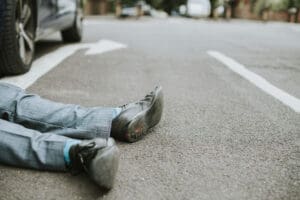
Photographs and Video Documentation
Images and footage captured immediately after the incident preserve conditions that may change within hours. This evidence is especially vital if the driver had fled the scene after the accident. These images should document:
- Vehicle damage
- Pedestrian injuries
- Skid marks
- Crosswalk markings
- Traffic signal positions
- Street lighting
- Weather conditions
- Any obstructions to visibility
The position of debris and the pattern of damage to the vehicle can indicate the point of impact and the direction both parties were traveling.
Skid Marks and Debris Patterns
Skid marks provide valuable insight into driver behavior in the moments before impact. The length and pattern of these marks can reveal whether the driver attempted to brake, how fast they were traveling, and whether they swerved to avoid the collision.
Accident reconstruction experts often use skid mark measurements to calculate vehicle speed at the time of impact, which can demonstrate whether the driver was exceeding posted limits or traveling too fast for conditions.
Traffic Control Devices
Traffic control devices require careful documentation as well. The condition and visibility of stop signs, traffic signals, crosswalk markings, and pedestrian crossing signals all factor into fault determination. Signal timing records can prove whether a walk signal was activated for pedestrians or whether a driver ran a red light. Faded crosswalk paint or malfunctioning signals may shift liability or establish municipal responsibility.
Road Surface and Environmental Factors
Environmental and road surface factors also contribute to the complete picture. Potholes, construction zones, inadequate lighting, overgrown vegetation blocking sightlines, or temporary conditions like ice patches can all influence how fault is assigned in Pennsylvania pedestrian accident cases.

“Since 1959, we have secured over $1 billion in compensation for our clients. When someone is seriously injured, they’re up against insurance companies with unlimited resources. My job is to level that playing field, and fight until they get the justice they deserve.”
Daniel W. Munley

Witness Testimony and Statements
Eyewitness accounts provide compelling narratives of pedestrian accidents. Independent witnesses carry significant weight in pedestrian accident cases because they lack an incentive to misrepresent events.
Expert witnesses bring specialized knowledge. Accident reconstructionists analyze physical evidence to demonstrate vehicle speed and reaction times, and medical experts establish causation between the collision and specific injuries.
Electronic and Digital Evidence
Modern technology has transformed how pedestrian accident cases are proven. Electronic and digital evidence tools that are most used for providing evidence in Pennsylvania pedestrian accident claims include:
- Traffic cameras and surveillance footage from municipal systems, businesses, residential doorbell cameras, and dashboard cameras in other vehicles can capture the actual collision or the moments leading up to it.
- Cellphone records have become key evidence in proving distracted driving. Call logs, text message timestamps, and app usage data can demonstrate that a driver was using their phone at the moment of impact.
- Vehicle event data recorders, commonly called black boxes, store information about a vehicle’s operation in the seconds before a crash. These devices record speed, throttle position, brake application, steering input, and seatbelt use.
- Social media posts have emerged as a valuable source of evidence in injury cases. Posts made by the driver before or after the accident may reveal distraction, intoxication, or consciousness of guilt.
Official Reports and Documentation
Official documentation provides objective evidence that courts and insurers rely upon heavily.
- Police reports document observations, witness statements, traffic violations, and preliminary fault assessments, and citations create a presumption of negligence.
- Medical records establish causation by tracking injuries from emergency treatment through recovery, distinguishing accident-related harm from pre-existing conditions.
- Official weather and traffic reports corroborate or refute claims about visibility and road conditions at the accident time.
Demonstrative Evidence and Reconstructions
Accident reconstruction creates visual representations that help judges and jurors understand complex collision dynamics. Computer simulations and three-dimensional models demonstrate sightlines, reaction times, and the physical forces involved in the impact. These reconstructions help create visual formats that communicate how the accident occurred and why the driver should be held responsible.
Timeline documentation organizes evidence chronologically to establish the sequence of events. A well-constructed timeline integrates witness statements, electronic data, and physical evidence to create a coherent narrative that demonstrates negligence and causation.
Photographic comparisons serve multiple purposes in pedestrian accident cases. Before-and-after images of the injured pedestrian document the progression and severity of injuries. Sequential photographs of vehicle damage can establish the force of impact. Comparative images of the accident scene at different times of day or in different weather conditions can demonstrate visibility challenges that contributed to the collision.
Pennsylvania-Specific Evidence Considerations
Evidence in Pennsylvania pedestrian accident claims must address the state’s modified comparative negligence standard, which bars recovery if pedestrians are more than 50% at fault. Evidence must demonstrate that either the driver bears primary responsibility or that the pedestrian also shares the fault.
Pennsylvania law grants pedestrians right-of-way in crosswalks and requires drivers to exercise due care. Violations create strong liability presumptions. Municipal ordinances governing crosswalk placement, signal timing, and driver responsibilities in business districts add another evidentiary layer, establishing liability even when state law seems ambiguous.
Preserving and Collecting Evidence
The immediate aftermath of a Pennsylvania pedestrian accident presents a limited window for evidence collection before skid marks fade, debris clears, and surveillance footage is overwritten. While victims should photograph the scene and obtain witness information, comprehensive evidence preservation requires legal expertise. 
Munley Law’s personal injury attorneys immediately send preservation letters to drivers, businesses, and municipalities to prevent spoliation (the illegal destruction of evidence). Our legal team retains accident reconstructionists, issues subpoenas for phone records and surveillance footage, hires private investigators to locate witnesses, and ensures all evidence is properly authenticated for trial.
Speak with an Experienced Pedestrian Accident Attorney Today
The strength of any pedestrian accident claim in Pennsylvania depends directly on the quality and completeness of evidence proving the driver’s fault. From physical debris patterns at the scene to sophisticated electronic data analysis, every piece of evidence contributes to establishing liability and demonstrating the full extent of harm suffered.
If you or a loved one has been injured in a pedestrian accident, consulting with an experienced pedestrian accident lawyer at Munley Law can make the difference in successfully proving fault and obtaining the compensation you deserve.
Call our pedestrian accident lawyers to get the claims process and accident investigation started.
Daniel W. Munley
Daniel W. Munley is an award-winning personal-injury attorney and champion of plaintiffs’ rights. For decades he’s won multi-million verdicts and settlements and is recognized as a national leader in truck and rideshare litigation, including a record $26 million truck settlement in Northeastern Pennsylvania and a $20 million recovery in 2024 for life-altering commercial-vehicle injuries.
Reviewed by Bernadine Munley, Esq., Personal Injury Attorney at Munley Law, on July 14, 2026.