Injured at Lincoln Financial Field, Citizens Bank Park or Xfinity Mobile Arena? Stadium Premises Liability for Philadelphia Sports Fans
Philly fans show up. More than 69,000 fill Lincoln Financial Field on Eagles Sundays, Citizens Bank Park regularly draws crowds of over 40,000 during peak Phillies games, and Xfinity Mobile Arena hosts more than 20,000 for Flyers and Sixers matchups. With that many people moving through concourses, stairwells, seating sections, and parking areas, injuries are bound to happen.
Most fans expect a safe experience when they head to the NRG Sports Complex in South Philadelphia. When that does not happen, Pennsylvania’s premises liability law may give injured fans a path to compensation. Our Philadelphia premises liability attorneys at Munley Law represent fans who have been hurt at stadiums, arenas, and large venues throughout the region.
How Premises Liability Applies at Philadelphia Stadiums
Stadium operators, property owners, and event organizers have a legal duty to maintain reasonably safe conditions for guests. Fans attending a game are considered business invitees under Pennsylvania law. In practical terms, that means stadiums must inspect for hazards, fix dangerous conditions, and warn visitors when a danger cannot be addressed right away.
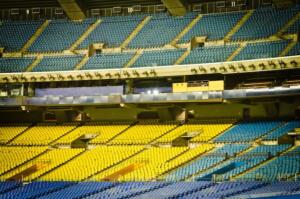 At large venues like Lincoln Financial Field or Xfinity Mobile Arena, multiple entities may share responsibility. Ownership groups, management companies, concession vendors, cleaning crews, and private security contractors often operate under separate agreements. Figuring out who controlled the area where an injury happened is often one of the most important parts of a claim.
Common hazards at Philadelphia stadiums include:
- Slippery concourses from spilled drinks or food
- Broken or uneven steps in seating sections
- Poor lighting in stairwells or parking lots
- Overcrowded entry gates or exits
- Inadequate security leading to fights or assaults
- Falling objects from upper levels or unsecured equipment
Even a short delay in cleaning up a spill during a sold-out Eagles game can lead to serious injuries. In a packed venue, even a minor hazard can become dangerous very quickly.
The “Foul Ball Rule” and Other Assumption of Risk Issues in Philadelphia
Pennsylvania courts apply the “no-duty” rule in spectator sports cases. Under Jones v. Three Rivers Management Corp., 483 Pa. 75 (1978), stadium operators owe no duty to protect fans from risks that are common, frequent, and expected — such as a foul ball reaching the stands at Citizens Bank Park. However, the assumption of risk is not unlimited. Stadium operators may still be liable if protective netting is improperly installed or maintained, ushers fail to control unsafe crowd behavior, a fan is injured in an area where a flying object would not reasonably be expected to occur, or alcohol service contributes to dangerous conduct.
Similar arguments can arise at Eagles or Flyers games. A certain amount of crowd contact may be expected, but a poorly managed surge near a gate, stairwell, or escalator may still amount to negligence.
Alcohol Service and Liability in the Sports Complex
Alcohol is a major part of the game-day environment in Philadelphia. Pennsylvania’s dram shop law allows injured parties to hold alcohol vendors liable if they serve visibly intoxicated patrons who then cause harm.
This can come into play inside stadiums, at nearby lots, and at tailgates. Security and concession staff are expected to monitor intoxication levels. When they fail to cut off service or intervene appropriately, fights and falls become more likely.
We have seen cases where an intoxicated fan pushed another person down concrete steps or caused a chain reaction in a crowded aisle. These incidents are preventable with proper oversight.
Parking Lots, Tailgates, and Post-Game Injuries
Many injuries happen outside the stadium itself. The lots surrounding Lincoln Financial Field and Citizens Bank Park host thousands of tailgaters each weekend. After the game, traffic congestion and impaired driving increase the risk of accidents.
Premises liability can extend to these areas when poor lighting, lack of traffic control, or unsafe design contributes to an injury. In some cases, multiple claims may overlap, including premises liability against the property operator, negligence claims against individual drivers, and dram shop claims against vendors who overserved alcohol.
Because the Sports Complex is spread out, pedestrians often have to walk long distances through active traffic lanes. If those areas are poorly designed or inadequately monitored, serious injuries can result.
Types of Injuries Seen in Stadium Accident Cases
Stadium-related injuries range from minor to life-altering. Common injuries include:
- Fractures, especially wrists, ankles and hips, from falls
- Traumatic brain injuries from slips or falling objects
- Spinal injuries from stairwell or escalator accidents
- Lacerations requiring stitches
- Shoulder and knee injuries from crowd surges
Emergency medical services are frequently called to Philadelphia’s major venues. Large stadium events can generate dozens of medical incidents in a single day, especially during football season.
What to Do After an Injury at a Philadelphia Stadium
If you are injured at a game or event, the steps you take immediately afterward can affect your claim:
- Seek medical attention right away, either from on-site medical staff or at a nearby hospital such as Thomas Jefferson University Hospital or Penn Presbyterian Medical Center.
- Report the incident to stadium staff or security and request an incident report.
- Take photos or videos of the hazard, if possible.
- Get contact information from witnesses.
- Keep your ticket, receipts, and any documentation from the event.
Stadiums often have surveillance systems, but footage may not be preserved indefinitely. Acting quickly helps ensure critical evidence is not lost. In Pennsylvania, injured victims generally have two years from the date of the injury to file a premises liability claim, making early legal consultation especially important
Contact a Premises Liability Lawyer at Munley Law
 Call Us At 844-686-5397
 Who Can Be Held Liable in a Stadium Injury
Determining liability in a stadium injury case requires a detailed investigation. Potential defendants may include stadium ownership or management entities, third-party vendors operating concessions or merchandise stands, maintenance or cleaning companies, security contractors, and event promoters.
For example, if a fall occurs due to a spill that was not cleaned, the responsible party could be a contracted cleaning company rather than the stadium itself. If an assault occurs, liability may be shared by both the individual and the security provider.
Compensation Available in Pennsylvania Premises Liability Claims
Injured fans may be entitled to compensation for:
- Medical bills, including emergency care and follow-up treatment
- Lost wages if time away from work is required
- Pain and suffering
- Rehabilitation or long-term care costs
Pennsylvania follows a comparative negligence rule. If a fan is partially at fault, compensation may be reduced, but not necessarily eliminated. For example, a person who was distracted while walking may still recover damages if a hazardous condition played a significant role.
Protecting Philadelphia Fans After Stadium Injuries
The Philadelphia Sports Complex is one of the busiest entertainment hubs in the region. On a single weekend, tens of thousands of fans may move between games, concerts, and events. With that level of activity, safety depends on consistent maintenance, trained staff, and responsible oversight.
When stadium operators or vendors cut corners, fans bear the risk. Legal action not only helps injured individuals recover compensation, but it also pressures operators to correct unsafe conditions.
Our Philadelphia personal injury attorneys represent clients injured at Lincoln Financial Field, Citizens Bank Park, Xfinity Mobile Arena, and other venues throughout the city. We investigate how the injury occurred, identify all responsible parties, and pursue claims against large corporations and insurers.
If you or a loved one was injured at a Philadelphia sporting event, legal guidance can make a significant difference. Contact the Munley Law Philadelphia office for a free consultation to discuss your case. There is no fee unless we win your case.

Robert W. Munley, III
Robert W. Munley, III is a recognized and highly accredited premises liability lawyer. Bob has served thousands of injured victims, winning millions in compensation. He has been appointed to Best Lawyers in America since 2013, and has been a Pennsylvania Super Lawyer since 2011.
Posted in Premises Liability.