What Are a Philadelphia Patient’s Rights After a Birth Injury at a Center City Hospital
Posted July 20th, 2026 by Marion Munley, Esq..
A family affected by a birth injury at a Philadelphia Center City hospital, such as Pennsylvania Hospital or Thomas Jefferson University Hospital, has the right to pursue a medical malpractice claim on the child’s behalf.
Pennsylvania law gives that claim far more time to be filed than most other medical malpractice cases. Because a birth injury involves a minor, the standard two-year filing deadline works differently, which changes how urgently a family needs to act and what records matter most in the meantime.
What Counts as a Birth Injury Under Pennsylvania Malpractice Law?
A birth injury becomes malpractice when the medical team’s response to labor and delivery falls outside the accepted standard of care and causes harm to the mother or infant.

Common examples include:
- A delayed response to fetal distress on the heart rate monitor
- Mismanaged shoulder dystocia that causes a brachial plexus injury
- Improper use of forceps or a vacuum extractor
- A delayed cesarean section that leads to oxygen deprivation
Not every difficult delivery or unexpected complication is medical malpractice. […]
Read MorePosted in Medical Malpractice.
Can an Allentown Renter Sue Their Landlord for an Injury at Home?
Posted July 17th, 2026 by Marion Munley, Esq..
Injury on Rental Property
The landlord is usually liable when an unsafe condition in an Allentown rental property causes a tenant’s injury, and the tenant often has an unusual advantage in proving it: the city’s own rental inspection records.
Allentown runs one of Pennsylvania’s most active rental inspection programs, which means that a landlord’s history of code violations, failed inspections, or an expired rental license can serve as evidence in the case rather than requiring the tenant to prove it from scratch.
What Legal Standard Applies When an Unsafe Rental Property Causes an Injury?
In a premises liability claim, the standard against which a landlord’s conduct is measured derives from the Pennsylvania Supreme Court’s 1979 decision in Pugh v. Holmes, which requires that rental housing be safe and sanitary regardless of what the lease says. This standard doesn’t exist to give a tenant a way to compel repairs. […]
Read MorePosted in Premises Liability.
Who Is Liable for a Slip and Fall at a Pocono Water Park Near Stroudsburg?
Posted July 17th, 2026 by Marion Munley, Esq..
Whether at Camelbeach, Kalahari Resorts, or Great Wolf Lodge, the water park operator can be held liable for a slip and fall, even if a guest signed a liability waiver at check-in.
Monroe County’s three major water parks draw families from across the region every summer, and a wet concrete deck around a wave pool or slide landing is one of the most common places a visit turns into an injury. What a guest can recover in compensation for their injuries often depends on what the waiver covers and whether the fall resulted from the water park’s own maintenance failure.
Does Signing a Liability Waiver Stop an Injured Guest From Suing a Pocono Water Park?
No, not automatically. Pennsylvania courts enforce liability waivers for voluntary recreational activities against ordinary negligence but not against reckless conduct or gross negligence, the most flagrant form of carelessness. […]
Read MorePosted in Premises Liability.
Can Wilkes-Barre Be Held Liable for an Injury at the MLK Jr. Park Splash Pad?
Posted July 15th, 2026 by Marion Munley, Esq..
Yes, the City of Wilkes-Barre can be held liable for an injury at the Dr. Martin Luther King Jr. Park splash pad, but a claim against the city comes with limits.
Pennsylvania’s governmental immunity law bars most lawsuits against municipalities, but it creates a specific exception for injuries arising from how a city maintains its own property, including the playground and splash pad at the recreation complex on Kattell Street.
Why Doesn’t Pennsylvania’s Governmental Immunity Automatically Protect the City?
Pennsylvania’s Political Subdivision Tort Claims Act gives local governments broad immunity from lawsuits, but the law carves out eight specific exceptions, and one of them, the “real property” exception under 42 Pa.C.S. § 8542(b)(3), covers negligence in how a local agency cares for, controls, or maintains property it possesses. A city-owned park and splash pad falls squarely inside that exception. 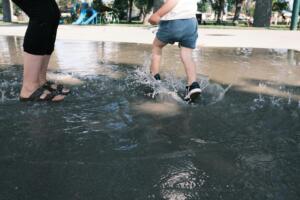
But this is narrower than it sounds. […]
Read MorePosted in Premises Liability.
Who Is Liable for a Summer Boating Accident at Blue Marsh Lake?
Posted July 15th, 2026 by Marion Munley, Esq..
Blue Marsh Lake Berks County
Liability for a boating accident at Blue Marsh Lake usually falls on the other boat operator under Pennsylvania’s Boat and Fish Code. But when the accident involves the lake’s own docks, buoys, or hazard markings, the claim is against the U.S. Army Corps of Engineers instead, and follows an entirely different federal process.
Blue Marsh Lake draws close to 900,000 visitors a year to its 1,147 acres of water northwest of Reading, and knowing which of those two paths applies changes both the deadline a boater is working against and the paperwork the claim requires.
What Pennsylvania Law Governs a Boating Accident at Blue Marsh Lake?
A boating accident caused by another operator on Blue Marsh Lake is governed by Pennsylvania’s Boat and Fish Code, which treats negligent operation of a watercraft as a summary offense and reckless operation as a third-degree misdemeanor. […]
Read MorePosted in Personal Injury.
Who Is Liable When a Pedestrian Is Struck in Downtown Pittsburgh’s Golden Triangle?
Posted July 14th, 2026 by Marion Munley, Esq..
The driver who failed to yield is usually liable when a pedestrian is struck in Pittsburgh’s Golden Triangle.
But fault in a downtown crash isn’t always that simple once local driving habits like the “Pittsburgh left” and the neighborhood’s own narrow, one-way street grid enter the picture.
What Does Pennsylvania Law Say About a Driver’s Duty to a Pedestrian in a Crosswalk?
Under 42 Pa.C.S. § 3542, a driver must yield to a pedestrian crossing within any marked crosswalk, or any unmarked crosswalk at an intersection, whenever there’s no traffic signal controlling the crossing. A driver who violates that duty commits a summary offense, and while the fine is only $50, the violation becomes powerful evidence of negligence in a civil injury claim.

Pedestrians have obligations too. Pennsylvania law requires pedestrians in urban districts to cross only within a marked crosswalk between signalized intersections, […]
Read MorePosted in Pedestrian Accidents.
When Are Scranton Bars and Restaurants Liable for a Slip and Fall?
Posted July 13th, 2026 by Marion Munley, Esq..
A Scranton bar, restaurant, or commercial property is liable for a slip and fall when it knew, or reasonably should have known, about a dangerous condition and failed to fix it or warn customers in time. This standard applies to the more than 50 restaurants, bars, and cafes all packed into downtown Scranton.
What counts as “reasonable” depends on the hazard. How long did it exist? And did the business have a real chance to catch it before someone got hurt?
What Legal Duty Does a Scranton Bar or Restaurant Owe Its Customers?
Pennsylvania law treats a paying customer at a bar or restaurant as a business invitee. Invitee status carries the highest duty a property owner owes anyone on the premises. The courts apply Section 343 of the Restatement (Second) of Torts directly, which means that an owner is liable if they: 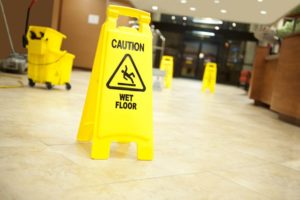
- Knew or should have discovered the hazard
- Should have realized the danger it posed
- Should have expected that customers would not protect themselves against it
- Still failed to fix or warn customers about it
This is a four-part test. […]
Read MorePosted in Premises Liability.
Why Are Truck Accidents on I-78 and Route 22 So Common Near Lehigh Valley Industrial Parks?
Posted July 10th, 2026 by Marion Munley, Esq..
Truck accidents often occur on I-78 and Route 22 near Lehigh Valley industrial parks for a simple reason. Route 22 near the JW Industrial Park in Allentown carries some of the heaviest volume of any state route in the region, and the companies operating out of the Lehigh Valley Industrial Park send trucks merging onto it all day at speeds well below the flow of highway traffic.
The mismatch of a fully loaded truck accelerating from a warehouse driveway into highway-speed traffic is one of the most common setups for a serious crash in this corridor.
How Much Truck Traffic Does This Corridor Carry?
The Greater Lehigh Valley’s industrial footprint sits directly along I-78, Route 22, Route 33, and the Northeastern extension of the Pennsylvania Turnpike. This positioning is deliberate. Warehouses and distribution centers choose these locations specifically for interstate access, and the region has grown into one of the busiest warehousing and logistics hubs on the East Coast as a result. […]
Read MorePosted in Truck Accidents.
Why Are Downtown Stroudsburg’s Crosswalks a Growing Liability for Monroe County Pedestrians?
Posted July 10th, 2026 by Marion Munley, Esq..
Downtown Stroudsburg’s crosswalks are becoming an increasing safety concern as foot traffic along Main Street continues to grow. While pedestrian activity has increased over time, much of the corridor’s infrastructure was not designed to accommodate today’s levels of use, prompting the borough to pursue safety improvements.
Pennsylvania law already requires drivers to yield to pedestrians in crosswalks. Even so, the borough recently secured a major federal safety grant to redesign Main Street’s crossings, reflecting a recognized need to improve pedestrian safety and better protect the growing number of people using the area.
This combination of a legal right-of-way that already exists on paper and a borough project confirming it was not working in practice is exactly what makes a Main Street pedestrian crash a real liability question. The two pieces of evidence reinforce each other.
What Does Pennsylvania Law Require at a Crosswalk? […]
Read MorePosted in Pedestrian Accidents.
Why Do I-95 Truck Accidents in Philadelphia Often Involve Multiple Vehicles?
Posted July 9th, 2026 by Marion Munley, Esq..
I-95 truck accidents in Philadelphia often involve multiple vehicles for one main reason. The corridor combines highway-speed traffic with some of the densest interchange spacing on the East Coast, and a single truck losing control at speed rarely stays a single-vehicle event.
When a fully loaded tractor-trailer suddenly stops, jackknifes, or catches fire, the vehicles immediately behind it often have no realistic way to stop in time.
The 2023 collapse of I-95 in the Tacony section of Northeast Philadelphia, caused by a tanker truck fire at the Cottman Avenue interchange, is the clearest recent example of how quickly a single truck incident on this highway can escalate.
How Busy Is I-95 Through Philadelphia?
Interstate 95 carries traffic from across the Northeast Corridor as it runs through Northeast Philadelphia, past Center City, and south toward the Delaware Memorial Bridge. This volume mixes commuter traffic, […]
Read MorePosted in Truck Accidents.
Why Is the Warren Street Bypass One of Reading’s Most Crash-Prone Corridors?
Posted July 9th, 2026 by Marion Munley, Esq..
Route 12, better known as the Warren Street Bypass, is one of Reading’s most crash-prone corridors for a specific reason. It averages more than one interchange per mile of highway. This creates a merge density that most drivers do not expect from what appears to be an ordinary bypass.
The interchange density with highway speeds, packed into a tight cluster of on-ramps and off-ramps, is normally reserved for a major interstate, not a state route running through a mid-size city. It creates far more opportunities for a serious crash than a typical rural stretch of road.
What Kind of Road Is the Warren Street Bypass?
PA Route 12 covers over 9 miles, running from the city of Reading east to Laureldale and Pricetown in Berks County. The western 4.5-mile section of the bypass is designated as a controlled-access expressway, with five interchanges packed into that stretch. […]
Read MorePosted in Car Accidents.
How Does Distracted Driving Put Pedestrians at Risk Around Wilkes-Barre’s Public Square?
Posted July 9th, 2026 by Marion Munley, Esq..
Wilkes-Barre’s Public Square draws heavy foot traffic into a tight downtown grid where drivers are already threading through narrow streets, around parked cars, and across frequent crosswalks. When drivers become distracted, this increases pedestrians’ risk of an accident.
A driver glancing at a phone for even a few seconds has less time to notice someone stepping off a curb, and Public Square concentrates exactly that kind of pedestrian activity into a few compact blocks. Pennsylvania has specific laws addressing both distracted driving and a driver’s duty to pedestrians, and these laws intersect directly in a setting like this.
Understanding how those two laws work together is crucial right after a crash when insurance companies are already deciding who to blame.
How Much Foot Traffic Does Public Square Actually Draw?
Public Square is a two-acre park at the historic center of downtown Wilkes-Barre, […]
Read MorePosted in Pedestrian Accidents.
Pittsburgh Medical Malpractice Lawsuits Against UPMC and Allegheny Health Network: Why They’re More Complex Than They Appear
Posted July 8th, 2026 by Marion Munley, Esq..
Medical malpractice claims against a major Pittsburgh hospital system are more complex than they appear for a structural reason.
A system like UPMC or Allegheny Health Network is not one legal entity. It is a network of affiliated hospitals, practice groups, and physicians, each of which may need to be evaluated separately for liability. This structure is not an accident; it reflects decades of mergers and acquisitions across the region.
Determining which entity within a large system is legally responsible for an instance of substandard care is a very different task than suing an individual physician in solo practice.
What Makes UPMC or Allegheny Health Network Different From a Single Doctor’s Office?
A large hospital system in Pittsburgh includes multiple hospital campuses, outpatient centers, and physician practice groups. Some are directly owned by the system. Others are separately organized entities that merely affiliate with it, […]
Read MorePosted in Medical Malpractice.
Pennsylvania Nursing Home Staffing Requirements and How They Affect Patient Safety
Posted July 8th, 2026 by Marion Munley, Esq..
Families trust nursing homes to have enough trained staff on duty to care for residents around the clock.
The number of staff on duty affects nearly every part of a resident’s day, from basic care to supervision. When staffing levels are too low, residents may not be checked on as often as they should be, and everyday care tasks can be delayed or missed.
If this happens, problems such as preventable falls, medication errors, and residents wandering away without being noticed begin to arise.
Pennsylvania Nursing Home Staffing Laws

Pennsylvania nursing homes must meet both federal and state staffing standards. These rules are meant to match staffing levels with resident needs, not just facility size.
Federal law, 42 C.F.R. § 483.35, requires nursing homes to have sufficient licensed nurses and aides on duty to provide proper care for every resident. […]
Read MorePosted in Nursing Home Abuse.
What Do Medical Malpractice Lawyers Do?
Posted July 7th, 2026 by Bernadine Munley, Esq..
The medical malpractice lawyers at Munley Law can help you hold negligent healthcare providers accountable and recover compensation after serious medical errors. When a doctor, nurse, or hospital fails to meet the accepted standard of care, the consequences can be life-changing, ranging from worsened conditions and preventable complications to permanent disability or loss of life.
Medical malpractice claims are complex, often requiring detailed medical records, expert testimony, and a clear understanding of both healthcare standards and Pennsylvania law. An experienced legal team can investigate what went wrong, identify responsible parties, and build a strong case while you focus on moving forward.
For nearly 70 years, Munley Law has earned a national reputation for excellence in personal injury and malpractice litigation, with board-certified trial attorneys and a long history of significant case results. Clients trust our medical malpractice attorneys for our experience, resources, and compassionate, […]
Read MorePosted in Munley News.
Why Does a Truck’s GVWR Matter for Drivers on I-81 Near Scranton?
Posted July 6th, 2026 by Marion Munley, Esq..
Commercial trucks are a common sight on Scranton’s highways and throughout Northeastern Pennsylvania. Because these vehicles can weigh up to 40 times as much as the average passenger car, even small violations of federal safety standards can have serious consequences.
One of the most important safety measurements for any commercial truck is its gross vehicle weight rating (GVWR). While most drivers never think about GVWR, it plays an important role in preventing crashes and can become a critical factor when investigators determine why a truck accident occurred.
What Does a Truck’s GVWR Cover?
A truck’s Gross Vehicle Weight Rating is the maximum amount of weight a vehicle is designed to carry safely. This number is assigned by the manufacturer after engineers evaluate the truck’s frame, suspension, axles, brakes, tires, and other components.
 Federal law, at 23 U.S.C. […]
Posted in Truck Accidents.
What Philadelphia Construction and Union Workers Need to Know About Workers’ Comp When a Contractor Disputes the Claim
Posted July 1st, 2026 by Marion Munley, Esq..
A contractor disputing your workers’ compensation claim does not mean that you lose your right to benefits. It just means someone, usually the contractor’s insurance company, is questioning part of your claim. This query could be whether you were hurt on the job, whether your injury is work-related, or whether you should still be receiving benefits.
From commercial buildings in Center City to roadwork along I-95 and neighborhood redevelopment projects across Philadelphia, construction workers do some of the toughest jobs in the city. The work is physically demanding, and a single accident can leave someone unable to work for weeks or even months.
Pennsylvania’s workers’ compensation system is meant to cover medical benefits and wage-loss benefits after a work injury. Unfortunately, the process is not always as simple as filing paperwork and waiting for benefits to arrive. Contractors and insurance companies sometimes challenge claims, especially when an injury could keep someone out of work for months or longer. […]
Read MorePosted in Construction Accidents.
How Wrongful Death Claims Work After a Fatal Crash on Route 22 in the Lehigh Valley
Posted June 25th, 2026 by Marion Munley, Esq..
A fatal crash on Route 22 can leave surviving family members facing funeral expenses, lost household income, and difficult questions about how the collision happened. When another driver’s negligence caused the crash, Pennsylvania law may allow certain family members to pursue a wrongful death claim.
Not every fatal crash is simply an accident. Some occur because a driver was distracted, speeding, impaired, or otherwise acting carelessly. When that happens, Pennsylvania law gives certain family members the right to pursue a wrongful death lawsuit.
When a fatal crash occurs, determining exactly how it happened is often the first step toward understanding whether a wrongful death claim may be available.
Fatal Crashes on Route 22 Often Leave Families With Questions
Families are often left wondering whether the other driver was distracted, speeding, impaired, or engaging in some other dangerous behavior before the collision. […]
Read MorePosted in Car Accidents.
Why Slip and Fall Claims on SEPTA Platforms Are More Complicated Than a Standard Premises Case in Philadelphia
Posted June 24th, 2026 by Marion Munley, Esq..
A slip and fall on SEPTA property often involves issues that do not arise in a typical premises liability case. Unlike a fall at a grocery store or shopping center, a SEPTA claim may involve questions of governmental immunity, disputes over control of the property, and challenges to the preservation of key evidence.
SEPTA stations can pose hazards not found in many other premises liability cases. A fall may occur on a crowded platform, a stairway leading to the tracks, or an outdoor station exposed to rain, snow, and ice. Broken stairs, poor lighting, uneven walking surfaces, and slippery platforms are among the conditions that can lead to serious injuries.
The challenge is that proving a SEPTA claim is not always as simple as showing that a hazard existed. Determining who was responsible for the area and preserving evidence before it disappears are often important parts of the case. […]
Read MorePosted in Premises Liability.
Dan Munley Featured on SiriusXM Road Dog Trucking Radio
Posted June 24th, 2026 by Munley Law Personal Injury Attorneys.
Truck accident attorney Daniel W. Munley was recently featured as a guest on “On the Move with Dan Ronan”, airing on SiriusXM Road Dog Trucking Radio (Ch. 146). Munley joined host Dan Ronan to discuss the legal implications of the U.S. Supreme Court’s unanimous decision in Montgomery v. Caribe Transport II, LLC, a landmark ruling that allows injured parties to bring state negligence claims against freight brokers for negligently hiring unsafe motor carriers.
The May 14, 2026, ruling resolved a long-contested legal question about whether the Federal Aviation Administration Authorization Act (FAAAA) preempted state tort claims against brokers. The Supreme Court held that it does not, allowing cases to proceed in state courts when a broker’s carrier selection contributed to a truck crash.
Dan, who has lobbied Congress on trucking safety issues and tried truck accident cases across the country, […]
Read MorePosted in Munley News.
Load More Posts