




Another driver’s momentary inattention at the wheel can turn your life upside down, leaving you needing an experienced Scranton distracted driving accident lawyer to help you recover compensation. Distracted driving crashes often happen in an instant, but the consequences can last for months or years. Whether a driver was texting, scrolling, or adjusting their GPS, that split second of distraction can leave you dealing with a nightmare of medical bills, lost income, and a long recovery.
These cases are different from typical car accidents because the evidence is often hidden in digital records and device data. Building a strong claim means uncovering exactly what the driver was doing at the time of the crash and proving how that distraction caused your injuries. It’s detailed work, but it can make a powerful difference in the outcome of your case.
Our team at Munley Law understands how to investigate distracted driving claims, preserve key evidence, and fight for full compensation. If you’ve been injured by a distracted driver in Scranton, contact our Scranton car accident lawyers today for a free consultation and take the first step toward protecting your rights and your recovery.
What is Considered a Distracted Driving Accident in Scranton?
A distracted driving accident claim is a personal injury case filed when a driver causes a crash by not paying attention to the road, such as texting, using a phone, eating, or interacting with in-car technology. In Scranton and throughout Pennsylvania, injured victims can seek compensation for medical bills, lost wages, and pain and suffering.
In 2024, 75,621 of the 110,765 reportable traffic crashes in Pennsylvania were caused by driver error. Within the list of driver errors, distracted driving was third on the list of highest contributing causes, with a total of 9,687 crashes, leading to 43 deaths. Lackawanna County was responsible for 2,259 (2%) of the state’s traffic accidents.
 Call Us At 844-686-5397
 Distracted Driving Laws in Scranton
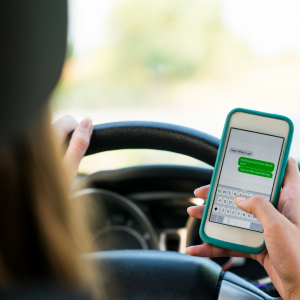
Pennsylvania has strict laws against texting while driving, such as 75 Pa. C.S. § 3316 (also known as Paul Miller’s Law), and violations of these laws can significantly strengthen your injury case. Understanding these laws helps us build stronger cases for our clients.
- Distracted driving is illegal. Pennsylvania law prohibits holding and using a cell phone while driving. This includes when you are stopped at a stoplight or in traffic. Drivers who violate this law face fines and penalties.
- Enhanced penalties for injury crashes. When distracted driving causes serious injuries or death, Pennsylvania’s Daniel’s Law imposes additional penalties on the driver. These enhanced criminal penalties often support our arguments for higher compensation in civil cases.
- Stricter rules for commercial drivers. Truck drivers, bus drivers, and other commercial vehicle operators face even more stringent rules about phone use while driving. Federal regulations and company policies create additional ways to hold commercial drivers accountable.
These laws exist because distracted driving is dangerous and preventable. Drivers who break these laws and cause accidents should be fully responsible for the consequences.
How to Prove Distracted Driving in a Scranton Car Accident Claim
Unlike cases of car accidents caused by negligence, proving distracted driving requires more investigation. For example, breath tests can easily prove an accident was caused by a drunk driver. However, in distracted driving cases, we must determine what the driver was doing at the time of the crash.
We can obtain detailed records from phone companies showing when calls were made, texts were sent, or data was used. These records often provide the most evidence that drivers used their phones when they should have been watching the road. We will also check social media accounts for posts, messages, or location data. This helps us see if the driver used their phone during the crash.
Our car accident attorneys will also review the vehicle’s navigation, entertainment, and other technologies. We want to see if the driver used these systems instead of paying attention to driving.
Other drivers, passengers, or pedestrians sometimes see distracted driving behavior before crashes occur. We interview all potential witnesses to document their observations of the driver’s behavior.
We work with experts who can review phone records and analyze crash patterns. They explain to juries how distracted driving leads to accidents.
Who Can Be Held Liable in a Distracted Driving Crash?
Depending on the circumstances, liability may include:
- The distracted driver
- The driver’s employer (for commercial drivers)
- A company that requires phone use while driving
- Vehicle manufacturers (in rare technology-failure cases)
It’s essential that you keep 42 Pa C.S.A. § 7102, Pennsylvania’s modified comparative negligence rule, in mind. This rule allows you to pursue compensation if you’re less than 51% responsible for the accident, and if this is the case, your compensation will be reduced by your percentage of fault. You cannot pursue compensation if you’re more than 51% responsible.
Common Types of Distracted Driving
 Distracted driving involves more than just texting. Other types of distracted driving include:
- Talking on handheld phones, texting, checking social media, taking photos, or using apps while driving can be distracting and contribute to accidents. Even hands-free phone calls can be distracting and contribute to accidents.
- Trying to eat meals, drink coffee, or handle food while driving takes attention away from the road and often requires taking one’s hands off the steering wheel.
- Applying makeup, shaving, fixing hair, or performing other grooming activities while driving creates dangerous distractions that can lead to serious accidents.
- Conversations with passengers, dealing with children in the backseat, or turning around to address passenger needs can distract drivers from the road.
- Programming GPS devices, adjusting music, or interacting with entertainment systems while driving diverts attention from the primary task of safe driving.
All of these activities can wait until you’re safely parked. When drivers engage in these behaviors while driving, they should be held responsible for any accidents they cause.
Why Scranton Distracted Driving Cases Are Different
Distracted driving accidents often lead to worse injuries than other crashes. This happens because distracted drivers do not brake or move away before hitting something. When someone is looking at their phone instead of the road, they often strike other vehicles at full speed.
Distracted drivers often do not slow down before crashes. This can lead to serious collisions, like a rear-end accident, where victims cannot react in time. Victims receive no warning when drivers do not brake or swerve before a crash. They cannot brace for impact or take protective action. This often leads to more severe injuries.
Many distracted driving accidents occur at intersections, where drivers must monitor traffic signals, pedestrians, and vehicles approaching from multiple directions. In Scranton, busy intersections such as Pittston Avenue and Orchard Street, Mulberry Street and North Washington Avenue, and the area around Lackawanna Avenue and North Seventh Avenue can become especially dangerous when drivers take their eyes off the road, even for a few seconds. These side-impact crashes frequently cause serious injuries.
These accidents could also have been easily prevented. This fact often makes the emotional impact worse for victims and their families. It adds more trauma on top of their physical injuries.
Common Injuries in Distracted Driving Crashes
Victims of distracted driving accidents often suffer from the following injuries:
- Traumatic brain injuries (TBI)
- Neck and spinal cord injuries
- Broken bones
- Internal injuries
- Whiplash
- Severe soft tissue injuries
Insurance Company Challenges in Scranton Distracted Driving Crashes
Insurance companies often dispute distracted driving claims because proving distraction can be complex. They may argue that injuries weren’t serious or weren’t caused by the accident. They use several tactics to avoid paying fair compensation for these preventable accidents.
Insurance companies may argue that phone activity occurred before or after the crash, not during the collision. Our Scranton distracted driving accident lawyers analyze timelines to show how phone use caused the accident.
The insurance adjuster might question the trustworthiness of phone records. They may also say the driver was using a hands-free device. Munley Law works with experts who can explain how various types of phone use impair driving ability.
Insurance adjusters often blame accidents on road conditions, weather, or mechanical issues. This is a common tactic when dealing with insurers after a Scranton car crash. We conduct thorough investigations to demonstrate that distraction was the primary cause.
Why Choose Munley Law for Distracted Driving Cases?
Distracted driving cases require attorneys who understand modern technology and know how to obtain and analyze digital evidence. We have the experience and resources needed to prove these complex cases.
We work with digital forensics experts who can obtain phone records, analyze social media activity, and examine vehicle technology to prove distracted driving. We’ve successfully handled numerous distracted driving cases and recovered significant compensation for our clients throughout Scranton and Pennsylvania. With numerous awards from leading organizations, including Best Lawyers, Super Lawyers, the Irish Legal 100, and the American Association for Justice, our attorneys are well recognized for the experience and skill they bring to every case.
We will also file your case before the two-year deadline from the date of injury under Pennsylvania’s statute of limitations (42 Pa. C.S.A. § 5524(2)) is reached. Filing a claim after this deadline can bar you from recovering compensation altogether.
Frequently Asked Questions about Distracted Driving in Scranton
Can Phone Records Really Prove The Driver Was Distracted?
Yes. Cell phone records can show the exact time calls, texts, or data usage occurred. When this timing lines up with the crash, it becomes strong evidence that the driver was distracted. Your attorney can legally obtain and analyze these records as part of the investigation.
What if The Distracted Driver Was Using a Work Phone Or Driving For Their Job?
If the driver was working at the time of the crash, their employer may also be held responsible. This can apply to delivery drivers, truck drivers, rideshare drivers, or anyone required to use a phone while driving for work. Holding an employer liable can increase the compensation available in your case.
Do I Have To Go To Court For A Distracted Driving Accident Claim?
You don’t always have to go to court for a distracted driving case. Many distracted driving cases settle through negotiations with the insurance company. However, if a fair settlement is not offered, your attorney may recommend filing a lawsuit and pursuing full compensation in court.
What if I Didn’t Realize I Was Injured Right Away?
Some injuries, like whiplash, concussions, or soft tissue damage, can take hours or even days to show symptoms. You can still pursue a claim as long as you seek medical care and document your condition. It’s important to speak with a lawyer as soon as you notice symptoms so your rights are protected.
Contact Munley Law Today to Speak to a Scranton Car Accident Lawyer
Evidence in distracted driving cases can disappear quickly. Phone companies may delete records, social media posts can be removed, and witness memories fade over time. The sooner you contact us, the better we can preserve the evidence needed to prove your case.
Pennsylvania law gives you two years from the date of your accident to file a lawsuit, but waiting too long can make it harder to gather the evidence needed to prove distracted driving.
If you’ve been injured by a distracted driver in Scranton, don’t let them avoid responsibility for their preventable choice. These accidents shouldn’t happen; when they do, the drivers who cause them should be held accountable.
Contact Munley Law’s personal injury lawyers today for a free consultation. We’ll review your case, explain your options, and begin investigating to prove distracted driving and recover compensation.

Daniel W. Munley
Daniel W. Munley is an award-winning auto accident lawyer and advocate for auto accident victims. Widely recognized as a national leader when it comes to truck and rideshare accident cases, Daniel has been rated AV Preeminent by Martindale-Hubbell, alongside being named to Best Lawyers in America since 2013 and in 2020. Daniel has helped recover millions for injured auto accident victims, such as a $17.5 million jury verdict for a teen death caused by a car accident, and another $4.4 million settlement reached for car accident case. As well as this, Daniel has advocated for victims through speaking arrangements such as “Pennsylvania Practice Program: Auto and Trucking Cases.”
Reviewed by Bernadine Munley, Esq., Personal Injury Attorney at Munley Law, on August 19, 2026.