






A Scranton failure-to-yield accident lawyer at Munley Law can guide you through the aftermath of an accident when a simple right-of-way mistake causes serious harm on the roads of Scranton. These crashes often happen in seconds, but the consequences can last for months or years. Understanding your rights and the steps to take after the collision is key to protecting your recovery and your financial future.
Although these accidents are preventable, they can still lead to severe injuries, costly medical care, and complicated insurance disputes. In many cases, proving fault can be complicated. It takes careful review of traffic laws, witness accounts, and, sometimes, expert analysis. Having a legal team that knows how to build a strong claim can make a real difference in how your case unfolds.
Munley Law has almost seven decades of experience handling serious car accident claims in Scranton and throughout Lackawanna County. Our Scranton car accident attorneys know how to hold negligent drivers accountable and push back against insurance companies that try to minimize your claim. We focus on clear communication, thorough case preparation, and results that help you move forward with confidence. Call us today for your free consultation.
 Call Us At 844-686-5397
Why Failure to Yield Accidents Happen in Scranton, PA
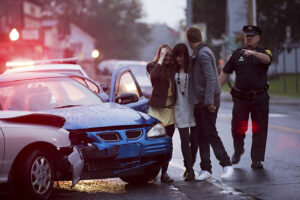 In 2024, PennDOT recorded 8,971 crashes in Pennsylvania in which a driver proceeded without clearance, and 53 of those crashes were fatal.
When a driver fails to drive safely and follow right-of-way rules, the result can be a serious crash that turns your life upside down. These collisions often occur at intersections during merging or in high-traffic areas throughout Scranton. Our team understands the lasting effects of these crashes, and we are here to help you make sense of what happened and what comes next.
Most failure-to-yield crashes in Scranton trace back to poor decision-making. Drivers who ignore stop signs, rush yellow lights, or enter intersections without checking for cross-traffic often cause these preventable wrecks. Other common factors include:
- Unsafe passing
- Wrong-way turns
- Drowsy driving
- Drunk driving
- Distracted driving
A Scranton personal injury lawyer from our team can help uncover what really caused your crash. We will review local surveillance, police reports, and witness statements to determine fault and build a strong case on your behalf.
Pennsylvania Right-of-Way Laws
Failure-to-yield crashes are often the result of a driver ignoring basic right-of-way rules. Under Pennsylvania law, drivers must obey stop signs and yield signs at intersections, as outlined in 75 Pa. C.S. § 3323 of the Pennsylvania Vehicle Code. Violating these rules puts other drivers at risk for serious harm.
Pennsylvania law outlines who must yield the right of way in various driving situations to prevent accidents and maintain orderly traffic flow.
Here are the key rules:
At Intersections
At a 4-way stop, the first vehicle to arrive has the right of way. If two vehicles arrive at the same time, the one on the right goes first.
At uncontrolled intersections, yield to vehicles already in the intersection or coming from the right.
When turning left, yield to oncoming traffic going straight or turning right.
At Traffic Signals
Green lights give the right of way, but always yield to pedestrians in crosswalks.
A flashing red light acts like a stop sign; yield before proceeding.
Flashing yellow means proceed with caution and yield as needed.
Pedestrians
Always yield to pedestrians in marked crosswalks and at intersections, even if there is no traffic signal.
When turning at a green light, yield to pedestrians crossing with the light.
Emergency Vehicles
Pull over to the right edge of the road and stop when an emergency vehicle with lights or sirens is approaching.
Merging and Roundabouts
Vehicles entering a roundabout must yield to those already inside. When merging, yield to traffic already on the main road.
If you were injured because another driver failed to yield the right of way, you have the right to pursue compensation. Your Scranton failure to yield car accident attorney at Munley Law can determine whether a citation or violation under Title 75 strengthens your case. We can also work with traffic experts to prove that the other driver failed to act responsibly at the time of the crash.
Common Locations in Scranton Where Failure-to-Yield Crashes Occur
In Scranton, failure-to-yield accidents often happen in areas with heavy traffic flow and frequent merging. Busy downtown intersections, highway on-ramps like I-81, multi-lane turning areas, and commercial corridors with frequent stop-and-go traffic are all common locations. Parking lot exits and residential intersections without traffic signals can also be hotspots for these types of crashes.
Our car accident attorneys are familiar with the local roads, traffic patterns, and high-risk areas throughout Scranton and Lackawanna County. This local knowledge helps us investigate your accident more effectively and identify contributing factors that may not be obvious at first glance.
Being familiar with Scranton’s most dangerous routes can help drivers be more alert and make better decisions.
Scranton’s most dangerous roads include:
- Mulberry Street: It’s a prime route between downtown Scranton and the surrounding areas, with many business entrances/exits and on-street parking zones.
- North Washington Avenue: As a major thoroughfare, it connects shopping areas to residential areas and commuter routes, causing heavy congestion.
- Route 307 (North Keyser Avenue): This route features a mix of vehicles and pedestrians, so drivers need to remain alert for people at crosswalks and other areas.
- Routes 6 and 11 (Lackawanna Avenue): It’s a main route for commuters and commercial vehicles.
When a driver ignores right-of-way rules—even for a moment—the risk of a severe collision increases dramatically. These crashes also put pedestrians and cyclists at higher risk. A driver who fails to yield while turning or approaching a crosswalk may not see someone crossing until it is too late. That is why right-of-way laws are strictly enforced and why proving a violation can play a key role in your injury claim.
How Fault Is Proven in a Failure-to-Yield Car Accident Claim
Proving fault in a failure-to-yield accident requires more than simply showing that a crash occurred. Your legal team must demonstrate that the other driver violated Pennsylvania right-of-way laws and that this violation directly caused your injuries. To do this, we gather and analyze key evidence such as:
- Police reports
- Traffic camera footage
- Vehicle damage patterns
- Witness statements.
In some cases, we also work with accident reconstruction experts to show how the crash happened and who had the legal right-of-way at the time. By building a clear, evidence-based case, we strengthen your claim and improve your chances of recovering full compensation.
After a serious crash, you may be overwhelmed by medical bills, lost income, or pressure from an insurance company to settle quickly. If the driver who hit you did not yield as required, it is important to understand your rights and have someone in your corner who knows how to protect them.
What Compensation Can You Recover After a Failure-to-Yield Accident?
If another driver failed to yield the right of way and caused your crash, Pennsylvania law lets you seek compensation from that driver for your financial losses and for the physical and emotional harm the crash caused.
Economic Damages
Economic damages cover losses you can put a dollar figure on: emergency care, hospital stays, surgery, physical therapy and future medical treatment, lost wages while you recover, reduced earning capacity if you can’t return to the same work, and repairs to or replacement of your vehicle. Your own auto policy’s first-party medical benefits pay the first part of your medical bills regardless of fault, and a claim against the at-fault driver covers what those benefits don’t.
Non-Economic Damages
Non-economic damages compensate for losses that don’t come with a bill, including pain and suffering, emotional distress, scarring or disfigurement, and loss of enjoyment of life. Whether you can recover these depends partly on the tort option you chose on your own auto insurance policy, which we explain below.
Compensation for Families After a Fatal Crash
When a failure-to-yield crash is fatal, close family members may bring a wrongful death claim and the estate may bring a survival action. Combined, these can cover funeral costs, medical bills, the income your loved one would have earned, and the loss of their companionship and support.
How Shared Fault Affects Your Compensation
Failure-to-yield claims often turn into disputes over who had the right of way. Under Pennsylvania’s modified comparative negligence rule (42 Pa.C.S. § 7102), you can recover compensation as long as you are not more than 50% at fault, but your award will be reduced by your share of the blame. For example, if you are found 20% at fault, your compensation is reduced by 20%. That is why the evidence described above, such as police reports, camera footage, and witness statements, matters so much in these cases.
Can You Recover Pain and Suffering With Limited Tort?
It depends on the injury and the crash circumstances. When you bought auto insurance in Pennsylvania, you chose either full tort or limited tort coverage. With full tort, you can recover pain and suffering and other non-economic damages after any crash someone else caused. Limited tort costs less, but it generally limits you to economic damages, such as medical bills and lost wages, unless an exception applies.
The Serious Injury Exception
Even with limited tort, you can still recover pain and suffering if the crash caused a “serious injury.” Pennsylvania law defines this as death, serious impairment of a body function, or permanent serious disfigurement. Courts look at which body function was affected, how much it was affected, and for how long. Many failure-to-yield crashes are side-impact (T-bone) collisions, which often cause fractures, head injuries, and spinal injuries that can meet this threshold.
Other Exceptions to Limited Tort
You may also be treated as full tort, whatever your injury, if:
- The driver who caused the crash was convicted of DUI or accepted ARD for it
- The at-fault vehicle was registered in another state
- The at-fault driver had no auto insurance
- You were riding in a commercial vehicle or other vehicle that isn’t a private passenger car, such as a bus
- The at-fault driver intended to cause injury
Insurance companies often argue that an injury isn’t serious enough to get past limited tort. Our Scranton car accident lawyers gather medical records and expert opinions to show how your injuries have affected your daily life. We also check whether any exception applies before you accept that your claim is limited.
Situations Where Legal Help Makes a Difference
If you suffered a serious injury, are unsure who is at fault, or have received a low settlement offer, legal guidance can make all the difference. Our Scranton personal injury attorneys have helped many clients understand claims involving uninsured drivers, disputed liability, or aggressive insurance tactics.
We are also here when you do not know where to start. From the moment we take your case, we handle all communication with the insurance company, begin collecting evidence, and review your medical records to make sure nothing is missed. We also endeavor to file your claim before the two-year deadline under Pennsylvania’s statute of limitations [42 Pa. C.S.A. § 5524(2)] is reached, as filing after this deadline can bar you from recovering compensation. With so much on the line, you should not have to manage it on your own.
What Happens After You Hire Our Scranton Car Crash Attorneys?
Once you decide to work with us, our firm begins a detailed investigation into what happened. That means gathering police reports, consulting with medical professionals, and identifying all sources of coverage so nothing falls through the cracks. We also take care of negotiating with the insurance company and preparing your case for trial if necessary.
You do not pay anything out of pocket while your case is ongoing. We work on personal injury cases on a contingency fee basis, which means you owe nothing unless we win for you.
If you were injured in a failure-to-yield accident in Scranton, you likely have questions about what happens next. From deadlines and damages to liability and insurance, it’s important to understand your rights before making any decisions. At Munley Law, we believe in providing straightforward answers so you feel confident as you move forward.
Frequently Asked Questions About Failure-to-Yield Accidents in Scranton
Who Is at Fault in a Left-Turn Crash?
In most cases, the driver turning left. Under 75 Pa.C.S. § 3322, a driver turning left must yield to oncoming traffic close enough to pose a hazard. The oncoming driver can share the blame, though, if they were speeding, ran a red or yellow light, or weren’t paying attention. When both drivers share fault, Pennsylvania’s comparative negligence rule reduces each driver’s compensation by their percentage of fault.
What If the Other Driver Says I Was the One Who Failed to Yield?
This is common, especially at four-way stops and intersections where both drivers say they had the green light. Fault is decided by the evidence, not by whose story sounds better. Signal timing records, traffic and business camera footage, vehicle event data, where the vehicles were damaged, and independent witnesses can all show who had the right of way. That evidence can disappear quickly, so it helps to have a lawyer request it early.
Can a Pedestrian or Cyclist Recover Compensation If a Driver Failed to Yield?
Drivers in Pennsylvania must yield to pedestrians in crosswalks (75 Pa.C.S. § 3542) and to cyclists in the same way as to other vehicles. An injured pedestrian or cyclist can usually claim first-party medical benefits through their own auto policy, or a household member’s, and then bring a claim against the driver who failed to yield.
How Long Do I Have to File a Failure-to-Yield Accident Claim in Pennsylvania?
In most cases, two years from the date of the crash (42 Pa.C.S. § 5524). If you miss that deadline, you will usually lose your right to compensation. Shorter deadlines can apply if a city, county, or PennDOT vehicle was involved, or a poorly designed intersection contributed to the crash; you generally must give written notice within six months (42 Pa.C.S. § 5522). Deadlines for children injured in a crash are extended until they turn 18.
Call Your Failure to Yield Car Accident Attorney in Scranton
You should not have to face the financial and emotional fallout of a failure to yield accident on your own. Our team will fight for the results you deserve, and you will not owe anything unless we win your case.
To speak directly with your failure-to-yield car accident lawyer in Scranton from Munley Law, contact us anytime for a free consultation.

Marion Munley
Marion Munley has been a practicing auto accident lawyer for nearly 40 years. During her career, she has helped clients across auto accident cases, winning multi-million dollar settlements for auto accident victims. Notable verdicts include a $17.5 million jury verdict for a teen death caused by a car accident, and a $1.9 million settlement for a family hit by a 16-year-old driver. Marion has also advocated for motor vehicle victims through speaking engagements such as “Pennsylvania Practice Program: Auto and Trucking Cases” and “Collision Investigation and Reconstruction in Motor Vehicle Cases”. Marion is also to become triple board-certified by the National Board of Trial Advocacy, alongside this, she is currently serving as Vice President of the American Association for Justice.
Reviewed by Bernadine Munley, Esq., Personal Injury Attorney at Munley Law, on November 11, 2026.